
KNKT reveals key findings in Bekasi Timur train crash investigation
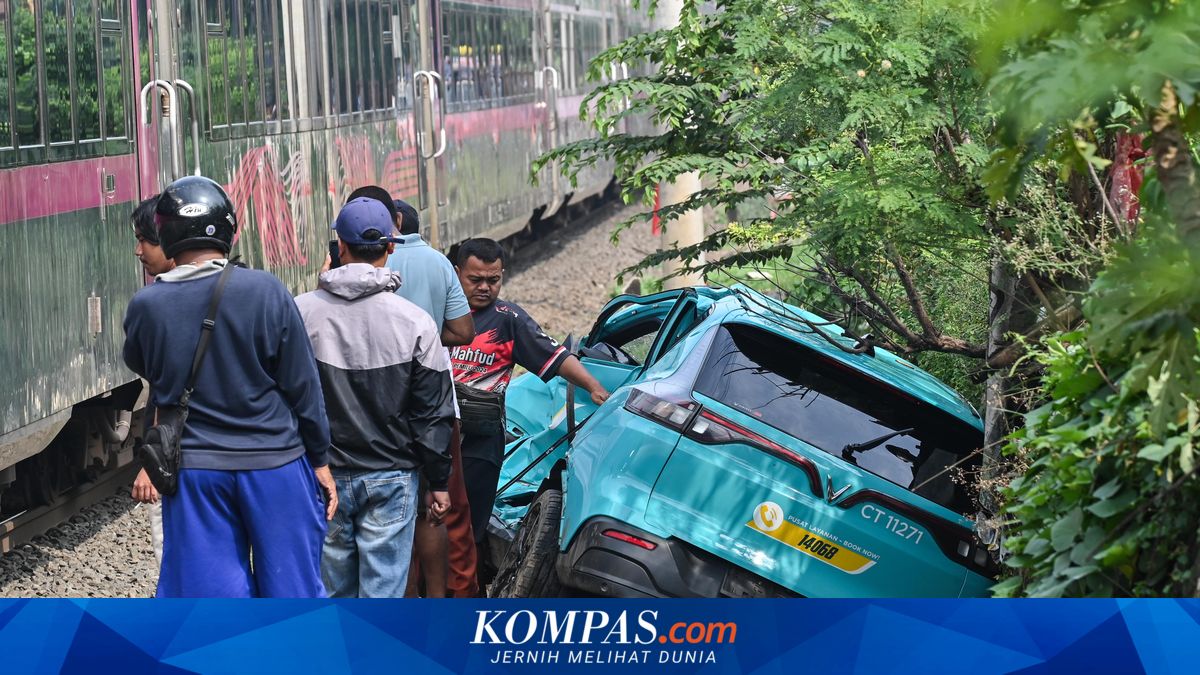
The National Transport Safety Committee (KNKT) has revealed several findings regarding the collision between a commuter train (KRL) and the Argo Bromo Anggrek train in Bekasi Timur on 27 April 2026.
Sixteen people died in the incident, all passengers in the women’s carriage of the KRL or at the very end of the train.
The accident was triggered when a Green SM electric taxi stopped on the tracks, with the signal remaining green, allowing the Argo Bromo Anggrek train to continue moving.
KNKT Chairman Soerjanto Tjahjono stated that the onboard unit data for vehicle B 2864 SBX showed no system errors detected in the hour before the incident.
“The onboard unit data for vehicle B 2864 SBX recorded no system errors in the hour preceding the incident,” Soerjanto said during a joint hearing with the House of Representatives’ Commission V on Thursday, 21 May 2026.
KNKT found that the taxi’s transmission was operated incorrectly just before it halted on the railway crossing.
Soerjanto explained the vehicle was initially moving normally from north to south across the Ampera Road level crossing in drive mode (“D”) at approximately 15 kilometres per hour.
However, the transmission shifted to neutral (“N”) as the vehicle descended a 2.9% slope.
“The vehicle then shifted to neutral and slid at 3 to 7 kilometres per hour. We do not know why it was put into neutral,” he said.
According to KNKT, the driver allowed the vehicle to coast while applying light braking until it entered the railway crossing area.