
KNKT: Argo Bromo Sempat Braked 1.3 km Before Colliding with a KRL in Bekasi
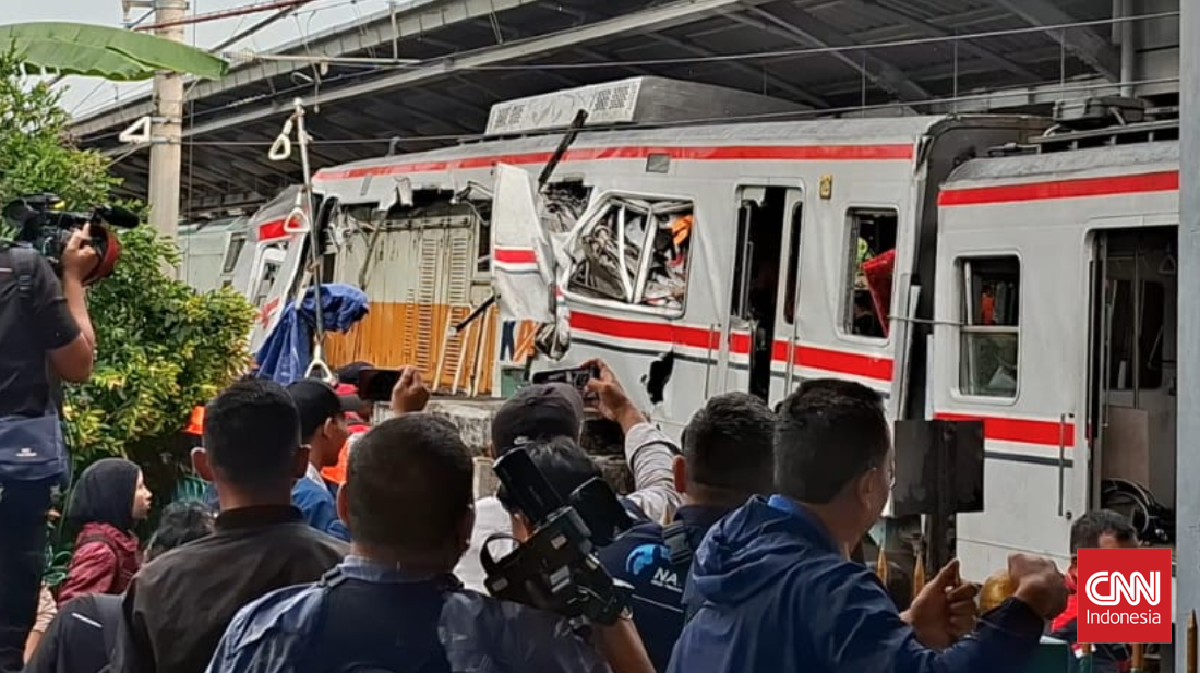
The National Transport Safety Committee (KNKT) revealed that the driver of the Argo Bromo train had begun braking 1.3 kilometres before colliding with a electric multiple unit (KRL) near Bekasi Timur station in April. The KNKT head Soerjanto Tjahjono told a working hearing at the DPR’s Commission V on Thursday (21 May). He said, however, that the distance was not sufficient to stop the collision.
“Actually, the driver… I want to tell you the driver had started braking at 1.3 kilometres before the collision location, Sir,” Soerjanto said during the meeting. The statement drew a response from Commission V chair Lasarus, who presided over the meeting, as he questioned what distance would be enough for a train to brake to a stop.
“This train really needs how many kilometres, Sir, to brake to a safe stop?” Lasarus asked.
“Well, if he brakes to the maximum, it is roughly between 900 and 1,000 metres, Sir,” Soerjanto replied.
However, Soerjanto added, the Argo Bromo driver did not brake to maximum because there was information from the control centre instructing braking in steps.
“So the driver did not apply maximum braking because the information received from PK Timur was to brake little by little and to keep the horn sounding,” Soerjanto said.
The Argo Bromo Anggrek train’s collision with the KRL Commuter Line at Bekasi Timur Station occurred on Monday night (27 April).
The incident was triggered by the Green SM taxi stopping on a level crossing due to a power system fault. The taxi was then struck by an oncoming KRL.
As a consequence of the initial crash, a Cikarang-bound KRL set stopped in emergency at Bekasi Timur Station.
In that stopped position, the KRL set was hit from behind by the Argo Bromo Anggrek, causing the rear carriage reserved for women to be crushed and resulting in multiple fatalities.
Subsequently, police named the Green SM taxi driver, initials RPP, as a suspect in the KRL–taxi collision at the Bekasi Timur level crossing.
“Yes, we have named him a suspect,” Police Metro Bekasi City Traffic Chief Kompol Gefri Agitia told reporters on Thursday (21 May).