
KNKT: Argo Bromo Anggrek train briefly braked 1.3 kilometres before Bekasi Timur incident
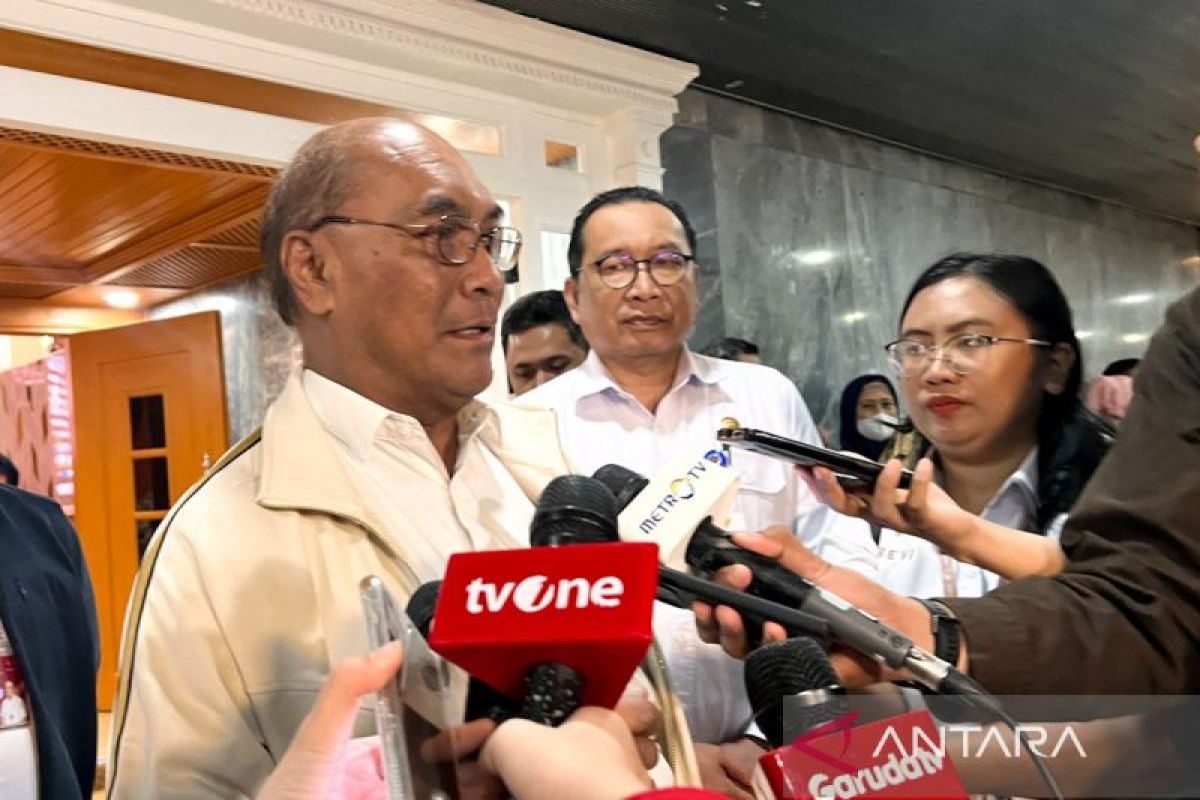
Jakarta (ANTARA) - The National Transport Safety Committee (KNKT) has revealed that the driver of the Argo Bromo Anggrek train applied a gentle braking about 1.3 kilometres before the collision with a KRL commuter train at Bekasi Timur Station, West Java, on 27 April 2026.
Meeting after attending a working session with Commission V of the Indonesian House of Representatives in Jakarta on Thursday, KNKT Chairman Soerjanto Tjahjono said the braking was performed by the long-distance train driver after receiving information about a collision ahead.
“Earlier I said that from a distance of 1,300 metres after receiving news that there was a collision ahead, the driver had already started braking,” Soerjanto said.
According to KNKT, information about a collision on the front line was conveyed to the driver by the operations control centre via voice communication, so the actual conditions on the ground could not be known directly.
Because information was received only via voice communication, the operations controller personnel did not know in detail the situation at the scene and asked the driver to reduce speed as a safety precaution.
“Because the situation at Pusdal is not known in reality since the communication is only via voice,” he said.
“So what the field conditions are like, they don’t know; they only told there was a collision ahead, and to brake lightly. Then there were repeated signals of ‘35’”, he added.
KNKT stated that the driver had responded to the directives from the operations control centre in Manggarai by acting in accordance with the information received before the accident occurred.
“That is all that was conveyed, so the driver had acted, responding to what was conveyed by Pusdal from the Manggarai operations centre,” he said.
Nevertheless, KNKT stressed that it is still too early to determine the primary cause of the crash, as technical and operational aspects are still being investigated.
The investigative team is currently collecting, verifying, and processing a range of supporting data needed to obtain a comprehensive picture of the sequence of events leading up to the crash.
KNKT explained that the findings will be concluded after all data and on-site findings are analysed comprehensively so that the cause of the crash can be established objectively and accurately.
After the entire investigation processes are completed, KNKT hopes to present final conclusions along with safety recommendations to prevent repeated accidents in the future.
“We hope that everything goes smoothly; within two to three months, we hope to draw conclusions about the cause of the accident,” he said.
Similarly, Transport Minister Dudy Purwagandhi said his ministry was still awaiting the KNKT’s investigation results on the cause of the Bekasi Timur train crash on 27 April 2026.
The incident left 124 injured, including 16 dead, five still being treated, and 103 survivors who have returned home.