
KNEKS Proposes Sukuk and Islamic Social Funds to Support Solar Energy Development
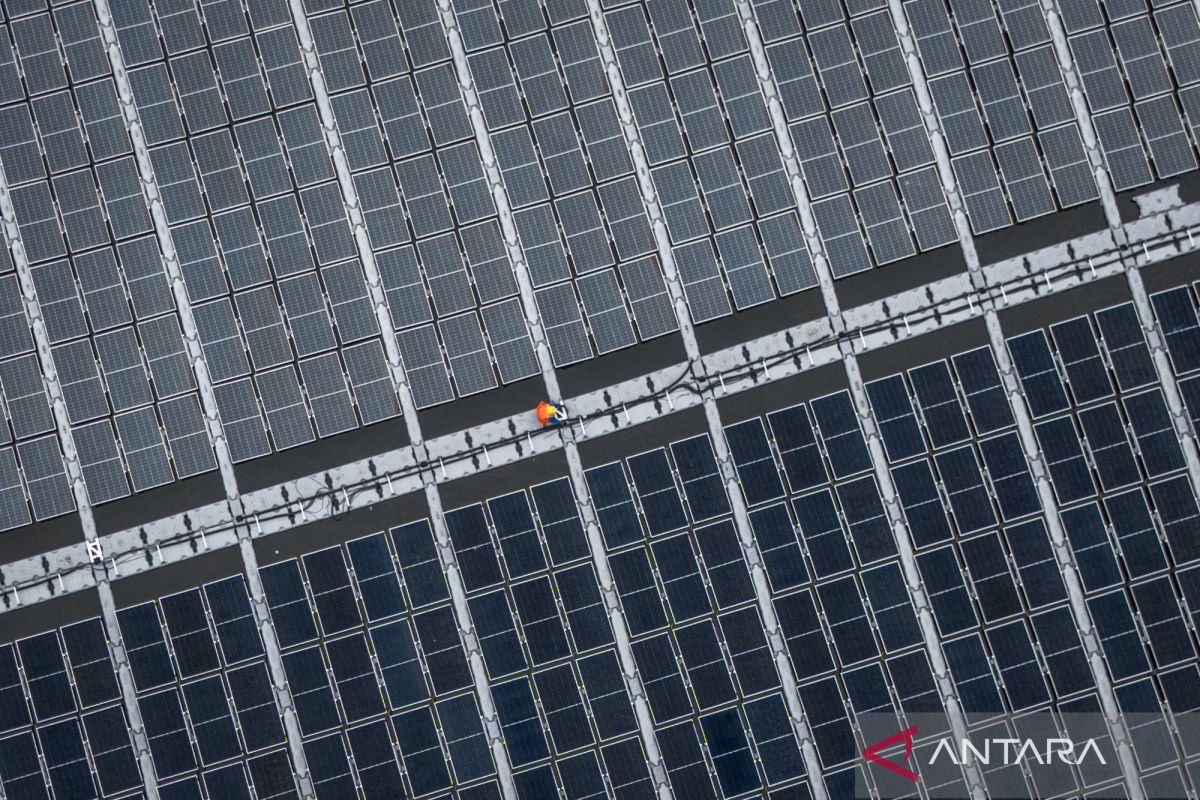
Jakarta – The National Committee for Islamic Economics and Finance (KNEKS) has proposed a blended financing scheme combining Sukuk instruments with Islamic social funds to strengthen financing for solar energy projects in Indonesia.
Dwi Irianti Hadiningdyah, Director of Islamic Social Finance Services at KNEKS, stated that this blended financing scheme, which merges commercial financing instruments with Islamic social instruments, can unlock more innovative financing opportunities for renewable energy development.
“Going forward, we can develop a blended financing scheme between Sukuk and Islamic social finance instruments, enabling renewable energy project financing to be conducted in a more innovative and sustainable manner,” Dwi said in a statement received in Jakarta on Thursday.
In a discussion titled “Green Sukuk for Energy Transition: Innovative Financing Models for the 100 GW Solar Energy Programme”, she noted that besides Green Sukuk, renewable energy financing sources can also come from cash waqf linked sukuk (CWLS), zakat, and other social funds.
She assessed that combining these instruments could serve as an alternative to expand funding sources for renewable energy projects, which have historically relied heavily on conventional financing.
Dwi explained that Indonesia possesses substantial Islamic social finance potential that can be leveraged to support sustainable development. National zakat potential is estimated at approximately Rp327 trillion annually, whilst waqf fund potential is estimated at around Rp180 trillion.
“This potential can be mobilised to support sustainable development, including solar energy expansion,” she said.
Additionally, she highlighted opportunities to utilise waqf assets for renewable energy infrastructure development, including solar panel installations that can provide direct benefits to communities.
In the same forum, Deni Ridwan, Director of Islamic Finance at the Directorate General of Financing and Risk Management of the Ministry of Finance, noted that Islamic financing instruments represent one of the options the government is promoting to drive green economic development. Indonesia is a pioneer in issuing Green Sukuk in the global market.
These instruments, he said, have been utilised to finance various environmentally friendly projects, ranging from renewable energy and low-carbon transportation to waste management and sustainable infrastructure development.
“Projects supported by green sukuk financing have contributed to reducing carbon emissions by more than 10 million tonnes of carbon dioxide,” Deni said.
Beyond supporting green project financing, green sukuk issuance also creates opportunities to expand the investor base among those concerned with environmental, social, and governance (ESG) aspects. Consequently, this instrument can become a strategic financing source in supporting Indonesia’s national energy transition agenda.
Roy Abimanyu, Technical Expert to the Deputy for Cooperative Development at the Ministry of Cooperatives, stated that renewable energy programmes also have the potential to drive economic activities in rural communities. Therefore, adequate energy access becomes a critical factor in enhancing business productivity at the village level, including for the fisheries and small business sectors.
He cited the example of developing microgrid-based solar power plants in several island regions that have historically faced electricity access constraints.
The use of solar energy, he said, can support various production facilities such as refrigerators, ice factories, and fisheries product processing with potential to increase value-added benefits for coastal communities.
Through collaboration between the government, the financial sector, religious institutions, and communities, various green and Islamic financing instruments are expected to serve as a catalyst in accelerating renewable energy investment whilst supporting the achievement of Indonesia’s national net-zero emissions target.