
KLH Allows Reopening of Special Incinerator for Wood Waste in Bali
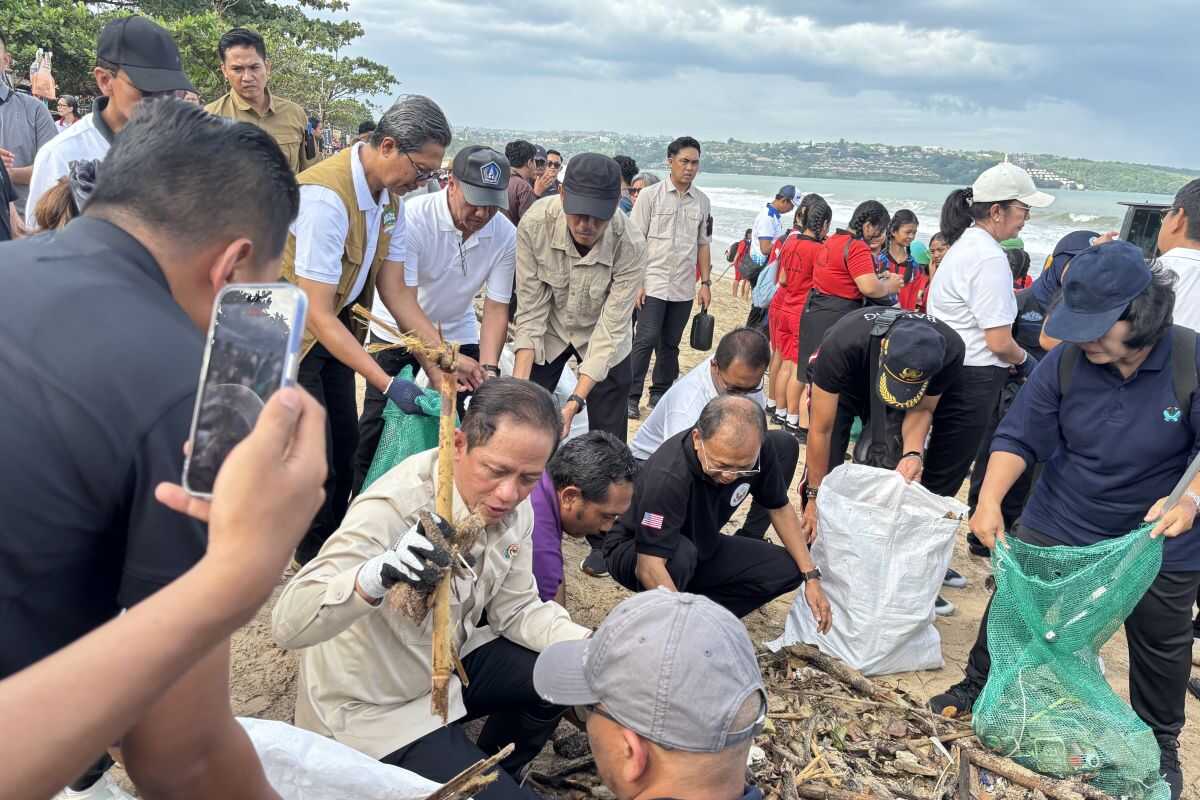
The Ministry of Environment today requested the incinerator to be reopened specifically for handling wood — i.e., wood, bamboo, and other biomass organic material. Badung (ANTARA) - Environment Minister Hanif Faisol Nurofiq officially authorised the resumption of incinerator use to process waste in Bali, which had previously been closed for not meeting environmental standards.
“Today I am asking that the incinerator be reopened specifically for handling wood. So wood, bamboo, and organic biomass,” Minister Hanif said during the Jimbaran Beach Clean-up Korve in Badung, on Thursday.
The Environment Minister explained that incinerator use will be tightly supervised by the Law Enforcement Task Force (Gakkum) of the Ministry of Environment (KLH), with the waste destruction equipment limited to wood-based organic waste that is beach litter and must not be mixed with other waste.
“To ensure this, our officers and the Governor’s staff will be stationed at the site for a defined period to ensure that operations comply with this,” he said.
However, on the condition that incinerator use must not be mixed with other waste, as the modular incinerator machines in Bali have the potential to produce dioxins and furans.
“For example, with plastics, it must be plastics only and must not be mixed with food; plastics require additional cleaning before they can be put into the incinerator, whereas wood can go directly into the incinerator, but must not be mixed with other materials,” Minister Hanif Faisol Nurofiq said.
This separation of waste types also encourages communities and local governments to increasingly practise waste sorting from the source.
If it is not sorted, the Environment Minister has made clear that incinerator usage will not be allowed. Up to now, authorities have sealed incinerators on the grounds that Bali has not yet managed to present sorted waste.
There are currently 12 incinerators in Bali, located in Badung Regency.
Badung Regent I Wayan Adi Arnawa expressed gratitude for KLH’s permission, noting that this is the fastest solution amid the overcrowded Suwung landfill, with plans to use waste-to-energy (PSEL) still in progress.
He confirmed that going forward there would be immediate sorting of waste to be processed by the incinerators, so that waste entering the landfill can be reduced.
“For these 12 incinerators, I want the Head of LHK to sort which ones are for wood and which for plastics, so that processing at the TPST incinerators can be faster,” he said.