
KKP to push for the development of two Merah Putih Fishermen Villages in Kupang to boost coastal economies
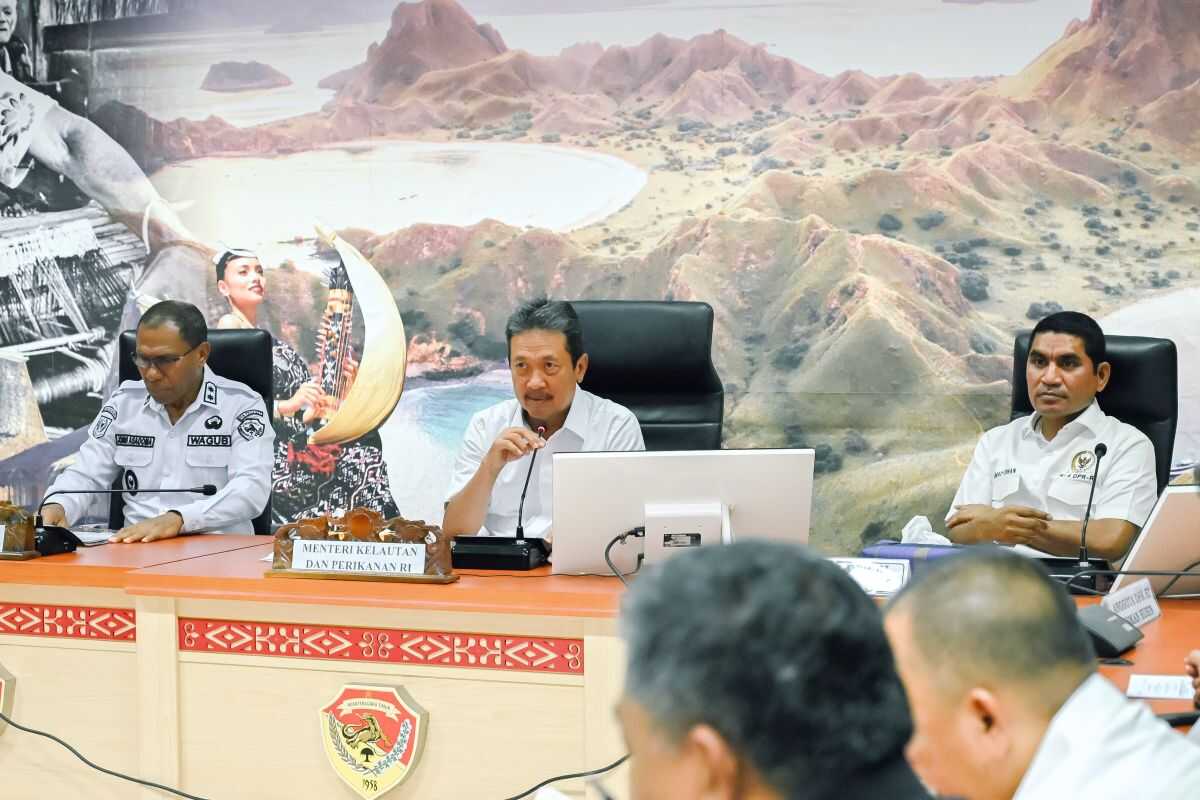
Kupang, NTT (ANTARA) - The Ministry of Marine Affairs and Fisheries (KKP) is pushing for the development of Merah Putih Fishermen Villages (KNMP) in two locations in the Kupang City area, East Nusa Tenggara (NTT), to boost the coastal economy.
Minister of Marine Affairs and Fisheries Sakti Wahyu Trenggono, in a coordination meeting in Kupang on Wednesday, said that accelerating the development of KNMP in NTT is a key priority.
Currently, seven KNMP locations have been established in the NTT region, and further coordination will be carried out in 2026 to expand the program’s reach.
Trenggono emphasised that the development of KNMP is part of a national strategy to strengthen the economies of coastal communities.
According to him, the program is in line with President Prabowo Subianto’s direction to build the economy from the bottom up to make it more productive and competitive.
“The target is not just physical development, but the welfare of the community. Coastal areas must become centres of sustainable fisheries production and industry,” he said.
He asked the Director General of Capture Fisheries and his team to immediately follow up on the proposal for the development of KNMP in Lasiana and Oesapa villages, given that the Kupang City Government has provided the land.
Meanwhile, Mayor of Kupang, Dr. Christian Widodo, said that both locations have been declared “clean and clear,” with complete administration and have been verified by the KKP team.
“We ask that this be a priority. All requirements are ready, just waiting for support to accelerate the process,” he said.
He said that Lasiana Village has 900 fishermen with an area of approximately 9.3 hectares and a potential fish production of 350 tons per year. However, damage to equipment due to previous disasters has made productivity less than optimal.
Christian reaffirmed the full readiness of the Kupang City Government to collaborate, starting with providing land, regulatory support, and assistance to fishermen so that the program runs sustainably.
“We are ready to work together. This is not just about the City of Kupang, but about the future of fishermen and their families,” he said.
In addition to fishermen’s villages, the KKP is also encouraging the development of the salt industry in Rote and other potential areas in NTT.
The government is targeting that Indonesia will no longer import salt by the end of 2027. NTT is expected to be one of the national salt production centres.
The development of modern shrimp and seaweed cultivation is also a focus, in order to encourage increased exports and create a surplus in the regional trade balance.