
KKP supports biofloc fish farming for village empowerment
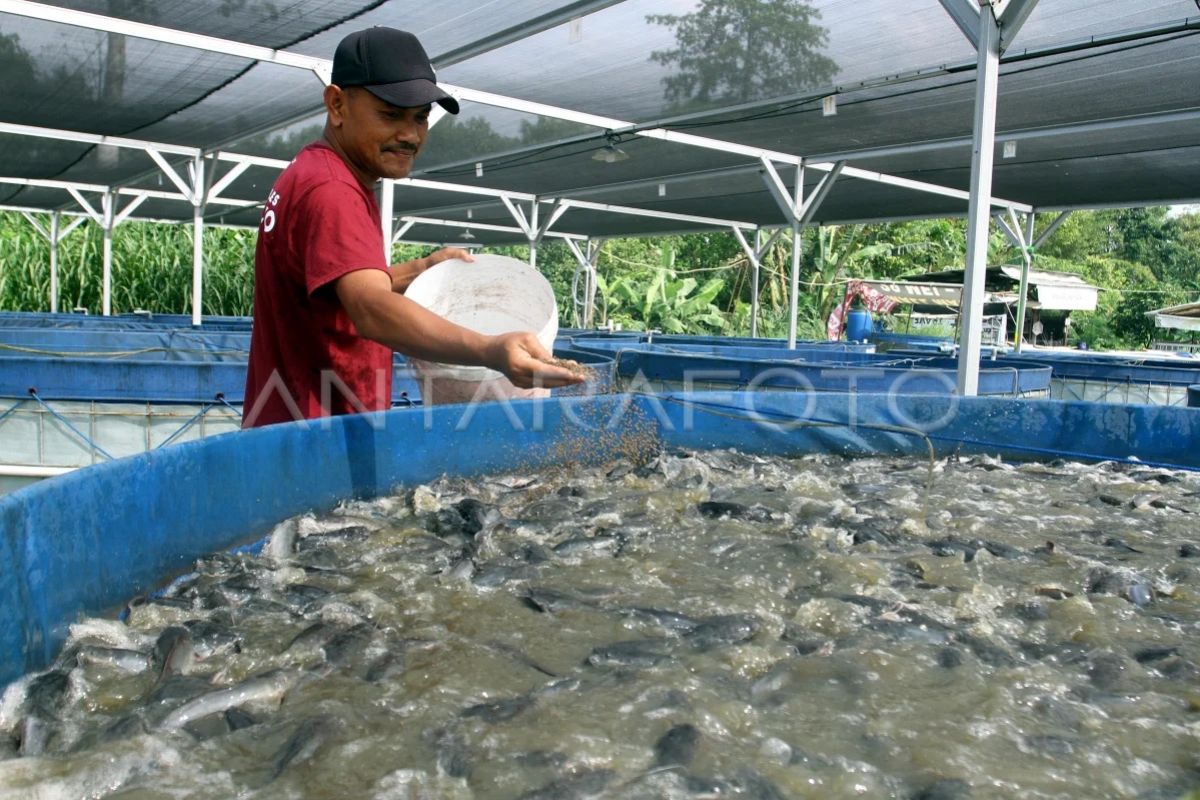
Jakarta (ANTARA) - The Ministry of Marine Affairs and Fisheries (KKP) is encouraging the development of fish farming using the biofloc system as an effort to empower the rural economy through collaboration with the Merah Putih Village Cooperative (KDMP).
Director General of Aquaculture at KKP, Tb Haeru Rahayu, in a press release in Jakarta on Wednesday, stated that the biofloc catfish harvest in Mekarsari Village, Cipongkor Subdistrict, West Bandung Regency, can serve as an example of fisheries-based economic development for the community.
According to Haeru, the biofloc system is not merely an aquaculture technology but also an innovation capable of addressing current challenges in fisheries business efficiency.
The biofloc system is also considered more efficient because it saves on water, feed, and does not require extensive land.
“Water is only added at the beginning until harvest time, with additions made only if truly necessary. In addition to saving feed, this system does not require large land areas and is efficient in water usage,” he said.
Haeru stated that the biofloc farming programme is part of the government’s efforts to support food security while improving the welfare of rural communities.
He added that the implementation of good aquaculture practices (CBIB) is also being continuously promoted so that the resulting fishery products have good quality, are safe for consumption, and are competitive in the market.
“This programme we entrust as initial working capital for the community. It is hoped that it can continue to develop and operate independently to support improvements in the community’s economy and support the free nutritious meal programme,” he said.
KKP has developed the biofloc farming programme at 100 locations spread across West Java, Central Java, the Special Region of Yogyakarta, and East Java.
Meanwhile, the Chair of the Fisheries, Livestock, and Food Unit of the Merah Putih Cooperative in Mekarsari Village, West Bandung Regency, Elpan, said that biofloc farming provides an alternative business for communities around Saguling Reservoir who previously relied on floating net cages (KJA).
“With the arrival of biofloc, this becomes a solution for the community. The risk of fish mortality is lower and management is more controllable,” said Elpan.
He stated plans to develop processed fish products such as shredded fish, fillets, and crackers to expand economic empowerment for the surrounding community.