
KKP Promotes Community-Based Blue Economy
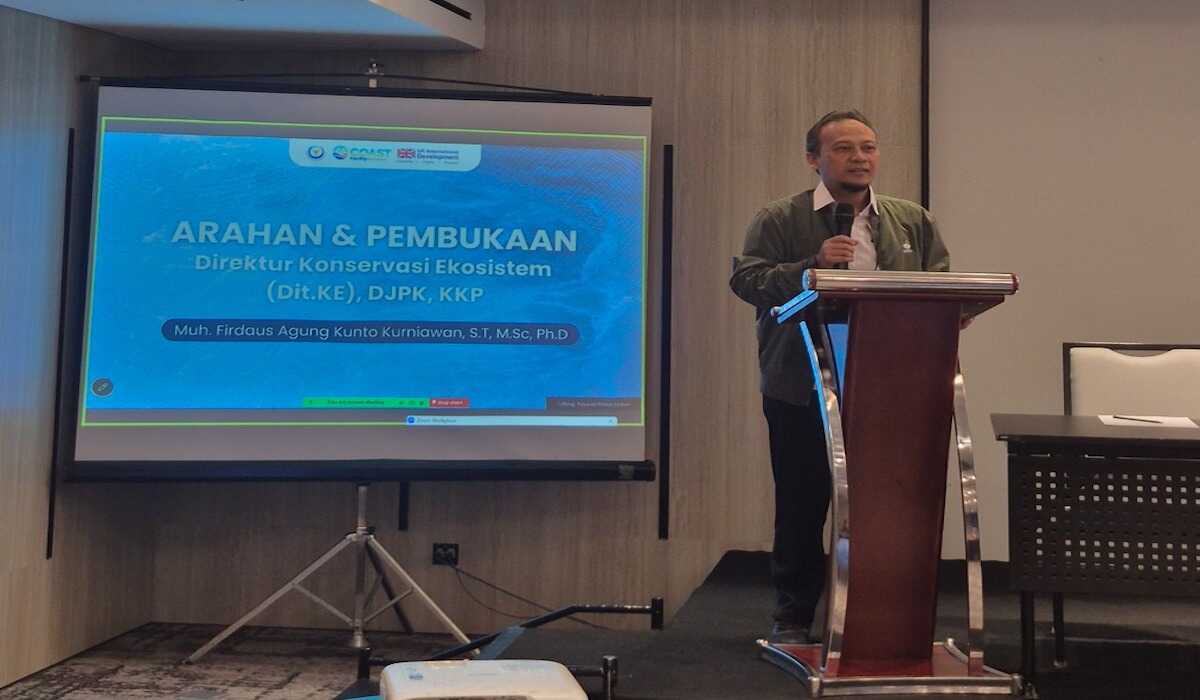
The Ministry of Marine Affairs and Fisheries (KKP) together with the Coastal Conservation Foundation (YPL) affirmed that strengthening Indonesia’s blue economy must go hand in hand with the protection of marine ecosystems. This emphasis emerged during the forum “Synergy of the Blue Economy in Harmony with Ecosystem Protection Through Concrete Actions at the Community Level” in Jakarta, Monday (23/2).
This forum places coastal communities as the main actors in the marine economy, not just recipients of programs. A number of stakeholders were present, ranging from the KKP, Bappenas, the West Nusa Tenggara (NTB) Provincial Government, academics, civil society organizations, to representatives of coastal communities and people with disabilities.
Participants assessed that the main issue of the blue economy today has shifted from policy formulation to the implementation stage. They highlighted the risk of implementation running in a fragmented manner across sectors, so that long-term benefits may not be achieved.
Director of the Coastal Conservation Foundation, Dina Kosasih, mentioned Teluk Jor, NTB, as an example of community-based coastal management practices that are considered capable of maintaining the ecosystem while improving welfare.
She stated that a collaborative pentahelix approach, involving government, community, academics, business, and civil society organizations, can be replicated in other coastal areas.
“Strengthening the role of communities at the local level is the key to ensuring that the blue economy does not just become a policy jargon,” said Dina.
The Director of Ecosystem Conservation at KKP, Firdaus Agung, affirmed that conservation is the foundation of the blue economy and requires shared responsibility from the central government, local governments, and communities. According to him, the community must be the actor as well as the beneficiary of conservation efforts.
“The community is the main actor, not just a party that is involved,” he said.
From the planning side, a representative from Bappenas highlighted the need to integrate the blue economy into local development planning documents so that its impact is more measurable and directly felt by coastal communities.
The forum also emphasized the mainstreaming of GEDSI (Gender, Equity, Disability, and Social Inclusion). The participation of women, people with disabilities, and vulnerable groups is affirmed as part of fair and sustainable coastal management, not just an additional element.
This activity is part of the HATCH project (Harnessing Adaptive Conservation Through Social Enterprises and Learning Hubs) which is supported by the COAST Facility Indonesia and funded by the British Government. The results of the meeting are targeted to be a reference for strengthening policies and practices of the blue economy to be more adaptive, inclusive, and impact-based.
The Chairman of the Teluk Jor Awik-Awik Management Agency (LPATJ), Mustamin, stated that the blue economy will not work if the sea is only seen as a commodity. He emphasized that the sea is a living space that must be managed together, with coastal communities as strategic partners.
A number of recommendations were formulated, including encouraging the harmonization of the blue economy with ecosystem protection, strengthening inclusive and transparent coastal management, increasing community capacity in the development of micro social enterprises, expanding funding schemes that support the empowerment of coastal communities, and forming multi-party partnerships at the local level so that collaboration does not stop at discourse. (Z-10)
The commodity of catfish is now moving up a class, not just for export, but also entering the world’s Hajj and Umrah food supply chain.
KKP ensures the availability of cultivated fish is safe to meet community needs during Ramadan to Eid al-Fitr 1447 Hijri.
The Minister of KKP explained the polemic of the ship budget which was said to have been disbursed by the Minister of Finance. The shipbuilding industry has not received orders because the procurement process is still ongoing.
The Minister of Finance, Purbaya Yudhi Sadewa, revealed that the funds for the purchase of ships at the Ministry of Marine Affairs and Fisheries (KKP) were not actually disbursed.
The Minister of Marine Affairs and Fisheries, Sakti Wahyu Trenggono, responded to the statement by the Minister of Finance, Purbaya Yudhi Sadewa, regarding the ship purchase fund.
Copyright @ 2026 Media Group - mediaindonesia. All Rights Reserved