
Khofifah accelerates vehicle normalisation to realise zero ODOL by 2027
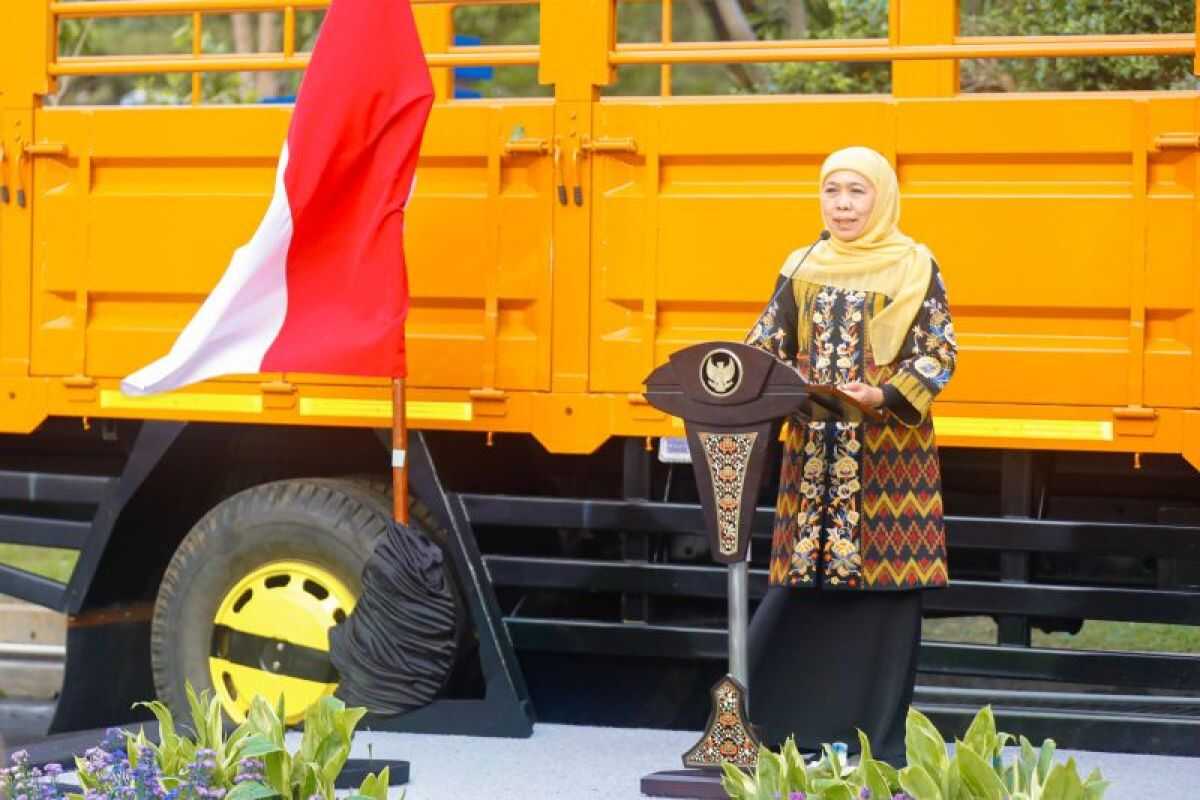
East Java Governor Khofifah Indar Parawansa urged the acceleration of normalisation of over-dimension over-load (ODOL) vehicles to support realising the zero ODOL target by 2027 in East Java through synergy between government, business actors, and the driver community. ‘What we are doing today is part of our joint effort to normalise ODOL vehicles. Insha Allah if we move together East Java will realise Zero ODOL by 2027,’ Khofifah said in Surabaya on Saturday. She explained that speeding up vehicle dimension normalisation is part of the East Java Provincial Government’s support for the central government’s programme to realise zero ODOL by 2027, which is coordinated by the Coordinating Ministry for Infrastructure and Regional Development. According to Khofifah, the step to normalise vehicle dimensions is important to create a road transport system that is more orderly, safe, and sustainable while safeguarding road infrastructure quality. Measurement of vehicles is carried out by the Class II East Java Land Transportation Management Agency (BPTD) on 209 vehicles owned by members of the East Java Drivers’ Movement (GSJT). Of 238 vehicles recorded, 160 units have had their technical dimensional specifications issued and must undergo normalisation. She added that the vehicle normalisation process is facilitated by the East Java Provincial Government gradually, including financing support for dimension reduction for individual vehicle owners who are also drivers. ‘The normalisation process is all facilitated by the East Java Provincial Government through financing support for reducing vehicle dimensions,’ she said. Khofifah stressed that ODOL vehicle control is not only about compliance with regulations, but also concerns the safety of all road users and the sustainability of transport infrastructure. Vehicles with excessive dimensions and loads are seen to increase the risk of traffic accidents and accelerate road damage. The situation also affects the rising budget needs for road repairs and disruptions to logistics distribution. ‘In the midst of strengthening national logistics, ODOL can actually be a bottleneck. Road damage caused by excessive loads will affect distribution effectiveness and safety,’ she said. She added that collaboration between government, transport business actors, the driver community, and various stakeholders is key to realising more orderly, safe, and sustainable road transport governance in East Java. ‘Synergy between government, business actors, driver communities, and various stakeholders is an important asset in realising more orderly, safe, and sustainable road transport,’ she said. Khofifah urged all parties to continue the vehicle normalisation process that still falls within the ODOL category so that the zero ODOL target for East Java can be achieved. ‘Thank you again. Let us continue, vehicles still in the ODOL category, let us normalise them together, with the strength we have. Insha Allah, we can realise zero ODOL by 2027 in East Java,’ she said.