
Kharg Island Becomes Target; World Braces for Oil Crisis
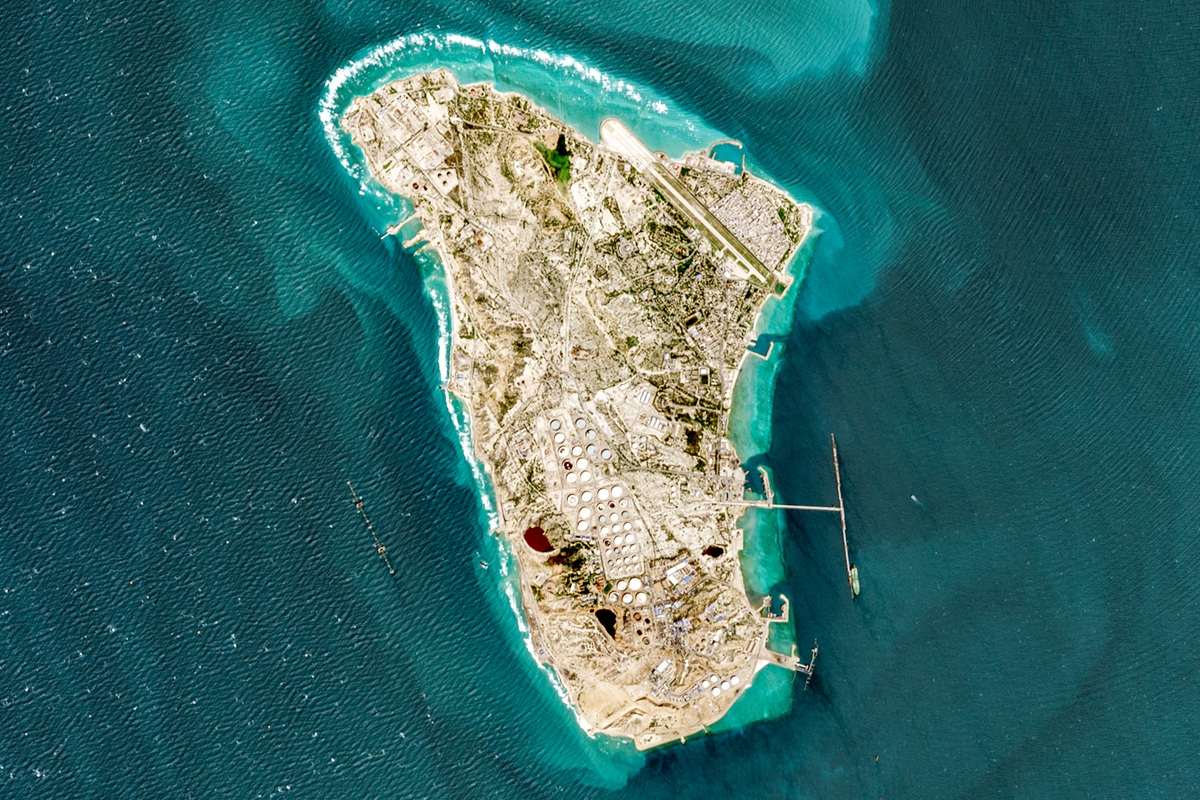
President Donald Trump has threatened to launch additional strikes against Iranian oil facilities on Kharg Island whilst calling for the deployment of international warships in the Strait of Hormuz. Meanwhile, Tehran has vowed to escalate retaliatory attacks amid an intensifying conflict.
Trump claimed that US military operations have completely destroyed much of Kharg Island and warned of the possibility of further strikes. “We might attack it a few more times just for fun,” he told NBC News on Sunday, 15 March.
Despite stating that Tehran appeared ready to negotiate a peace agreement, Trump assessed that the conditions presented were unacceptable. “The terms are not good enough yet,” he said.
The statement reflects an escalation in rhetoric compared to previous statements, when Washington claimed to be targeting only military facilities on the island. Trump’s remarks are also viewed as undermining diplomatic efforts. Three sources familiar with the situation stated that the US administration has rejected initiatives from Middle Eastern allies to begin negotiations to end the conflict.
Iran’s ability to disrupt energy shipments through the Strait of Hormuz represents a major concern for the US and its allies. This strategic passage carries the majority of the world’s oil and gas exports, with any disruption to supplies immediately triggering spikes in global energy prices.
In a social media post, Trump called on countries using the waterway to help protect it. “Countries around the world that receive oil through the Strait of Hormuz should protect the passage, and we will help tremendously!” he wrote. He added that the US would coordinate to ensure security operations proceeded quickly, smoothly, and effectively.
Iran has rejected the possibility of a ceasefire whilst US and Israeli airstrikes continue. Iranian forces have continued mounting retaliatory attacks, including drone strikes that have disrupted energy facilities in the United Arab Emirates and missile attacks against the US embassy in Baghdad, prompting Washington to advise its citizens to leave Iraq.
Disruptions to the oil market are expected to continue. In Fujairah, a global ship fuelling hub, several oil loading operations were suspended following drone attacks. Local authorities reported that one drone was intercepted, but fires from falling debris continued to be extinguished into the evening.
Since airstrikes began on 28 February, the conflict has reportedly claimed more than 2,000 lives, mostly in Iran. At least 15 people died after airstrikes struck a household appliance factory in Isfahan, according to the semi-official Fars news agency, which blamed the attacks on American-Israeli enemies.
Tehran has also urged civilians in the UAE to avoid ports, docks, and American military installations, claiming these facilities were being used to launch attacks against Iran. The Islamic Revolutionary Guards Corps called US-related facilities legitimate targets and urged American companies to leave the region.
The UAE has denied that its territory is being used to attack Iran but has affirmed its right to defend itself against imposed terrorist aggression.
UAE presidential adviser Anwar Gargash stated that his country remained focused on de-escalation. According to him, Abu Dhabi continued to prioritise common sense and logic, exercising restraint and seeking a way forward for Iran and the region, and had attempted to mediate between Washington and Tehran until the moments before war erupted.
Trump spent the weekend at his Mar-a-Lago resort in Florida whilst continuing to call for the formation of an international maritime coalition. He hopes that countries such as China, France, Japan, South Korea, and the United Kingdom will send warships to the Strait of Hormuz, although there is no direct indication from these countries of their willingness to do so.
Democratic Senator Chris Murphy has assessed that President Donald Trump has lost control of the conflict that is now spreading across the Middle East region.