
Khamenei Dead: List of Iranian Officials Killed by US-Israel Operations
Jakarta, CNBC Indonesia - Geopolitical tensions in the Middle East have reached their highest escalation point following a major military operation launched by the United States and Israel against several strategic facilities in Iran on Saturday, 28 February 2026 (local time).
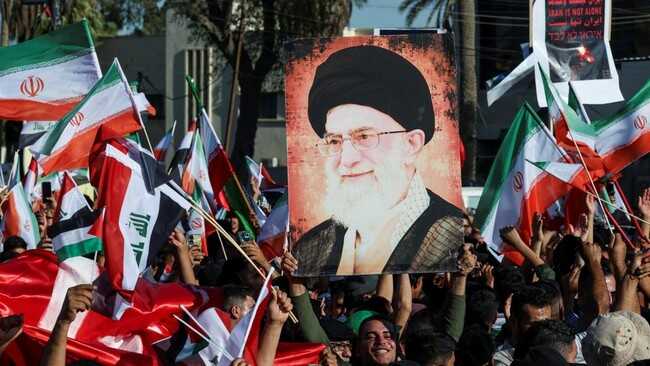
US President Donald Trump officially announced via social media that the strikes resulted in the death of Iran’s Supreme Leader, Ayatollah Ali Khamenei, at his residence complex in Tehran. Israeli Prime Minister Benjamin Netanyahu confirmed that the main complex in Tehran was destroyed through a coordinated surprise attack aimed at disabling domestic defences. Iranian authorities subsequently issued an official confirmation of Khamenei’s death, with government media stating the nation would observe a 40-day mourning period.
Senior Iranian Officials Killed According to Israeli Claims
The joint military operation, classified by the US Department of Defence as “Operation Epic Fury” and by Israel as “Lion’s Roar”, specifically targeted Iran’s crucial military infrastructure. The Israeli Defence Forces reported the deployment of approximately 200 fighter jets that simultaneously dropped hundreds of munitions on around 500 strategic targets.
Primary targets included command and control facilities of the Islamic Revolutionary Guard Corps (IRGC), air defence systems, and ballistic missile and unmanned drone launch sites. Israeli military confirmed the deaths of several senior Iranian defence officials in the operation, including Iran’s Defence Council Secretary Ali Shamkhani, IRGC Commander Major General Mohammad Pakpour, and Defence Minister Brigadier General Aziz Nasirzadeh.
President Trump stated that the military campaign aimed to disable Iran’s missile production capacity, destroy its naval fleet, and ensure Iran cannot access nuclear weapons. He issued an ultimatum to Iranian military forces to lay down arms in exchange for amnesty, or face consequences from further lethal operations.
Domestic Impact and Calls for Regime Change
The escalation occurred amid a stalemate in nuclear negotiations mediated by Oman. Washington and Tel Aviv openly used this momentum to push for regime change, with direct appeals to Iranian civilians to take over the government.
The impact of strikes within Iran has been massive and widespread. The Iranian Red Crescent reported on Saturday evening at least 201 deaths and 747 injured across 24 of Iran’s 31 provinces, including Tehran, Isfahan, Qom, and Kermanshah. Government media also reported at least 85 deaths from strikes on an elementary school in Minab, Hormozgan Province. The strikes also targeted areas near the office of President Masoud Pezeshkian, though he was reported to be safe. In response to the situation, Iranian civil aviation authorities immediately closed all airspace, accompanied by large-scale internet network outages.
Retaliatory Strikes Against US and Israeli Positions
Iranian Foreign Minister Abbas Araghchi condemned the strikes as illegal. In response, Iran’s military through the IRGC launched extensive retaliatory attacks. Intelligence reports indicated the launch of approximately 150 ballistic missiles and dozens of attack drones targeting Israeli territory and US military bases in the Gulf region.
In Israel, the Magen David Adom ambulance service reported casualties from shrapnel and blast waves in central and northern areas, with local media reporting one death in Tel Aviv after a missile struck a building.
US military bases targeted for precision strikes included Al Udeid Air Base in Qatar, Al Dhafra in the United Arab Emirates (UAE), the Fifth Fleet headquarters in Bahrain, and Ali Al Salem Air Base in Kuwait. The IRGC claimed to have struck US combat support ships and destroyed US FP-132 radar systems in Qatar.
Collateral damage extended to civilian infrastructure. In the UAE, civilian casualties were reported from falling debris in Abu Dhabi, with incidents injuring staff at Dubai International Airport. In Bahrain, a drone reportedly struck a high-rise building and triggered a major fire.
Energy Supply Chain Threats and Global Response
From a macroeconomic perspective, warnings issued by the European Union Naval Mission (EUNAVFOR ASPIDES) signalled high alert status. The IRGC reportedly issued instructions prohibiting commercial vessels from transiting the Strait of Hormuz.
This maritime route is a critical artery for global energy supplies, facilitating distribution of approximately 20 per cent of total global crude oil and natural gas. A potential blockade at this chokepoint risks triggering serious supply chain disruption that could trigger surging energy commodity prices.
The crisis has also paralysed the regional aviation sector. International airlines including Emirates, British Airways, Wizz Air, and Lufthansa suspended commercial operations to conflict areas to mitigate passenger safety and fleet risks.
The international community responded to the crisis with emergency action. The United Nations Security Council immediately convened a meeting at the request of France, China, and Russia. UN Secretary-General António Guterres lamented the loss of diplomatic opportunity, whilst leaders of European nations issued a joint statement urging immediate de-escalation to prevent a regional war that could shake global macroeconomic stability.