
Khalid bin Walid: How Did This Islamic Commander Read the Battlefield?
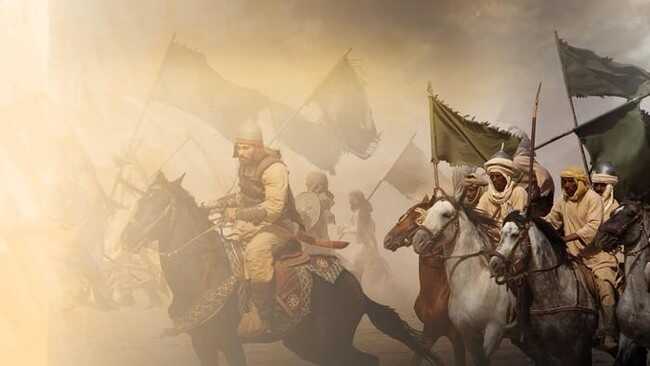
Khalid bin Walid: How Did This Islamic Commander Read the Battlefield?
Jakarta, CNBC Indonesia - The name Khalid bin Walid always appears in Islamic military history as a brilliant general. Nicknamed Saifullah al-Maslul or the “Sword of God”, he was known for his intelligence in reading war situations.
From Arabia to Syria, his actions helped pave the way for the Islamic expansion in the 7th century.
Born with a Silver Spoon
Khalid bin Walid was born around 592 AD from the respected Bani Makhzum family in Mecca. His father, Walid bin Mughirah, was known to be wealthy and influential, while his mother, Lubaba, came from a noble family.
From a young age, Khalid received complete facilities to hone his skills in horsemanship, using weapons, and military tactics. He was once an enemy of Islam and led the Quraysh forces in the Battle of Uhud (625 AD).
However, around 627-629 AD, Khalid received guidance and converted to Islam. He participated in various military missions in the Arabian Peninsula. After the death of the Prophet, Khalid became one of the main generals in the Islamic expansion during the eras of Abu Bakr and Umar bin Khattab.
Important Role in Islamic Expansion
Khalid bin Walid played a crucial role in maintaining the stability of Muslim territories after the death of the Prophet. He managed to recapture several areas that had rebelled, and was then sent by Caliph Abu Bakr to conquer Iraq. There, he successfully captured Al-Hirah before moving to Syria.
One of the most monumental moments was the Battle of Yarmuk (636 AD) against the Byzantines. Even though the number of Muslim troops was smaller, Khalid was able to repel the enemy and pave the way for the conquest of Damascus and other regions of Syria.
Interestingly, even though he was temporarily removed from his position as commander by Caliph Umar, Khalid remained loyal in fighting as a field commander. This humble attitude further strengthened his reputation as a military leader who was not power-hungry.
War Tactics: Intelligent, Adaptive, and Psychological
In addition to being brave, Khalid also possessed intelligence in war strategy. He was known for being flexible in reading battlefield conditions.
For example, in several battles, he divided his troops into dozens of contingents, rotating the positions of the right and left wings to deceive the enemy, and prepared reserve troops that arrived later as if they were new reinforcements. This strategy shook the morale of the enemy who felt outnumbered.
In the Battle of Mu’tah (his first battle after converting to Islam), Khalid managed to save the Muslim troops who were initially in chaos after the leaders fell. He reorganized the formation, carried out tactical maneuvers, and used camouflage to make the enemy hesitate to attack.
Another well-known strategy was to take advantage of the enemy’s negligence, as he had done during the Battle of Uhud before converting to Islam. It was this ability to read the enemy’s weaknesses that made him almost always superior on the battlefield.