
KH Zainur Arifin: From Commander of the Santri to National Hero
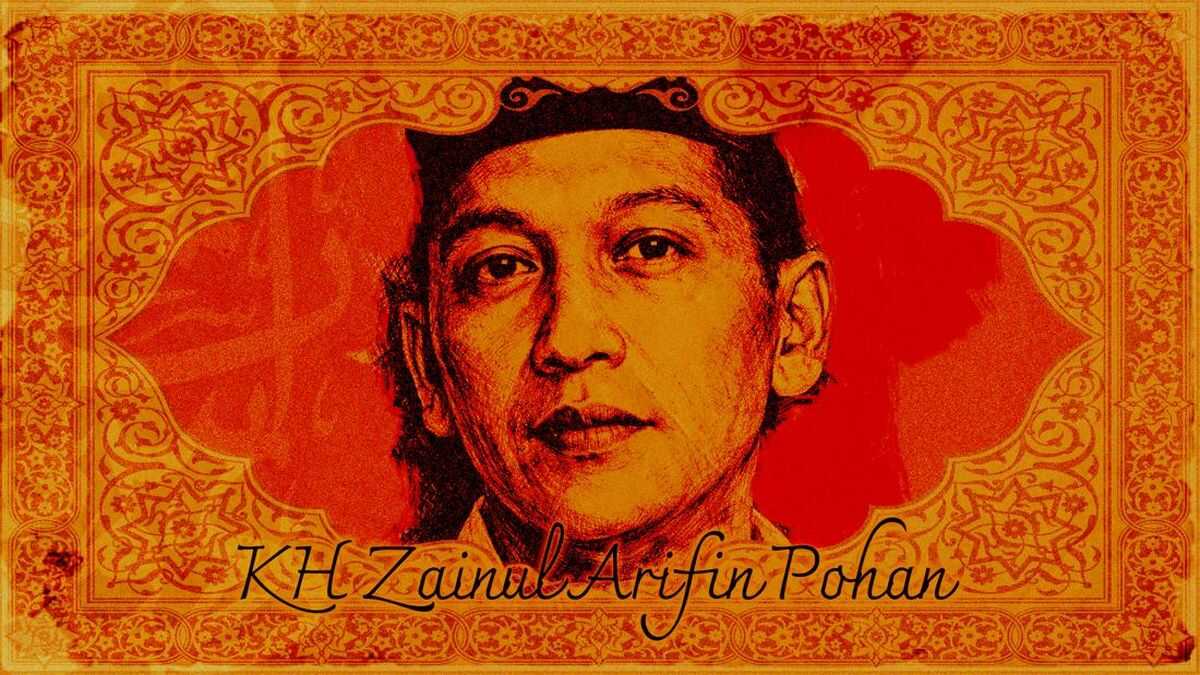
The crack of a gunshot during Eid al-Adha prayers on 14 May 1962 marked the beginning of the final days of KH Zainul Arifin Pohan — Commander of the Hizbullah militia during the Physical Revolution for Indonesian Independence.
The incident that wounded the Commander of the Santri occurred during the second rakaat of the Eid al-Adha prayers. The perpetrator was affiliated with the DI/TII movement and had targeted President Sukarno for assassination. Sukarno and Zainul, who at the time served as Chairman of the Gotong Royong People’s Representative Council (DPR-GR), were standing in the front row.
Following his death, the descendant of the Raja of Barus in Tapanuli was bestowed the title of National Hero through Presidential Decree No. 35 of 1963, issued on 4 March 1963.
KH Zainul Arifin was a prominent politician and senior cleric of Nahdlatul Ulama (NU). Before becoming Chairman of the DPR-GR from 1960 to 1963, he had served as Deputy Prime Minister from 1953 to 1955.
As an independence fighter, he led the Hizbullah militia, whose troops were drawn from pesantren students. He was also known for establishing the tonarigumi network, which later became the foundation of the neighbourhood association (RT) system that persists across villages in Java to this day.
At the time, the tonarigumi served as one of the instruments supporting the struggle against the Dutch during Military Aggressions I and II.
Career in NU and the Independence Struggle
His involvement with NU began as a cadre of the Anshor Youth Movement. Together with Djamaluddin Malik, a prominent figure in the national film industry, Zainul joined the ranks of NU’s youth wing.
Through Anshor, owing to his skills in diplomacy, communication and religious outreach, he became close to Kiai Wahid Hasyim, Kiai Mahfud Shiddiq, Muhammad Ilyas and Abdullah Ubaid.
Zainul Arifin subsequently became Chairman of the NU Consul for Jatinegara — then still known as Meester Cornelis — and later Chairman of the NU Consul Council for Batavia (present-day Jakarta), until the Japanese occupation of Indonesia in 1942.
Following the proclamation of independence, KH Zainul Arifin immediately took a seat on the Working Body of the Central Indonesian National Committee (BP-KNIP), the precursor to the legislative institutions of the DPR/MPR.
He then served as Deputy Prime Minister in the first Ali Sastroamijoyo Cabinet (1953–1955).
After the 1955 general elections, Zainul Arifin represented NU in the Constituent Assembly, until the body was dissolved by Indonesia’s first president, Sukarno, through the Presidential Decree of 5 July 1959, on the grounds that it had failed to formulate a new constitution.
Entering the era of Guided Democracy, Zainul Arifin served as Chairman of the Gotong Royong People’s Representative Council (DPR-GR), as part of NU’s efforts to counter the influence of the Indonesian Communist Party (PKI) in parliament.
KH Zainul Arifin Pohan was the only child of Sultan Ramali bin Tuangku Raja Barus Sultan Sahi Alam Pohan, a descendant of the Raja of Barus, and Siti Baiyah br. Nasution, a noblewoman from Kotanopan, Mandailing Natal.
When Zainul was young, his parents divorced. His mother took him to Kotanopan and later to Kerinci, Jambi. In Kerinci, Zainul completed his education at the Hollands Indische School (HIS) and the Normal School, a secondary teacher training institution.
Zainul then migrated to Batavia, where his HIS diploma enabled him to work for the colonial municipal government (Gemeente) at the Pejompongan water company.
He later left the Gemeente and worked as a primary school teacher. He also established an adult education centre called Perguruan Rakyat, located in the Meester Cornelis area (present-day Jatinegara, East Jakarta).
Drawing on his negotiation skills and command of Dutch, Zainul became involved in advocacy for Betawi residents through the Pokrol Bambu legal aid network.
Final Days
On that Wednesday morning of 14 May 1962, KH Zainul went to the Baiturrahim Mosque at the State Palace in Jakarta to attend Eid al-Adha prayers.
The prayers proceeded peacefully until the second rakaat, when a worshipper in the third row on the left side was heard shouting while drawing a pistol from his right calf.
His attempt to shoot Sukarno was deflected by the presidential guard, causing the bullet to miss its target. In the front row, KH Zainul Arifin collapsed, blood seeping from his left shoulder through his white shirt and outer jacket.
“I’ve been hit…” he murmured in resignation, before reciting: “La haula wa la quwwata illa billahil aliyyil adzim.”
From the moment he was shot, KH Zainul was in and out of hospital repeatedly. Ten months later, on 2 March 1963, he passed away after slipping into a coma several days earlier due to complications. He was laid to rest at the Kalibata Heroes’ Cemetery in South Jakarta.