
KH Hasyim Asy'ari: Hadratussyaikh and the 1945 Jihad Resolution
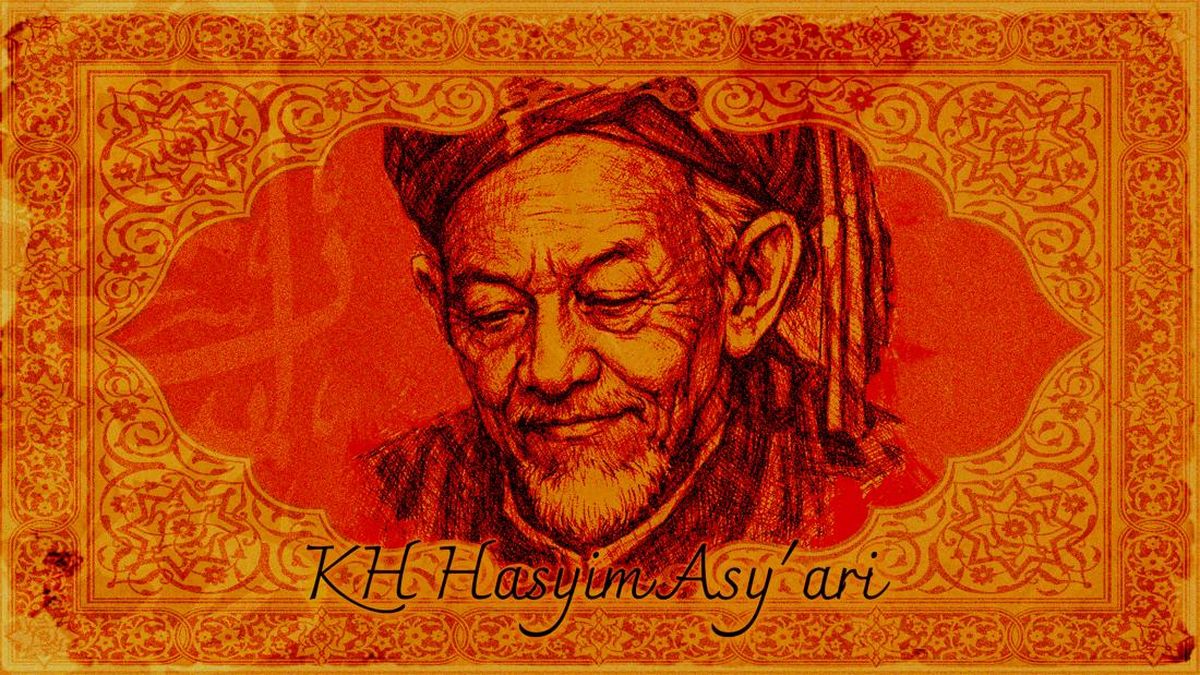
Nowadays, the bestowal of academic titles is criticised as increasingly devalued or falsely claimed despite lacking proper qualifications. In the past, however, a scholar or religious leader receiving a title of learning bestowed by others represented genuine recognition. The scholars themselves often displayed such humility that they were reluctant to be called by such titles, as they believed it might diminish sincerity in seeking and practising Islamic knowledge.
One such figure was KH Hasyim Asy’ari (1871-1947), founder of Nahdlatul Ulama (NU), who received the title Hadratussyaikh—meaning “Great Master” or “Grand Master.” Abror Rosyidin, a researcher at the Centre for the Study of KH Hasyim Asy’ari’s Thought, regards Hadratussyaikh as no ordinary title. Those with qualifications below Hasyim’s standard should refrain from using it.
“There is no need to strive artificially for the title Hadratussyaikh. He himself never aspired to it; it was others who bestowed it upon him. Therefore, let us instead emulate his character and teachings, especially as true Nahdliyyin who do not crave honour but rather conduct themselves with humility, modesty, and a sense of lowliness,” wrote Rosyidin, cited from the website of Tebuireng Pesantren—the Islamic boarding school founded by Hasyim in 1317 Hijri (1899 CE).
Beyond being a religious leader who established Islamic organisations during the colonial era, Hasyim played a central role in Indonesia’s struggle for independence through the 1945 Jihad Resolution. In recognition of his contributions, the state designated him as a National Hero in 1964.
Early Life and Education
Hasyim was born into a kiai family in Jombang in 1871. According to the Biographical Summary of Hadratussyaikh KH M Hasyim Asy’ari (1871-1947) published by LTN NU, Hasyim demonstrated aptitude for Islamic learning from childhood. Beyond studying under his parents, he attended many pesantren throughout Java and travelled to the Holy Land of Mecca to perform the Hajj pilgrimage, where he studied under renowned scholars including Syaikh Ahmad Khatib al-Minangkabawi, Syaikh Muhammad Salih al-Samarqandi, Syaikh Ahmad Zaini Dahlan, Syaikh Tahir al-Ja’fari, and Syaikh Muhammad Mahfuzh al-Tarmasi.
He also served as a teacher at the Masjidil Haram and held the title Syaikhul Haram. Upon returning to the archipelago, Hasyim established Tebuireng Pesantren in his hometown. Over time, most pesantren in Java and Sumatra came under the influence of Tebuireng, with many kiai studying there in their youth.
Hasyim’s influence produced influential scholars and national leaders, including his student KH Wahab Hasbullah, who co-founded NU; his son KH Wahid Hasyim; and his grandson Abdurrahman Wahid, who became Indonesia’s fourth President. After receiving blessing from his teacher Syaikhona Kholil Bangkalan, Hasyim and his colleagues firmly established NU in 1926.
Struggle for National Independence
During Dutch colonial rule, Hasyim led a federation of Islamic organisations, the Majelis Islam A’la Indonesia (MIAI). He later played a key role in merging MIAI with other nationalist movements, resulting in the political federation GAPI (Gabungan Politik Indonesia).
MIAI—similar to the current Majelis Ulama Indonesia—was established in 1937 following Hasyim’s speeches at the NU Congresses of 1930 and 1936, which emphasised Islamic unity (ittihad), mutual acquaintance (ta’aruf), forbearance (ta’aluf), and the setting aside of differences whilst eliminating sectarian fanaticism (ta’assub).
After the Netherlands fell to Germany, Hasyim and GAPI urged the colonial authorities to permit the formation of indigenous representation or parliament. Additionally, when Japanese invasion threatened, Hasyim and NU issued a fatwa in the 1940s calling on Muslims to refuse Dutch military conscription against Japan.
KH Hasyim also rejected a medal of honour that the Dutch Governor-General Van Der Plas offered to present in 1937. At that time, Van Der Plas was visiting pesantren to win the sympathy of kiai. The rejection was based on the example of Prophet Muhammad, who refused rewards from Meccan non-believers when asked to abandon his Islamic preaching.
When Japan occupied Indonesia, Hasyim became one of the Indonesian ulama who rejected the imposition of Japanese culture on the native population, particularly the mandatory bowing each morning towards the Japanese emperor (Saikeirei). Due to his refusal and stern fatwa, the Japanese secret police (Kempetai) arrested and imprisoned him, subjecting him to torture.
Japan later released him after shifting their policy to court Muslim groups and Indonesian nationalist leaders. Hasyim, along with 32 other ulama including his son, was invited to Jakarta, where the Japanese military head of government (Gunseikan) apologised and abolished the Saikeirei requirement.
The Japanese military government appointed Hasyim as Head of the Religious Affairs Office, effectively Minister of Religion. He accepted this position reluctantly, with the purpose of protecting the Muslim community. In his heart, he rejected the appointment, much as he had previously refused positions offered by the Dutch East Indies government. According to LTN NU publications, Hasyim held this position officially but his son Wahid Hasyim actually administered its affairs, while Hasyim returned to Jombang to manage his pesantren.
When Japan permitted preparatory bodies for Indonesian independence, including BPUPKI, Hasyim’s son Wahid Hasyim represented him there. Wahid was instrumental in drafting the Jakarta Charter and served as a bridge between Islamic and nationalist factions.