
Key Rights for Domestic Workers to be Regulated in Domestic Worker Protection Bill
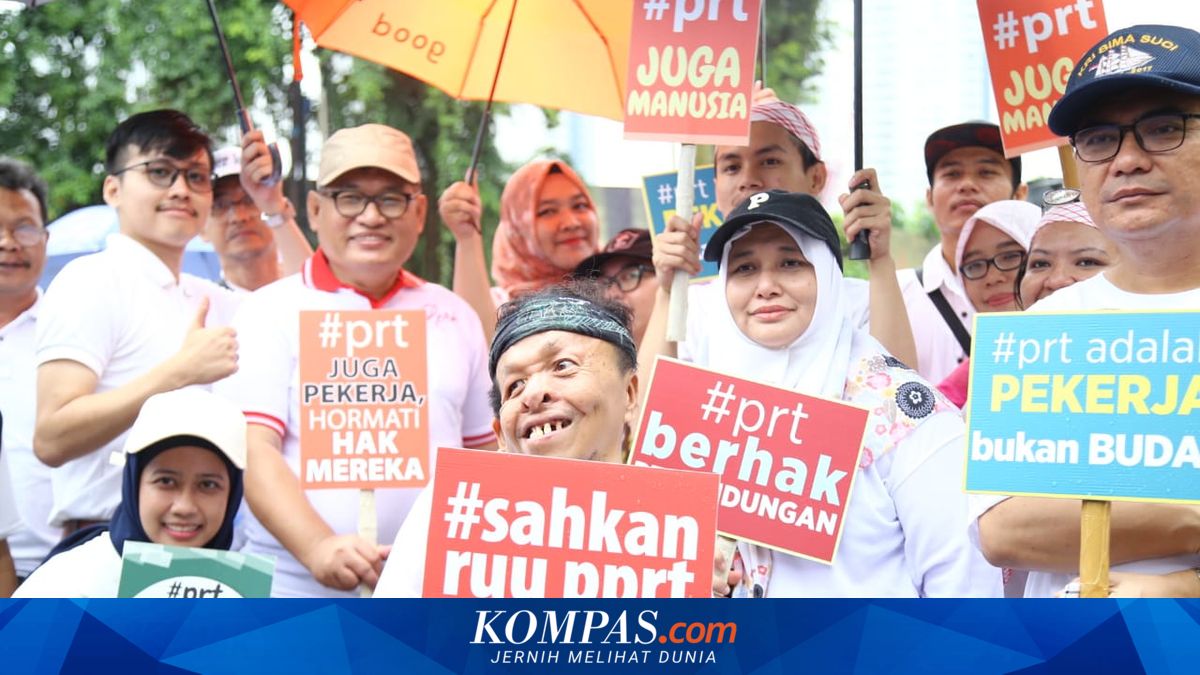
JAKARTA — The House of Representatives’ Legislative Body (Baleg DPR) is giving special attention to the discussion of the Domestic Worker Protection Bill (RUU PPRT), which will regulate 11 important points.
Deputy Chair of the Legislative Body Martin Manurung stated that the RUU PPRT has been included in the National Legislative Programme (Prolegnas) for 22 years.
“I believe both the House of Representatives and the government must give attention and commitment so that we can complete the RUU PPRT promptly,” said Martin, opening a parliamentary hearing (RDP) on the RUU PPRT on Wednesday (11 March 2026).
Currently, regulations concerning domestic workers are limited to the Ministry of Labour Regulation No. 2 of 2015 on Domestic Worker Protection.
“This means the regulatory level is still only at ministerial regulation. Therefore, we need to gather input before the working committee discusses and drafts the RUU PPRT, particularly regarding the pattern of conflict or labour dispute resolution in the domestic worker sector,” said Martin.
The 11 key points include:
Domestic worker protection shall be based on principles of family relations, protection, respect for human rights, justice, welfare and legal certainty.
Recruitment of domestic workers can be conducted directly or indirectly. Written employment contracts shall only apply to domestic workers recruited indirectly through Domestic Worker Placement Companies (P3RT).
Any person assisting with household work based on custom, kinship, family relations, education or religious grounds shall not be classified as a domestic worker under this law.
Indirect recruitment of domestic workers by P3RT can be conducted both offline and online, adapting to technological developments.
Prospective domestic workers shall receive vocational education and training from both central and local government as well as from domestic worker placement companies.
Vocational education and training for prospective domestic workers shall include education on social and cultural norms prevailing in society according to the context of the workplace, so that domestic worker placement can maintain sociocultural relations between employers and P3RT.
P3RT shall be a legal entity and must obtain business licensing from the central government in accordance with applicable laws and regulations.