
Kewek Bridge Revitalisation: Pavements to be Widened by 2 Metres
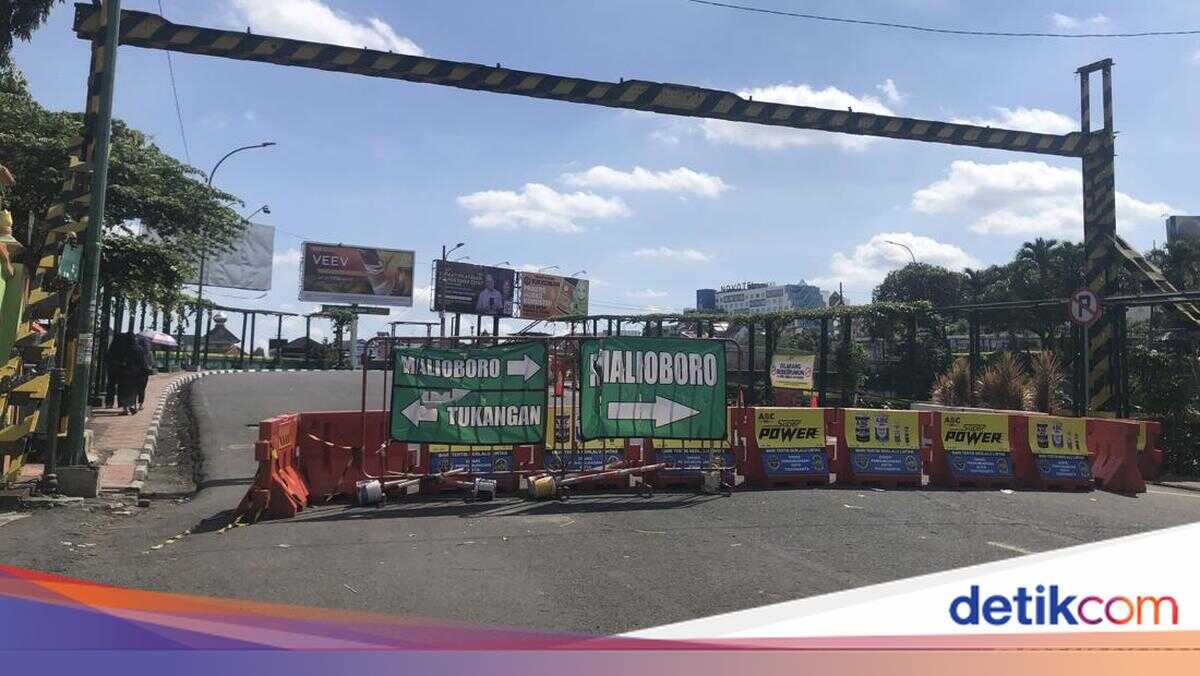
The Yogyakarta City Government is continuing its work on the Kewek Bridge revitalisation project in Danurejan, Yogyakarta City. Not only will a new bridge be built, but the city government also plans to widen the pavements around the bridge to integrate it with Malioboro.
The latest progress is that the Public Works, Housing and Settlement Areas Office (PUPKP) is working to meet the readiness criteria (RC) so that construction can begin in April as scheduled.
“The traffic impact assessment has been completed, and the Detailed Engineering Design (DED) is awaiting finalisation of the environmental documents and recommendations for the use of water resources from the BBWS,” said the Head of the Road and Bridge Division of the Yogyakarta City PUPKP, Hasri Nilam Baswari, when met at the Yogyakarta City Hall on Tuesday (24/2/2026).
Nilam explained that there have been adjustments to the project based on the dynamics in the field. One of these is the inclusion of the revitalisation of the pavements as part of the project.
Since access to the bridge was closed on 10 December 2025, many tourists have parked their vehicles in the Malioboro parking area, which is occupied by residents of the former Abu Bakar Ali temporary housing complex. From the parking area, which occupies the former Menara Kopi site, tourists can walk to Malioboro.
“When the Kewek Bridge was closed, many buses parked at the former Menara Kopi, and many visitors walked to Malioboro,” Nilam explained.
For this reason, the improvement of the pavements has been included in the project. Nilam also confirmed that this plan has received approval from the Yogyakarta City Transportation Department (Dishub).
“The hope is that the pavements can be widened so that pedestrians are more comfortable and safe. We plan to widen the pavements to 2 metres; currently, they are about 1.3 metres wide. Because it is a one-way street, the Dishub has said that reducing the width of the road is not a problem,” she explained.
The construction of the main structure of the Kewek Bridge will be fully funded by the state budget (APBN). However, Nilam said that some parts of the project will use a cost-sharing scheme with the Yogyakarta City budget (APBD).
“So, the park next to the Kewek Bridge is also part of what will be renovated during the construction, but this will be cost-shared from the APBD, so the park and the bridge will be built with the APBN, and the outer pavements will be built with the APBD,” she said.
Previously, it was reported that the Kewek Bridge revitalisation project was scheduled to begin in April 2026. The current Kewek Bridge will be demolished, and a new bridge will be built.
The Head of the Yogyakarta City PUPKP, Umi Akhsanti, explained that all project work will be carried out by the Ministry of Public Works because the funding will be fully from the APBN.
“The Kewek Bridge will be built in 2026; the current bridge will be demolished and a new one built. The construction will be carried out by the Ministry of Public Works, not by us, so it will be built using the APBN,” Umi said when met in the Kleringan area on Wednesday (10/12/2025).
“In terms of timeline, the construction will take approximately 9 months. It will probably start around April; in January, there will still be a review of the DED and the tender process, and the construction will start around April,” she added.
The project is estimated to cost up to IDR 19 billion because it includes the complete construction. Although the construction will be carried out by the Ministry, Umi said that the Yogyakarta City Government will prepare the DED.
Currently, the process being carried out is to discuss the design of the facade with the Department of Culture. Although it is not a cultural heritage site, Umi said that the Kewek Bridge is located in a cultural heritage area, so it is necessary to involve the Department of Culture for the design of the facade.
“So, all designs must follow the directions of the Department of Culture. This is currently in progress at the Department of Culture. Technically, the model will be the same as the current concrete bridge,” Umi explained.
“However, we are still discussing the facade because in the philosophical axis area, the facade must be in accordance with the directions of the Department of Culture,” she concluded.