
Ketupat Lebaran: The Deep Philosophical Meaning Behind Indonesia's Most Iconic Eid Tradition
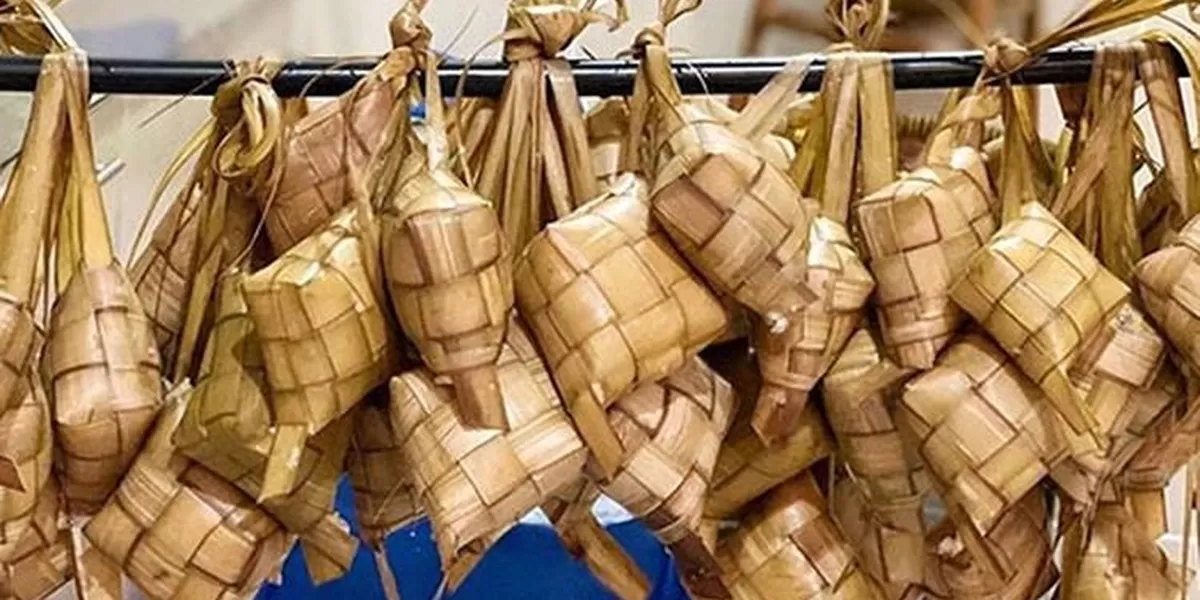
How Ketupat Lebaran Woven From Palm Leaves Carries Centuries Of Islamic And Javanese Wisdom
Every year, as the final prayers of Ramadan fade and the sounds of takbir rise across Indonesia, one dish quietly takes centre stage on nearly every Muslim family’s table. It is not expensive. It is not complicated. But the woven diamond-shaped rice cake known as ketupat carries within its palm-leaf shell one of the most layered and quietly powerful stories in all of Southeast Asian cultural history — a story of forgiveness, spiritual renewal, and a 15th-century saint who used food to change a civilisation.
Ketupat Lebaran, also known in Javanese as Riyoyo Kupat, is an Indonesian celebration observed on the 8th of Syawal — one week after Eid al-Fitr. While Eid al-Fitr on 1 Syawal marks the formal religious holiday, Ketupat Lebaran functions as a cultural extension of that celebration, rooted in Javanese Islamic tradition and now widely observed across Java, Kalimantan, Lombok, Sulawesi, Maluku, and beyond. At the centre of this tradition is ketupat: a rice cake cooked inside a hand-woven casing of young coconut leaves, known as janur. Its presence at the Eid table is so universal that its image appears on greeting cards, storefronts, and public decorations across the country every year. But its meaning goes far deeper than decoration.
Before Islam: Ketupat’s Ancient Roots in Nusantara
Long before Sunan Kalijaga ever set foot in Java, ketupat was already part of the spiritual fabric of the archipelago. According to multiple historical accounts, the dish appears as early as the Hindu-Buddhist era of Nusantara, referenced in ancient Javanese literary works including the Kakawin Kresnayana, Kidung Sri Tanjung, and Kakawin Subadra Wiwaha, where the terms kupat and khupat-khupatan are used. In those times, ketupat was deeply connected to the worship of Dewi Sri, the goddess of agriculture and fertility. People of the Nusantara archipelago regarded ketupat as a ritual offering connected to farming cycles, and it was tied to expressions of gratitude for the harvest.
In some Javanese communities, it was even hung above doorways as a protective charm, believed to hold spiritual power. This pre-Islamic significance made ketupat familiar to the Javanese people long before the religion of Islam arrived — and this familiarity would later become a powerful tool in the hands of one of Indonesia’s most celebrated Islamic missionaries.
Sunan Kalijaga and the Birth of Ketupat Lebaran
The story of ketupat’s transformation into an Islamic symbol is inseparable from the story of Sunan Kalijaga, born Raden Said, one of the Wali Songo — the nine revered saints credited with spreading Islam across the Indonesian archipelago in the 15th and 16th centuries. Sunan Kalijaga is believed to have lived between 1460 and 1513, and was known for his approach of weaving Islamic values into local Javanese cultural practices to make the faith more accessible to the community.
Rather than confronting existing traditions head-on, he reframed them. Ketupat, already sacred to the Javanese people, became his medium. He introduced two landmark observances to the Javanese Muslim calendar: Ba’da Lebaran and Ba’da Kupat. Ba’da Lebaran began on 1 Syawal with the Eid prayer, followed by the tradition of silaturahmi — visiting family and neighbours to seek and offer forgiveness. Ba’da Kupat, by contrast, began a week later, on 8 Syawal, and was marked by the collective making and sharing of ketupat.
On that day, virtually every home in Java was alive with the sound of palm leaves being woven into diamond shapes, filled with rice, and boiled. The finished ketupat were then brought to elders and relatives as a gesture of unity and respect. Over generations, this became the tradition now known as Ketupat Lebaran.
Ngaku Lepat: The Language of Forgiveness Encoded in Rice
What makes Ketupat Lebaran so intellectually rich is that Sunan Kalijaga did not simply assign the dish a spiritual meaning — he embedded it within the Javanese language itself. The word ketupat, or kupat, is understood in Javanese philosophy as an abbreviation of ngaku lepat, meaning “admitting one’s mistakes.”
This was not accidental. In a culture where direct apology could sometimes be socially difficult, ketupat offered a graceful alternative: presenting the dish to someone was, in itself, an act of asking for forgiveness. Eating the ketupat offered to you was understood as opening the door to pardon — and in that act of sharing and accepting, past wrongs between two people were considered dissolved.
This silent but powerful ritual gave millions of Indonesians a culturally fluent way to repair relationships and begin the year with a clean conscience. The phrase “mohon maaf lahir dan batin” — asking forgiveness in both physical and spiritual form — which is now among the most widely spoken phrases in all of Indonesia during Eid, has its roots in this same tradition that Sunan Kalijaga cultivated. Notably, scholars observe that this culture of actively seeking and granting forgiveness at Eid is unique to Indonesian Muslims and does not occur in the same form among Muslim communities in the Middle East, the Indian subcontinent, or elsewhere in the world.
Laku Papat: Four Sides, Four Lessons for Life
The square shape of ketupat is not coincidental either. In Javanese cosmology, the four sides of the ketupat carry the concept of Laku Papat, or “four actions,” each representing a value that Muslims are expected to carry out of Ramadan and into the rest of the year. The first side, Lebaran, derived from the word lebar meaning wide, signifies the opening of one’s heart and the widening of doors for reconciliation. The second, Luberan, meaning abundance or overflowing, represents the act of spreading blessings and generosity to the less fortunate. The third, Leburan, meaning forgiveness or melting, calls for dissolving past resentments through mutual pardon. The fourth, Laburan, meaning pu