
Ketug Lindu, Realistic Ogoh-ogoh 'Half-Human, Half-Monster' in Tampaksiring
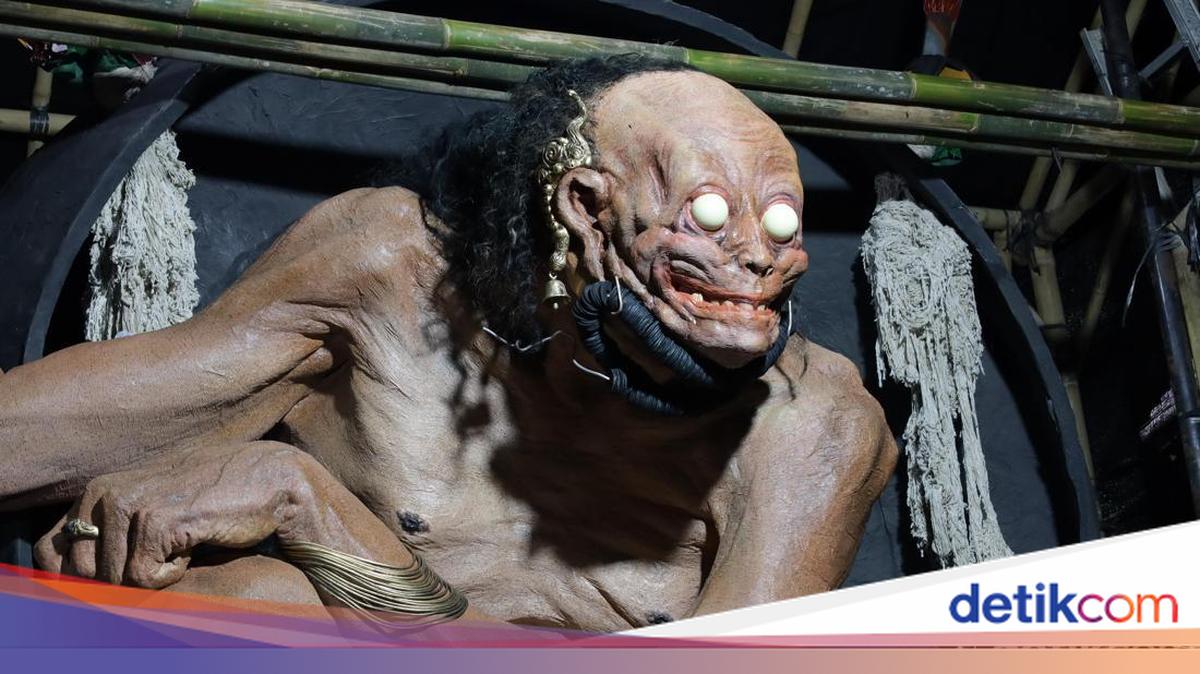
Following the success of Tulak Tunggul, Sekaa Teruna Teruni (STT) Sentana Luhur has unveiled a new ogoh-ogoh effigy named Ketug Lindu. The ogoh-ogoh is one of 13 realistic-style effigies characteristic of Tampaksiring district, Gianyar, which will be displayed during the pengerupukan procession.
“The style of ogoh-ogoh here is indeed realistic. It differs from other ogoh-ogoh that generally feature wayang puppet characters,” said Ketug Lindu artist Ketut Kembar Mariana, who was interviewed in Pura Penataran Uluwatu, Kelodan Traditional Village, Gianyar, on Wednesday 18 March 2026.
The Ketug Lindu ogoh-ogoh currently being crafted at the temple features a human form, similar to Tulak Tunggul. “Tulak Tunggul has been replaced. This one is called Ketug Lindu,” Kembar explained.
The effigy is depicted sitting cross-legged whilst crossing its legs to convey a relaxed impression. Ketug Lindu has a complexion of medium brown skin tone, stands seven metres tall, and displays a slender yet muscular physique with detailed contours.
Distinguishing it from Tulak Tunggul is its bearing. The smile on Ketug Lindu’s lips is crafted to be wide and menacing. The eyes are bulging extensively, nearly protruding, giving Ketug Lindu a distinctly malevolent expression.
With partially shaved hair, decorative gimbals extending down to the knees, Ketug Lindu’s appearance becomes increasingly menacing. Kembar states that Ketug Lindu’s facial expression emphasises the impression of a half-monster human figure.
“Yes, half-monster, not entirely normal human. There is not much improvisation because the focus is more on its pose and creating a frightening impression,” he said.
Kembar explained that constructing Ketug Lindu took one month. No specialised raw materials were used in its creation. The structure consists of an iron framework, with bamboo forming the outer frame, which is then covered with paper to create skin texture, and painted using 10 colours commonly used for ogoh-ogoh effigies.
Ketug Lindu is also not heavily adorned with accessories. Only a pair of sekartaji or ear-like ornaments attached behind the ears and several strings of bracelets adorn all wrists and ankles.
“The hair is not ijuk palm fibre. We use processed material from palm trees, usually employed for barong hair. The bracelets are made from water hoses to be budget-friendly, as iron would be quite expensive,” he explained.
Kembar said Ketug Lindu will only be paraded during the pengerupukan night. He and other STT Sentana Luhur members decided not to participate in ogoh-ogoh competitions scheduled for Gianyar Regency’s anniversary celebration.
The Meaning Behind Ketug Lindu’s Menacing Expression
Kembar explained that there is deeper meaning behind the menacing expression displayed by Ketug Lindu. The evil smile on the effigy’s face is depicted as a symbol of human behaviour that leads to natural disasters that have struck Bali since early 2026.
“Ketug Lindu is a symbol of natural disaster. Ketug means vibration, whilst lindu means earthquake,” Kembar said.
Beyond real-world natural disasters, Kembar stated that Ketug Lindu also symbolises the spiritual condition of humans who have become increasingly arrogant, greedy, and temperamental.
“Through this ogoh-ogoh, we invite all Balinese people to always maintain life balance according to the teaching of tri hita karana. That is, as a warning for humans to maintain their relationship with nature and God,” he said.