
Ketapang Port Implements Full 'Arrival-Unload-Departure' Pattern to Ease Congestion and Pilgrim Queues at Gilimanuk
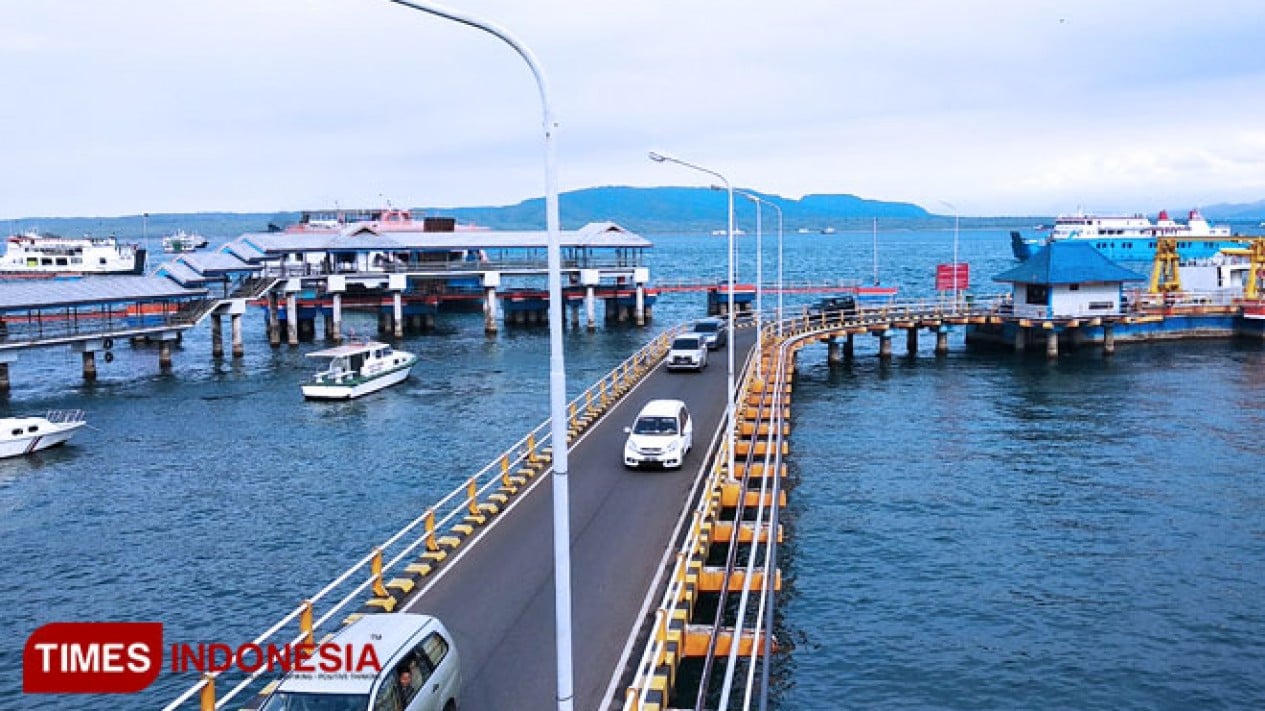
Ketapang Port’s Terminal III in Banyuwangi, East Java, has implemented a full “Tiba Bongkar Berangkat” (TBB, or Arrival-Unload-Departure) pattern for support ferries to ease congestion and queues of pilgrims at Gilimanuk Port in Bali.
“The full TBB pattern implementation at Terminal III of Ketapang Port began today, 15 March 2026, as part of service acceleration,” said Secretary of PT ASDP Indonesia Ferry (Persero) Windy Andale in a statement in Banyuwangi on Sunday.
He explained that ferries arriving at Terminal III of Ketapang Port only perform unloading operations without loading vehicles from Ketapang (Banyuwangi).
To ease congestion of pilgrims at Gilimanuk Port, ASDP continues to conduct intensive coordination with all stakeholders, including the Harbour Master’s Office, Police, Armed Forces and local government, to accelerate operational management in the field and ensure vehicle movement in the port area remains well-managed.
Regarding optimisation of ferry crossing services on the Ketapang-Gilimanuk route as pilgrim numbers increase ahead of the closure of ferry operations during Nyepi celebrations, he said that currently 35 vessels are operated around the clock to service the flow of vehicles and passengers from Bali to Java.
“ASDP has added seven vessels to the normal fleet of 28, bringing the current total to 35 vessels operating in rotation round the clock. With the fleet moving non-stop, transport capacity increases so that the crossing process can proceed faster and vehicle queues can be gradually relieved,” Windy said.
According to him, the increase in vehicle movement occurs as a result of high mobility of people and logistics vehicles seeking to cross ahead of the closure of ferry services from Gilimanuk Port (Bali) during Nyepi celebrations on 18-20 March 2026.
“ASDP extends its apologies for the inconvenience experienced by some service users,” Windy Andale said.
He added that operations on the Ketapang-Gilimanuk route are also supported by 17 active terminals, consisting of 9 terminals at Ketapang Port (4 large multipurpose vessels, 3 landing craft mechanised, 1 pontoon, 1 Bulusan) and 8 terminals at Gilimanuk Port (4 large multipurpose vessels and 4 landing craft mechanised).
“LCM terminals are focused on serving logistics vehicles to maintain smooth distribution of goods whilst separating the flow of large vehicles from passenger vehicles,” Windy said.