
Ketapang–Gilimanuk Crossing Temporarily Closed During Nyepi
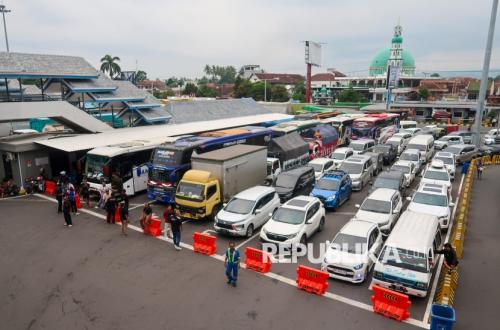
Head of Indonesian National Police Traffic Corps, Inspector General Agus Suryonugroho, announced that access to the Ketapang–Gilimanuk crossing has been temporarily closed for the celebration of Nyepi in Bali. The major Hindu holiday falls on Thursday (19/3/2026). He explained that vehicle flow management towards Gilimanuk Port was implemented in advance to prevent build-ups. Coordination was carried out with East Java Regional Police and port authorities to keep traffic under control before the closure took effect. “As of 17:00 (Wednesday), I received a report from the East Java Regional Police Traffic Director and the Ketapang Police Chief that access to Gilimanuk has been closed,” said Agus at the National Traffic Corps Command Centre in Cikampek, early Thursday (19/3/2026) WIB. He added that officers also closed access from Gilimanuk to Ketapang according to the predetermined schedule. This step is part of inter-provincial traffic arrangements during the religious observance. The Traffic Corps ensured that vehicles already near the port were directed into the buffer zone. This effort was made to avoid long queues on the routes leading to the port. “From Gilimanuk, alhamdulillah, it’s already clear, no queues, all vehicles have entered the buffer zone,” Agus stated. Beyond the crossing arrangements, the Traffic Corps is also monitoring mudik traffic conditions on toll and arterial roads. During the peak mudik night, vehicle movements were observed to be dense on several major sections. Traffic engineering such as national one-way systems and contraflows were applied to maintain smooth flow. These arrangements were based on traffic data evaluations and direct field monitoring. Vehicle flow from Jakarta to Central Java was recorded as dense but still controlled. After entering the one-way route, vehicles could proceed more smoothly to the Central Java area. The Traffic Corps noted an increase in vehicle volume compared to the previous day. Projections for the peak mudik flow reach around 250,000 vehicles. Mudik flow control is also supported by security at various points, including service posts and security checkpoints. This has contributed to a decline in fatal accident rates during the mudik period. The mudik flow will continue for several more days with a significant remaining volume of vehicles. The Traffic Corps ensures that all security scenarios are continuously adjusted to keep public travel safe and smooth. The Traffic Corps has also prepared anticipatory measures for the return flow by utilising functional tolls in several areas. Security also covers community order aspects in residential areas left by mudik travellers.