
Kenneth of DKI DPRD Urges Residents and Jakarta Provincial Government to Collaborate in Tackling Waste Emergency
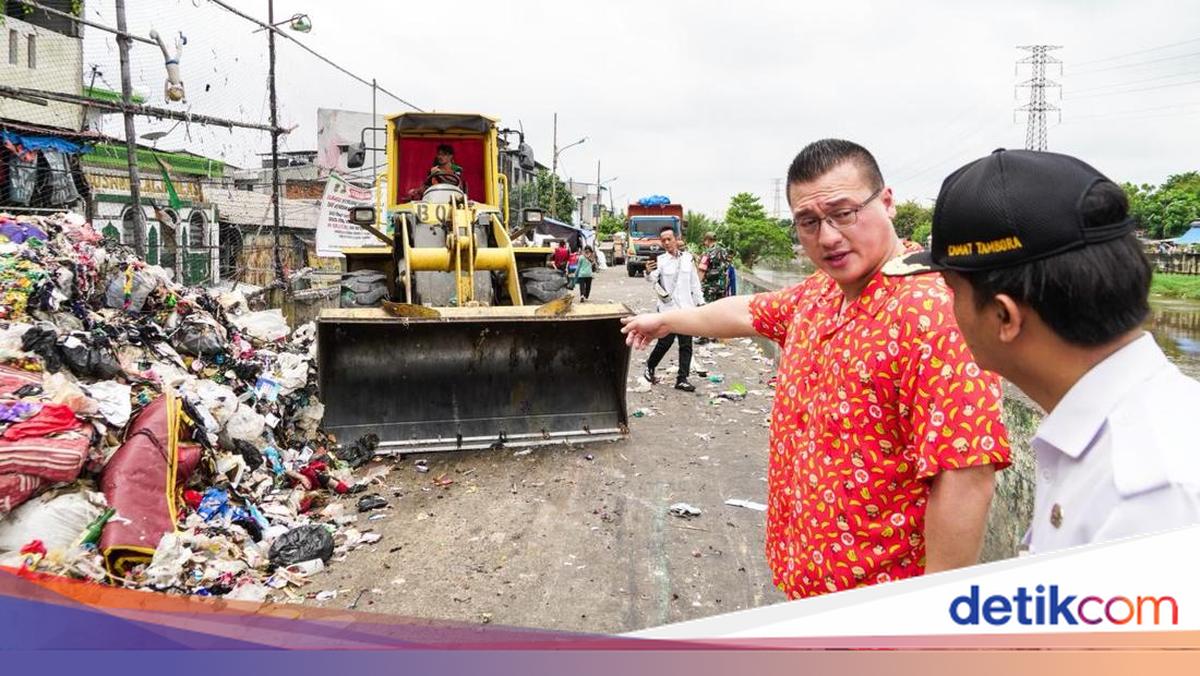
Mountains of rubbish in Tambora sub-district, West Jakarta, can no longer be considered a trivial issue. Residents’ complaints continuously flooding social media have finally prompted a swift response from DKI Jakarta DPRD member Hardiyanto Kenneth, who personally inspected conditions in Jembatan Besi and Kali Anyar sub-districts to ensure immediate handling.
During the inspection, Kenneth was accompanied by Jembatan Besi Sub-district Head Achmad Subhan, Kali Anyar Sub-district Head Iman Suhendar, Tambora Sub-district Head Pangestu Aji, and a representative from the West Jakarta Environmental Office, Dahlan. The presence of these local officials reflects cross-sector synergy and coordination in addressing the problems faced by residents.
“I often receive various reports from residents who feel disturbed by the rubbish accumulation, both in terms of unpleasant odours, increasing populations of flies and rats, and declining daily quality of life. This must certainly be a serious concern for the relevant agencies,” he stated in his remarks on Friday (27/3/2026).
As a follow-up, the man often called Bang Kent requested that the West Jakarta Environmental Office Task Force, along with Public Facilities and Infrastructure Handling Officers (PPSU) from each sub-district, immediately carry out thorough cleaning. This effort aims to restore environmental conditions to clean, healthy, and comfortable for the community.
“This problem cannot be taken lightly, because besides disturbing environmental aesthetics, it also has the potential to cause serious impacts on public health. I urge the relevant agencies, especially the DKI Jakarta Provincial Environmental Office, to immediately take concrete and measured steps. Handling must not be temporary or reactive, but systematic and sustainable. Starting from optimising waste transport fleets, adjusting more effective collection schedules, to increasing supervision at vulnerable accumulation points,” explained the DKI Jakarta DPRD Commission C member.
According to Kent, this activity will embody a joint commitment between DKI Jakarta DPRD, the DKI Jakarta Provincial Government, and the community in maintaining environmental cleanliness. Additionally, the swift steps taken also demonstrate that every resident complaint can be followed up responsively and on target.
“A comprehensive evaluation of the waste management system in DKI Jakarta is needed. Are there obstacles in infrastructure, lack of resources, or inter-agency coordination issues? All of this must be addressed transparently so that the solutions taken are truly on target. Then, I also encourage a community-based approach, where residents are actively involved in maintaining environmental cleanliness. Education on source-based waste sorting, reducing single-use plastic usage, and strengthening the role of neighbourhood units (RT/RW) and local communities are very important to build collective awareness,” stated the Chairman of IKAL PPRA LXII Lemhannas RI.
On the other hand, according to Kent, the DKI Jakarta government also needs to consider forward-looking innovative steps, such as seriously developing waste banks, utilising technology in waste and wastewater management, and collaborating with the private sector to improve the efficiency of existing systems.
“I will continue to monitor this issue seriously and ensure that every resident complaint receives a quick and accurate response. I do not want this rubbish accumulation problem to become a protracted issue without a clear resolution. My hope is that in the near future, conditions in Jembatan Besi and Kali Anyar, West Jakarta, can be handled well, so that the community can once again enjoy a clean, healthy, and comfortable living environment,” he said.
Kent also explained ways to handle waste to avoid various serious impacts, from environmental pollution, health disturbances, to declining quality of life for the community. It is known that waste itself is the residue of human daily activities or natural processes in solid form. Based on its nature and source, waste is divided into three main types: organic waste, inorganic waste, and hazardous and toxic materials (B3).
Organic waste is the type of waste that easily decomposes naturally, such as food scraps, leaves, and kitchen waste. Meanwhile, inorganic waste tends to be difficult to decompose, for example plastic, glass, cans, and metals. As for B3 waste, it contains hazardous substances, such as used batteries, neon lights, to electronic waste, which requires special handling.
“To address this issue, systematic and sustainable handling steps are needed. One approach that can be applied is the 3R principle, namely reduce (reducing), reuse (reusing), and recycle (recycling). Waste reduction can be done by limiting the use of single-use items and choosing environmentally friendly products. Reuse is done by utilising items that are still usable, while recycling aims to process waste into new products that have utility and economic value,” he explained.
In addition, continued Kent, sorting waste at the source is also an important step to make the management process more effective. Organic waste, for example, can be processed into compost, while inorganic waste can be recycled or reused.
“The role of the community is very determining in the success of waste management, especially through the implementation of clean and environmentally conscious living behaviours. On the other hand, the government has the responsibility to provide facilities, regulations, and education that support optimal waste management. With synergy between government and society, as well as the implementation of sustainable waste management, it is hoped that waste problems can be significantly reduced to create a cleaner, healthier, and more sustainable environment,” he stated.