
Kendeng Fault Could Trigger M7 Earthquake in Java: Route and Explanation
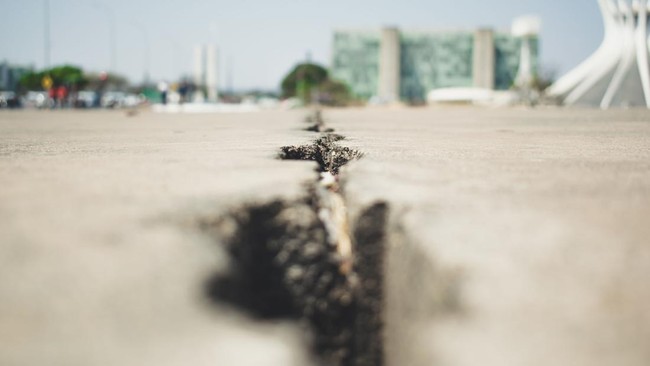
The Meteorology, Climatology and Geophysics Agency (BMKG) has identified the Kendeng Fault as one of the active fault zones on Java Island with a high disaster risk. The Kendeng Fault itself is an active fault zone stretching approximately 300 kilometres from west to east across the north of Java Island. This geological structure is a concern for local authorities because its route traverses urban areas with very high population density along Central Java to East Java. Ricko Kardoso, Head of the BMKG Geophysics Station Class III Malang, stressed that vigilance regarding this fault is essential to mitigate the impact of tremors on land. He noted the fault structure has a vast span and cuts through many regencies and cities. “The Kendeng Fault is one of the active fault zones that is highly watched on Java Island because of its densely populated route,” he said. The fault is divided into six main segments, including the Demak, Purwodadi, Cepu, and Blumbang segments which cross Lamongan, the Surabaya segment which cuts through the heart of the city, and the Waru segment in Sidoarjo. Administratively, this threat route covers the areas of Salatiga, Grobogan, Blora, Madiun, Nganjuk, Jombang, Bojonegoro, and Surabaya. “The Kendeng Fault zone stretches approximately 300 kilometres across the northern part of Java Island, extending from south of Semarang, Central Java, to East Java,” Ricko stated. Based on updated data in the 2024 National Earthquake Study Centre (PuSGeN), the Kendeng Fault has now been merged in nomenclature with the Baribis Fault and Semarang Fault into the Java Back-arc Thrust system. This mapping indicates that the worst-case scenario of seismic activity in each segment could trigger a destructive earthquake. “The targeted magnitude in the 2024 PuSGeN that is possible as a worst-case scenario from each active fault segment varies from magnitude six to seven,” Ricko explained. The geological structure actually has a relatively slow movement rate of about 5 millimetres per year, resulting in a long recurrence interval for large earthquakes. Although the last severe destructive activity was recorded in 1915, historical records show this fault once triggered devastating earthquakes with estimated strengths of magnitude 6 to 7 in 1836 and 1837 in the Mojokerto and Jombang areas. “The Kendeng Fault is a slow-moving fault, about 5 millimetres per year, and has a fairly long earthquake recurrence period. Therefore, large destructive earthquakes from this fault are mostly recorded in past history,” he said. In addition, strong earthquakes also struck the Madiun area in 1862 and 1915, and damaged infrastructure in the Surabaya area in 1867. BMKG notes that in recent years there has been seismic activity in the form of shallow, small to medium-scale earthquakes with magnitudes of 4 to 5 along this route. Discussion of the Kendeng Fault recently went viral on social media after several posts linked its potential activity to the Palu earthquake event, raising fears it could spread to the Bojonegoro area. ITS geology expert and senior researcher at the ITS Centre for Disaster Mitigation and Climate Change Research (Puslit MKPI), Amien Widodo, explained the positional comparison between the earthquake location in Sulawesi and Java. He provided scientific clarification regarding the direction of fault movement to prevent unnecessary public anxiety. “Palu’s position is very far away; above Java is Kalimantan, then Sulawesi over there. Sulawesi is roughly above Madura. And the fault’s shift, the fracture’s shift, is towards the northwest, so it is angled upwards, oblique to Java. So, it is not directly straight,” Amien said. According to research, the seismic activity in Palu is in the Palu-Koro Fault area, whose movement direction is away from the Java mainland. Thus, technically, tremors occurring in that region will not propagate directly or trigger activity on the active faults on Java Island. “So, it is in the middle of Palu, in the Palu-Koro fault area, even further north. Its movement is towards the northwest. North-west means it is moving away from Java,” Amien clarified. Amien added that when reviewing the Kendeng Fault’s activity, the main triggering factor is more likely to come from the push of the oceanic plate on the other side. Geological activity south of Java Island is seen as having a closer connection to the movement of faults on the Java mainland compared to fault activity in the Sulawesi region. “On Java, there are indeed faults as well, the Kendeng Fault for example. The Kendeng Fault is likely influenced by the megathrust south of Java. Because it is pushed from the South,” he concluded.