
Kendari Prison Conducts Urine Tests on Inmates and Staff for Early Drug Detection
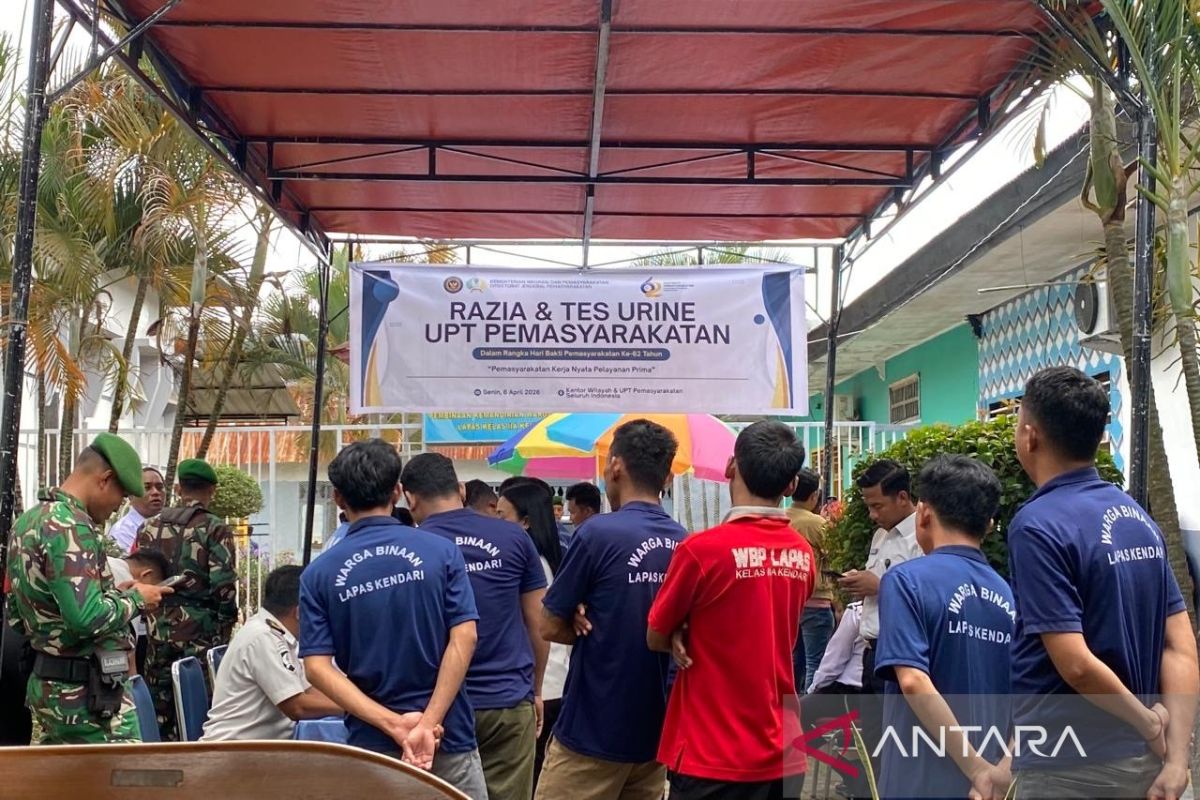
Kendari (ANTARA) - The Class IIA Kendari Penitentiary in Southeast Sulawesi Province conducted random urine tests on inmates and staff as an early detection effort against drug abuse within the correctional environment. Head of Security at Kendari Penitentiary Andi Fahriadi stated in Kendari on Monday that the activity was carried out simultaneously across all Technical Implementation Units (UPT) of penitentiaries and state detention centres throughout Sulawesi Tenggara, in commemoration of the 62nd Correctional Service Day. “This correctional cleaning activity is being conducted nationwide. Specifically at Kendari Penitentiary, we tested 50 staff members and 150 wards,” said Andi Fahriadi. He explained that the selection of inmates for urine testing was random, with a primary focus on those serving sentences related to narcotics cases. “Alhamdulillah, the urine test results were all negative. This is our real commitment to eradicating the circulation and abuse of drugs in the penitentiary environment,” he stated. Andi Fahriadi emphasised that the main target of the activity is to ensure the Class IIA Kendari Penitentiary is free from drugs, both in terms of circulation and abuse by rogue staff or inmates. Meanwhile, the Counsellor of the National Narcotics Agency (BNNP) of Sulawesi Tenggara Province, Asnon, appreciated the synergy between the penitentiary and BNN in drug prevention efforts. “As a proactive partner, we support the penitentiary’s steps. From the checks on the 150 people earlier, no positive results were found. This also dispels the public’s assumption that penitentiaries are synonymous with drug circulation,” said Asnon. He also praised the detection facilities at Kendari Penitentiary, namely the 10-parameter urine testing device that provides accurate results in a short time. “The equipment used by the penitentiary is very good, capable of reading 10 parameters of prohibited substances instantly. We strongly support this openness and early detection approach,” stated Asnon.