
Kemenko Kumham Imipas Compiles Cross-Sectoral Intellectual Property Roadmap
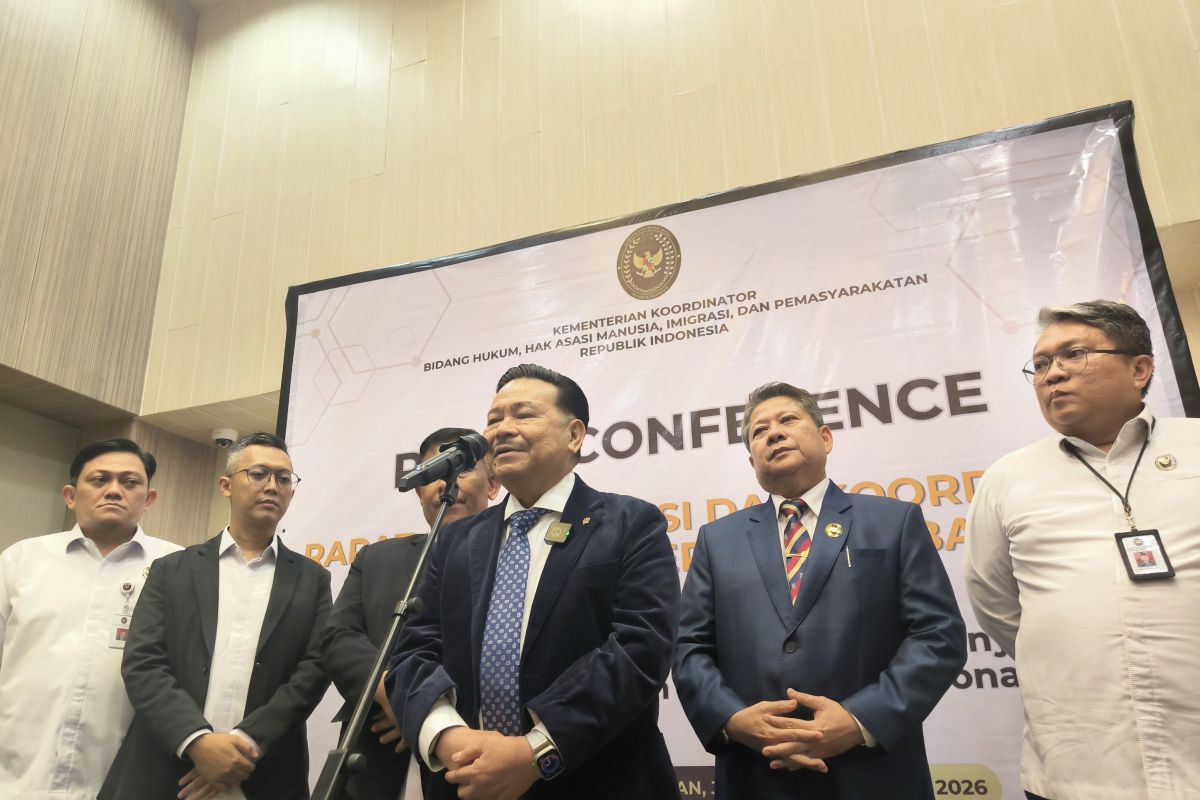
Jakarta (ANTARA) - The Ministry of Coordinating for Law, Human Rights, Immigration, and Correctional Services (Kemenko Kumham Imipas) is compiling a cross-sectoral roadmap for intellectual property (IP) rights to strengthen coordination, synchronisation, and collaboration among ministries and agencies in national IP management.
Deputy Coordinating Minister Otto Hasibuan stressed that IP management cannot be entrusted solely to one ministry, including the Directorate General of Intellectual Property under the Ministry of Law, as its scope spans various sectors.
This was stated during a press conference titled “FGD on Synchronisation and Cross-Ministry Coordination in Follow-Up to Compiling the National Intellectual Property Roadmap” in Jakarta on Wednesday.
“But we, from the Ministry of Coordinating for Law, Human Rights, Immigration, and Correctional Services, have tasks to ensure that these rights function properly, because? Because intellectual property rights are not confined to just one sector. They exist in many agencies,” Otto said.
He explained that IP management has often proceeded sectorally, potentially leading to policy overlaps and weak protection. Therefore, Kemenko Kumham Imipas is stepping in to ensure policy integration in a unified national direction.
“If we let each one proceed independently—education goes its way, this one goes its way, all of them—ultimately the map becomes unclear,” he said.
As part of these efforts, Kemenko Kumham Imipas held a coordination meeting to compile the IP roadmap, involving 27 ministries and agencies and 71 participants from various sectors, including education, creative economy, and technology.
According to Otto, a cross-sectoral approach is key so that technical authorities remain with respective agencies but are connected within a strong coordination framework.
“The sectoral authority work is in their hands, but to coordinate so that all these agencies can be coordinated and continuously synchronised, that is what our ministry can ensure. So our mandate, our task, is to ensure and guarantee (assurance) that,” he said.
In addition to governance aspects, the IP roadmap compilation is directed towards increasing economic contributions, including optimising non-tax state revenue (PNBP) from intellectual property registrations, which is still not maximal.
Otto also highlighted future challenges, including technological developments like artificial intelligence (AI) that raise new issues in copyright regimes. According to him, regulations must be more adaptive to avoid lagging behind technological advancements.
With this roadmap, the government hopes that IP management will become more directed, integrated, and capable of protecting while optimally utilising national intellectual property.