
Kemdiktisaintek promotes Indonesia–UK collaboration in health research
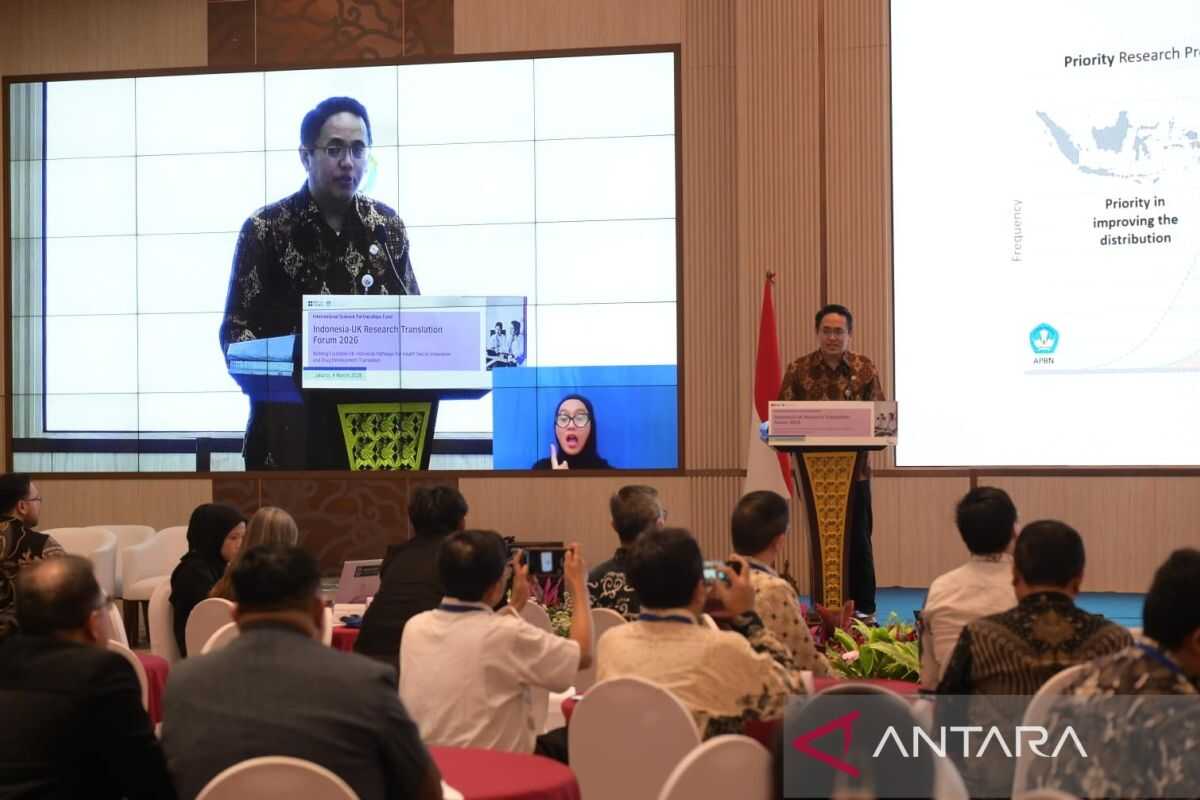
We are now focusing on challenge-based research. We want research to be multidisciplinary by applying a framework of collaboration across various partnerships and institutions. In Jakarta, the Ministry of Education, Culture, Research, and Technology (Kemdiktisaintek) is promoting Indonesia–UK collaboration in health research that is ready for downstream development and able to deliver real impact for society.
“Now we are focusing on challenge-based research. We want research to be multidisciplinary by applying a framework of collaboration across various partnerships and institutions. This is why we want to push Indonesia in this collaboration, so that we can enhance national competitiveness through efforts to improve the quality of research,” said Fauzan Adziman, Director General of Research and Development (Dirjen Risbang) at Kemdiktisaintek, in Jakarta on Friday.
Fauzan added that strategic partnerships with various institutions in the United Kingdom open up major opportunities to strengthen researchers’ capacity, technology transfer, and the development of a research funding model based on international collaboration.
“Through this programme, we are designing strategies to address the country’s most important and needed issues. For instance, the strategy could involve improving health service conditions in Indonesia, and by working independently or with international partners. By implementing this strategic programme, our research becomes more impactful,” he said.
He assessed that Indonesia has urgency driven by health and economic pressures, as well as capacity rooted in scientific strength, clinical scale, and ongoing regulatory reform.
“In this context, Indonesia and the United Kingdom are not merely collaborators, but partners that complement each other across the transnational spectrum. By aligning our strengths at specific Technology Readiness Level (TRL) stages, we can develop together, validate together, and deliver together health innovations that are scientifically robust, commercially viable, and socially impactful,” said Lucia.
Reza noted that the UK has strengths in delivering mature clinical research and strong adoption pathways.
On the other hand, Indonesia offers comparative advantages, including a large and diverse population, urgent health needs, and abundant biodiversity.
“The main focus of our collaboration is on TRL/TKT 4 to 6 phases, which include validation, trials, and scaling up,” said Reza.