
Kembang Lampir Hermitage in Gunungkidul Closed to Public, Visitors Still Arriving
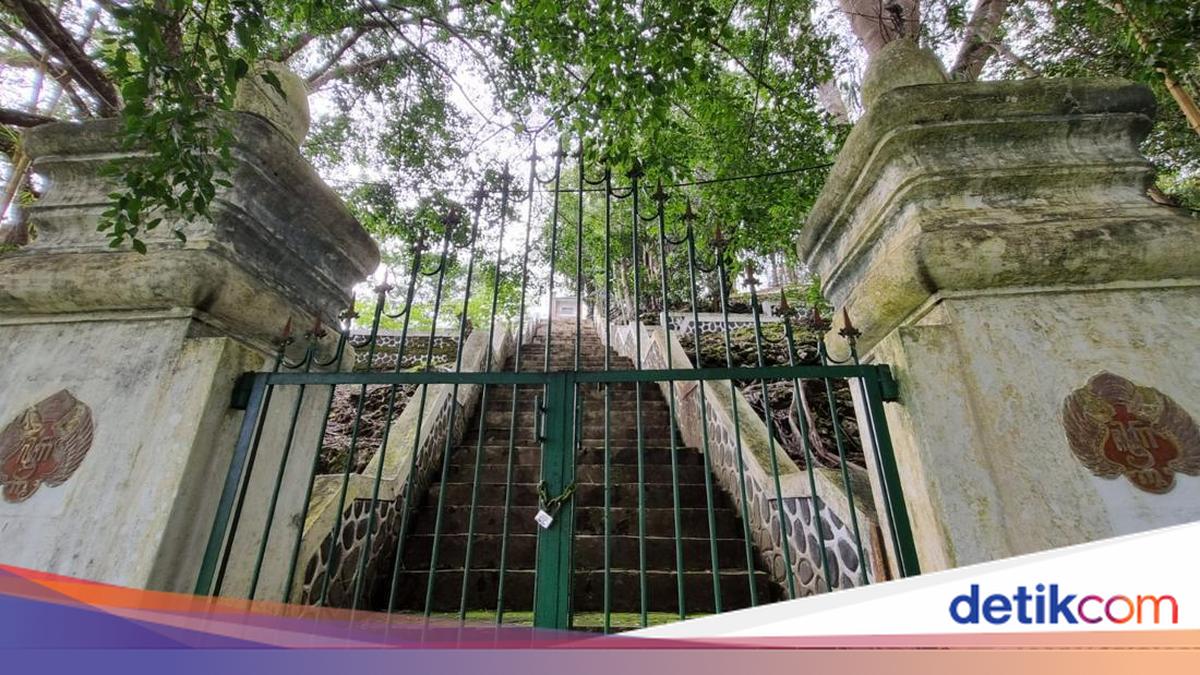
Visitors to the Kembang Lampir hermitage in Girisekar, Panggang, Gunungkidul, are currently unable to access the inner sanctum of the retreat. This restriction has been in effect since 2024 by order of the Yogyakarta Palace (Keraton Ngayogyakarta Hadiningrat).
During a monitoring visit on Monday, 16 March 2026, the hermitage, known for its connection to the establishment of the Mataram Islamic Kingdom, appeared particularly quiet. The main gate to the inner sanctum was firmly locked with a chain and padlock.
Outside the gate, a blue tent had been erected with seating and a container for ceremonial offerings (ubarampe).
One of the key custodians of Kembang Lampir, Trisno Sumarto (70), explained that the closure of access to the inner sanctum coincided with the election period, particularly the 2024 presidential election. According to him, all of this occurred by order of the Yogyakarta Palace.
“Visitors still come here, but they have not been allowed to go up to the inner area since 2024, specifically during the presidential election. As for the reason, that is an order (dhawuh) from the Palace,” he said when interviewed at Kembang Lampir in Girisekar, Panggang, Gunungkidul, on Monday, 16 March 2026.
The custodian, who carries the Palace-given name Sulakso Sekarsari, explained that such closures of access to the hermitage also occurred during the New Order period.
“This happened before too, before Suharto’s fall the place was closed for three years, and after he fell it opened again,” he said.
Although closed to the general public, the custodians are permitted to ascend to the inner sanctum of Kembang Lampir for cleaning purposes, as are emissaries from the Yogyakarta Palace.
“But when Palace officials come, the gate is opened, and we still clean it every morning as usual,” he explained.
In response, the custodians erected a tent on the side of the entrance gate to the inner sanctum of Kembang Lampir. This tent is typically used by visitors who come to pay their respects.
“Even though it is closed, many visitors still come, which is why we set up the tent,” he said.
Trisno stated that visitors have not objected to the closure of access to the inner sanctum of Kembang Lampir. This is because visitors understand that the Yogyakarta Palace is the owner of the site.
“With the closure, no visitors have made complaints,” he said.
A 50-Day Ascetic Fast
Trisno then shared stories of visitors who have practised extended spiritual retreats at Kembang Lampir. He mentioned a man from Boyolali who undertook a 50-day ascetic fast.
“In 2014, there was an elderly man from Pengging, Boyolali (Central Java) who stayed up there for 50 days and practised extreme fasting (not eating or drinking). Though every 15 days he would eat,” he said.
The Descent of the First Mataram Revelation
On another note, Trisno explained that Kembang Lampir was the former meditation site of Ki Ageng Pemanahan when he was seeking the Mataram revelation. After meditating at this location, the revelation he sought descended in the form of a flower (kembang) that lay scattered (lampir) among the trees surrounding his meditation spot.
“That is why this place is called Kembang Lampir, derived from the scattered flowers that appeared there,” he said.
This man, who has served as custodian’s assistant since 1983, stated that following the descent of the revelation, Ki Ageng Pemanahan together with his son Danang Sutawijaya established the Mataram Palace in Kotagede. Thus, the Kembang Lampir hermitage is closely connected to the history of the establishment of the Yogyakarta Palace.
Trisno revealed that the inner sanctum of the hermitage contains a petilasan, or meditation site, of Ki Ageng Pemanahan. The petilasan consists of a stone with a hand-sized piece of wegig wood beside it. Reportedly, this wood served as a resting place for Ki Ageng Pemanahan.
“It has not been altered, except that it is now surrounded by wood in a box-like structure,” he said.