
Keeping the Flame Alive from the East: Efforts and Hopes on Education Day
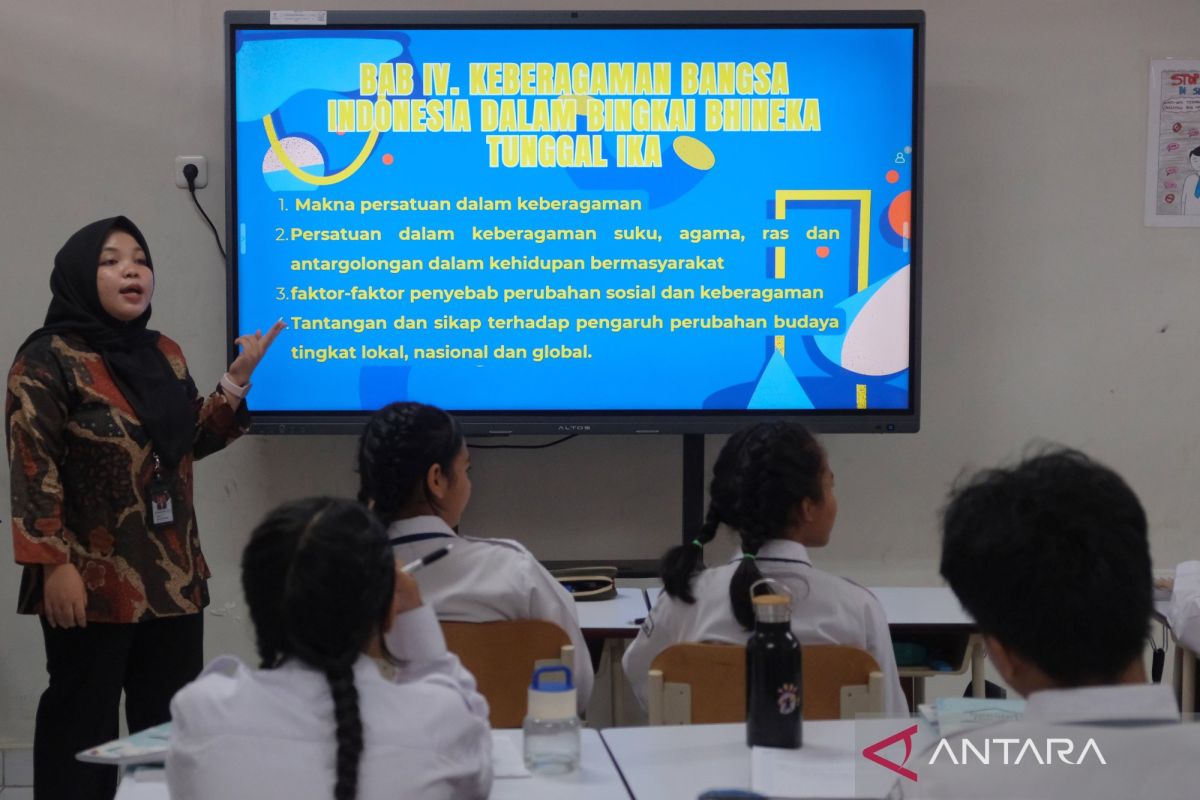
Jakarta (ANTARA) - The morning at a vocational secondary school in Bajawa Subdistrict, Ngada Regency, Nusa Tenggara Timur Province, begins with the sound of a newly started generator. On the illuminated whiteboard, a teacher is enthusiastically writing about how to convert the scorching sun into electricity that lights up cattle sheds using solar panel technology. Meanwhile, in the corner of another classroom, several computers are connected to the network. Such a scene, particularly in eastern Indonesia, might have been unimaginable just a few years ago. This reality is gradually becoming part of the changes pursued by the Government through the Ministry of Basic and Secondary Education (Kemendikdasmen). In eastern Indonesia, including Nusa Tenggara Timur Province, educational challenges extend beyond school buildings. Systems, access, and the distribution of teaching staff remain tangled threads that must be unravelled one by one. Therefore, in the past year, Kemendikdasmen has sought to shift its approach to make interventions more targeted. One prominent step taken by Kemendikdasmen is the introduction of the educational unit revitalisation programme. Throughout 2025, hundreds of schools in eastern Indonesia have begun receiving physical improvements, from classrooms and laboratories to prayer rooms and toilets that were previously often roofless. In Nusa Tenggara Timur Province, Kemendikdasmen has provided more decent learning spaces for pupils in 576 educational units. Beyond merely repairing physical structures, it has also promoted equitable digitalisation of education in eastern Indonesia. At least, Kemendikdasmen has distributed 14,000 interactive flat panel (IFP) units, complete with supporting ecosystems, to secondary high school educational units in the same province during the same period. Through these IFPs, Kemendikdasmen is transforming classrooms into more interactive and enjoyable spaces, even improving literacy and numeracy gaps in the region. In classrooms that once relied solely on limited printed books, pupils scattered across small islands are now beginning to engage with digital devices that serve as magical gateways to various learning resources. To broaden access to educational services in the province, Kemendikdasmen has also increased the number of recipients of the Secondary Education Affirmation Scholarship (ADEM). Throughout 2025, the scholarship has provided opportunities for 100 pupils from Belu, Lembata, East Manggarai, Sabu Raijua, and Central Sumba Regencies to pursue free education in 11 leading schools in Kupang City. Another strengthened approach is the enhancement of welfare and development of competencies for hundreds of thousands of teachers serving in eastern Indonesia. In that region, teachers often play roles beyond mere educators, acting as community mobilisers, information conduits, and guardians of learning enthusiasm amid limitations. Support for them is clearly key to sustaining the growth of educational quality. Therefore, Kemendikdasmen continues to drive an increase in the number of professional allowance recipients for teachers (TPG) in Nusa Tenggara Timur Province, with recipients rising to 49,000 in 2025. However, behind these various programmes and achievement figures, education remains fundamentally about people. About pupils who still walk long distances to school, about teachers who teach despite all limitations, and about communities that believe education is the path to a better future. There is still a long road ahead, as disparities have not been fully addressed, and geographical challenges will always be part of the education story in this archipelago nation. Collaborative efforts of four educational centres