
KDS Promotes Citarik Ecotourism as Waste Management Education Model Based on Villages
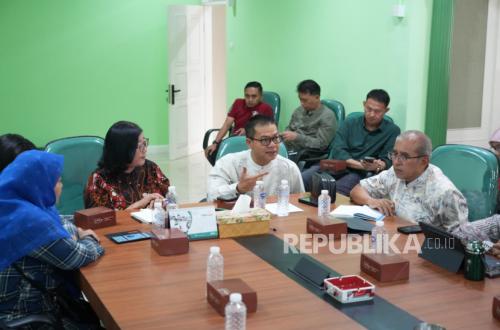
Bandung Regent Dadang Supriatna provided several recommendations during the evaluation meeting for the Citarik Ecotourism programme, located along the Citarik River in Cibodas and Padamukti villages, Solokanjeruk sub-district. Citarik Ecotourism is being developed as an environmental education tourism area based on waste management, a circular economy involving village communities, and the preservation of river corridors. Indeed, Citarik Ecotourism will be established as a waste processing education tourism village. Regent Kang Dadang Supriatna (KDS) stated that the recommendations are divided into short-term, medium-term, and long-term steps to ensure that the management of ecotourism, along with addressing waste issues in the area, runs more optimally. KDS hopes that Citarik Ecotourism, which has been operating for more than seven years, continues to develop. Citarik Ecotourism is expected not only as an environmental-based tourism destination but also as a centre for community education in protecting rivers and community-based waste management. “For the short term, out of the total 178 TPS3R in Bandung Regency, I agree to optimise existing TPS3R such as TPS3R Plus Padamukti. This includes incentives for TPS3R operators, which we will follow up with a study later,” said KDS during the evaluation meeting at the Regent’s Official Residence on Friday (24/4/2026). According to him, the existence of Reduce-Reuse-Recycle Waste Processing Sites (TPS3R) must be truly maximised to reduce the waste load entering the river while providing economic benefits for the community. KDS also emphasised the importance of education for residents to get used to sorting organic and inorganic waste from households. He explained that plastic waste has economic value because it can be resold to industry. Meanwhile, organic waste can be utilised to produce maggots or compost that benefits agriculture and livestock, thus also having economic value. Therefore, KDS urged village heads to be more active in mobilising hamlet heads, RT, RW, and PKK cadres so that waste sorting education becomes a collective movement. “If the community’s behaviour has changed, the waste problem will be much easier to handle. So this is not just about facilities, but also about community habits,” he said.