
KDMP and KKMP: New Finance Minister's Rules, "Quasi-Decentralisation"
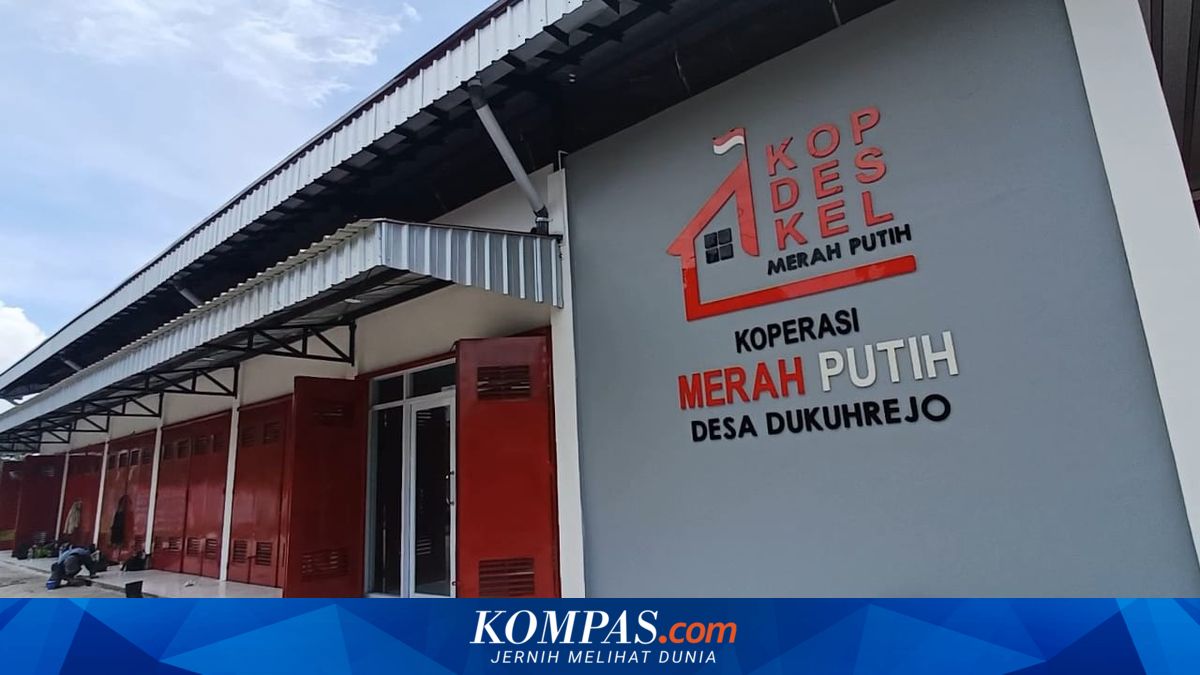
A policy originally intended to accelerate the economy in villages through Village/Urban Village Red and White Cooperatives (KDMP/KKMP) is slowly revealing a reversal of fiscal decentralisation in Indonesia.
Finance Minister Regulation (PMK) No. 15 of 2026 explicitly opens the door for the use of General Allocation Funds (DAU), Revenue Sharing Funds (DBH), and Village Funds to pay cooperative financing obligations.
The scheme involves the central government, in accordance with Finance Minister Regulation No. 49 of 2025, placing funds in Himbara banks; then the village/urban village red and white cooperatives obtain loans of up to Rp 3 billion from Himbara banks.
Principal repayments along with interest are paid through deductions from transfers to regions (DAU and DBH) or village funds.
The loans from Himbara banks of up to Rp 3 billion are used for physical development of outlets, warehousing, and cooperative equipment for village/urban village red and white cooperatives, where in accordance with Presidential Instruction No. 17 of 2025, PT Agrinas Pangan Nusantara (Persero) is designated as the vendor, with oversight from the Ministry of Cooperatives and BPKP/Regional APIP.
DAU and DBH, which have long been instruments of fiscal decentralisation, have now become seemingly instruments for financing central programmes in the regions.
Fiscal decentralisation is a consequence of regional autonomy based on the 1945 Constitution and the Regional Government Law, where the state divides what falls under central authority, regional authority, and concurrent authority.
When imbalances occur between regions and the centre in taxing authority, leading to vertical fiscal imbalance, the central government shares a portion of central tax revenues with the regions in the form of transfers to finance the regional government’s mandated authority.
Transfers to Regions are used to finance regional government tasks and concurrent tasks (jointly) carried out by both regions and the centre, implemented by regional governments.
Direct deductions by the central government from these transfers indicate that budget control remains with the centre, not the regions.
Regional autonomy and fiscal decentralisation are beginning to lose their meaning.
From the perspective of village autonomy regulated by the Village Law, deductions of village funds by the centre for KDMP also deviate from the concept of village government that should have autonomy to manage its own affairs.
Deductions from Village Funds even reach 60–80 percent of the allocation, leaving only 20–40 percent that villages can truly use as regular Village Funds.
The consequence is that village development has stalled. Village roads, irrigation, posyandu, and community empowerment programmes are stagnating because the village’s fiscal space is absorbed into paying cooperative loan instalments.
This impacts the quality of basic public services in villages.
With the loan scheme of Rp 3 billion per cooperative and instalments of around Rp 56.7 million per month, villages and regions essentially bear long-term obligations that bind the Village Budget (APBDes) and Regional Budget (APBD).
The problem is that these obligations do not arise from local fiscal decisions but from central policy design.
This creates what can be termed quasi-debt decentralisation, a concept where debt is formally borne by regions/villages but policy-wise determined by the centre.