
KDM Praises Iran's Budget Management Capabilities Amid Years of Economic Embargo
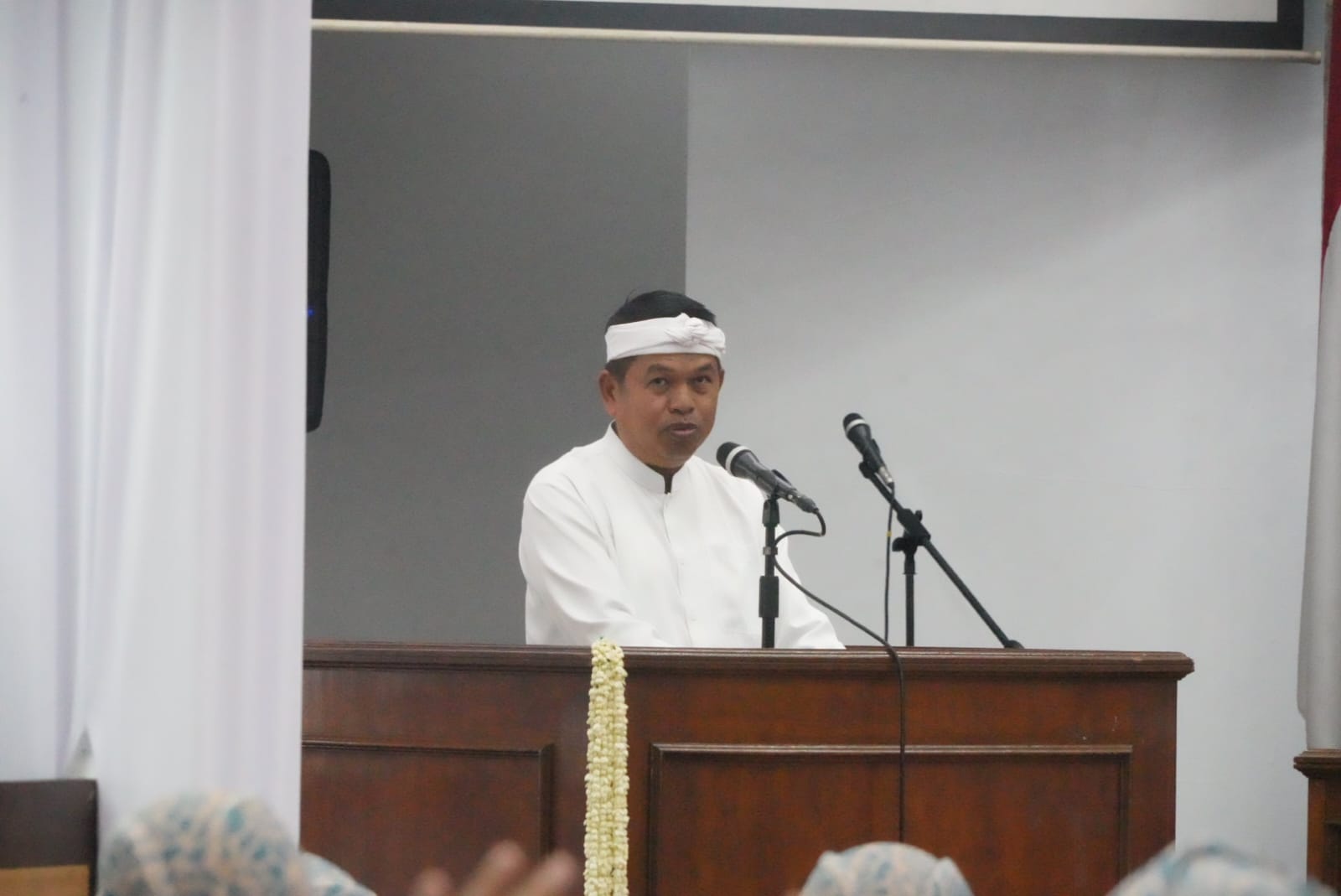
The ability of the Iranian government to manage state finances amid conflict with Israel and the United States has earned praise from West Java Governor Dedi Mulyadi, also known as KDM.
Iran has remained steadfast despite being constrained by heavy economic sanctions lasting many years. “From this perspective, I see why Iran can endure. First, its government is efficient. The clerics demonstrate extraordinary simplicity. They chose to become martyrs rather than die later. Their martyrdom becomes a public heroism movement. I looked at Iran’s state budget—Rp1,000 trillion from a population of 92 million,” Mulyadi stated in a statement on Monday, 9 March.
According to the governor, with such a budget, the Iranian government has managed to demonstrate extremely high commitment to education, healthcare and citizens’ infrastructure. “Out of 10 school-age people, 9 of them attend university. What do they study? Science, mathematics, physics, chemistry, medicine, engineering. Treatment is free, school is free, there are no potholes in the roads. The environment is clean, and no one goes hungry,” he explained.
The defence budget, according to Mulyadi, amounts to only approximately Rp132 trillion, yet because of sanctions the country has been able to develop drone technology, warheads and strengthen their entire military fleet. They can wage war with honour in defending their beliefs because they manufacture their own equipment.
Iran’s ability to maintain sovereignty would not occur if its government were not efficient in budget management, and would be difficult to achieve if its universities did not focus on producing excellent graduates with strong research capabilities.
From Iran, Mulyadi has learned how West Java under his leadership has managed to turn its provincial budget of Rp37 trillion into a surplus.
“A surplus for me is not happiness, nor is it pride. I led West Java when its financial condition was only Rp26 trillion. But I freed senior secondary education—making it free. I was able to build roads to remote areas. I could build houses for poor people. I could prepare the next generation so they can attend university in technology fields. Produce new engineers, and then have an efficient government,” he said.
The governor added that decentralisation or autonomy should not be understood merely as a division of authority or as part of financial distribution between central government, regions and villages. The existence of regional government must also be viewed as important. When a nation faces threats, if everything is too centralised, regions will experience weakening.
Currently, the government faces strict fiscal policy. One of these is the postponement of Revenue Sharing Funds (DBH). Under these conditions, he is striving to continue prioritising budgets for citizens’ interests ranging from road construction, social security to education costs.
“Perhaps district heads and governors will be confused. I am not, I already understand how to manage finances through efficiency and regulate work pace through work from home (WFH) policies. I also orchestrate efficiency through reducing general budgets in each agency whilst still producing high productivity,” he concluded.
In the current financial situation, according to Mulyadi, leaders are encouraged to find solutions so that public services and development continue to benefit citizens. According to Islamic teachings, leaders are obliged to prioritise the welfare of the people above all else. Because of difficult financial conditions, they must strive. The Creator, the servant who matters, must be rooted in Islam. Being rooted in Islam means the government prioritises the safety of its people over other interests.