
KBD Sugarcane Seen as Concrete Realisation of President Prabowo's Astacita
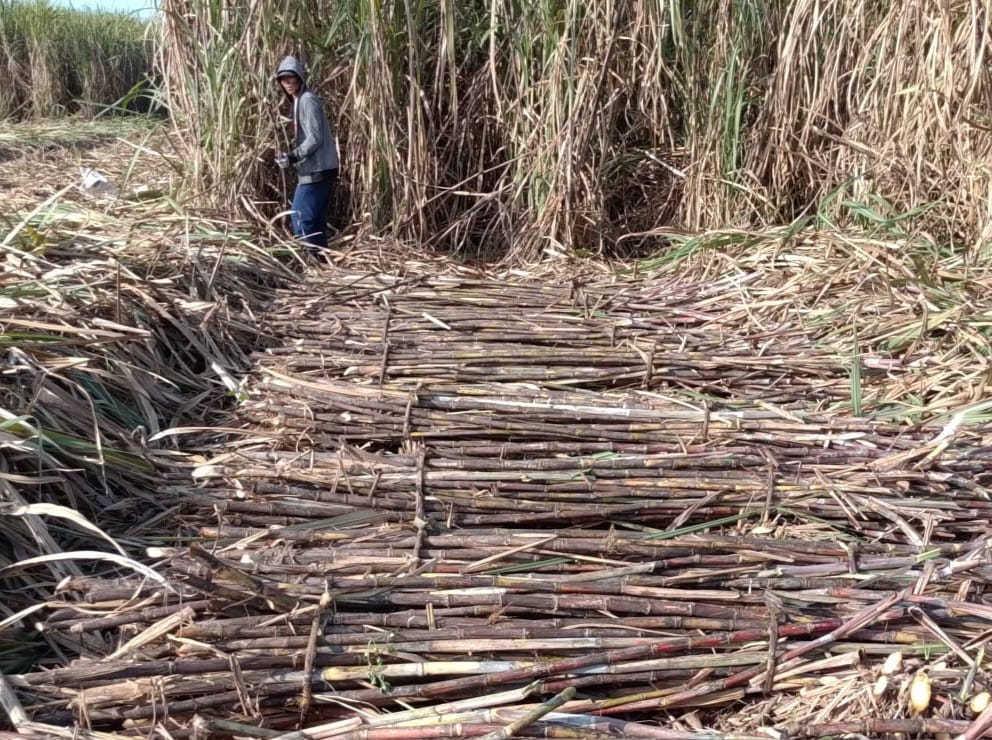
Majalengka, West Java — The Kebun Benih Datar (KBD) sugarcane seed plantation in Majalengka Regency is seen as more than a programme to supply superior seeds; it is part of the implementation of Article 33(3) of the 1945 Constitution and President Prabowo Subianto’s Astacita agenda to realise food self-sufficiency and downstreamisation of the national industry.
Nandang Sudrajat, a Senior Expert at the Ministry of Agriculture, said during the development of the KBD sugarcane area in Majalengka, West Java, that the establishment of a tiered seed system forms a crucial foundation for strengthening the national sugar industry and improving farmers’ welfare. This demonstrates the government’s commitment to delivering quality outcomes.
KBD is the final stage of a tiered breeding system before becoming a milling sugarcane plantation, which maintains strict production standards and quality control. To reach KBD class, sugarcane seeds must pass four successive breeding stages: nursery of basic progeny, main field, grandmother plantation, and finally KBD. This is the fourth level, he said.
Nandang added that seed quality is the starting point for the downstreamisation of sugarcane. Up to now, national sugarcane productivity has faced challenges due to unstandardised seeds, low yields, and high reliance on old ratoon crops. The government, through the Ministry of Agriculture, is accelerating the development of KBD as part of strengthening national sugar self-sufficiency. In Majalengka, the development of a 100-hectare KBD is projected to support the expansion of milling sugarcane plantations to at least 600 hectares.
‘The policy is directly linked to the national development direction set out in President Prabowo’s Astacita, particularly the food self-sufficiency and downstreaming agendas,’ he explained. Nandang noted that if the President proclaims Astacita, with Astacita II being food self-sufficiency and downstreaming, it means fulfilling Article 33(3) of the 1945 Constitution, whereby land, water, and the wealth contained therein are owned by the state and used for the greatest possible prosperity of the people. The implementation of that article in the sugarcane sector is not only about increasing production but also about creating added economic value that is directly enjoyed by farmers.
‘The link is that to produce sugarcane farmers who are prosperous, we must start with something of high quality. The KBD development is designed to yield high-yield, high-productivity seeds and better rendement. With higher productivity and sugar quality, the economic value generated in the sugarcane industry chain will also rise,’ he concluded.
According to Nandang, the KBD programme is one of the government’s efforts to reduce dependence on sugar imports. In recent years domestic sugar demand has continued to rise, while national sugarcane productivity remains relatively behind major producing countries. In the face of a global environment of instability, the government is accelerating the strengthening of strategic food sectors.
International supply chain disruptions and export restrictions on foods in some producing countries have prompted Indonesia to place food self-sufficiency as a national strategic issue. Therefore, the KBD development is not viewed merely as an ordinary agricultural project but a part of a grand agenda to strengthen national food security and a domestic-resource-based economy.
Nevertheless, Nandang reminded that the quality of KBD cannot be achieved merely through physical construction or government assistance. The success of the programme hinges on strict adherence to seed production standards in the field.
‘But even with KBD, if the process is not carried out properly as directed by Mrs. Ebi Rulianti, Director of Plantation Seed, and if we do not follow seed propagation rules in its care, the seeds will not be good,’ he said.
He also emphasised that seed plantations must not be attacked by Plant Pests and Diseases (OPT), as this would affect seed quality and certification success. ‘It is forbidden for KBD-class sugarcane seeds to be attacked by pests or OPT,’ he stated.
Looking ahead, Nandang said the government hopes the Majalengka KBD can become a national model for sugarcane development based on tiered seed quality, downstream industry, and farmer incomes. If this ecosystem remains consistent, the sugar sector is projected not only to meet national sugar needs but also to open opportunities for bioethanol development and other high-value downstream industries.