
Kansai Electric Power Chief Reveals Indonesia's Untapped Energy Potential
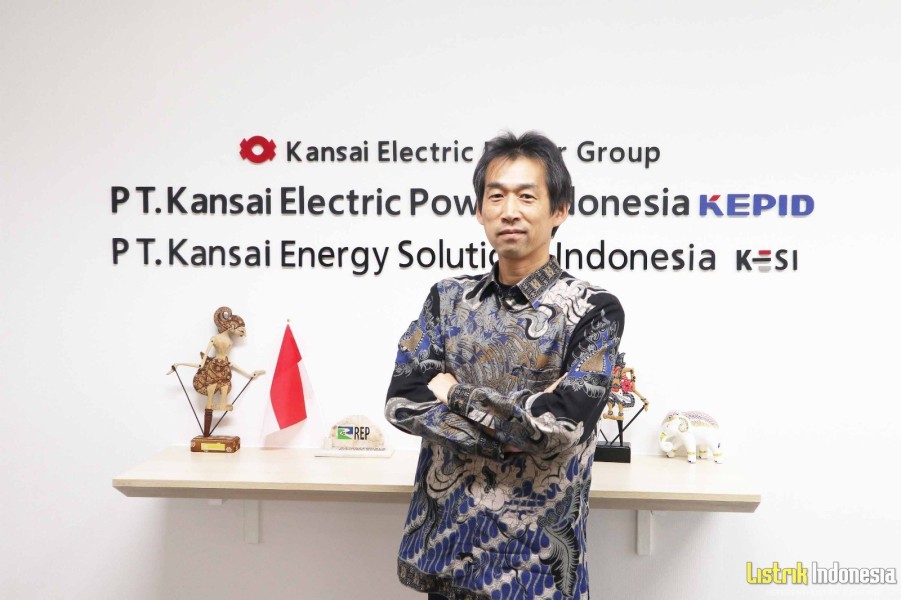
President Director of Kansai Electric Power, Takayuki Sugimoto, views Indonesia as one of the most promising clean energy markets in Southeast Asia. According to him, Indonesia possesses enormous renewable energy potential, with much of it still unrecognised by global energy industry players.
Sugimoto believes that Indonesia not only has a vast electricity market but is also endowed with abundant renewable energy resources, particularly from hydropower and geothermal sectors. The combination of growing electricity demand and the availability of green energy sources makes Indonesia an extremely attractive investment destination for international energy companies.
“Indonesia has remarkable potential, both in terms of market and renewable energy resources,” he stated, as quoted in Electricity Indonesia Magazine Edition 110.
This opportunity has been seized by Kansai Electric Power. The Japanese company is now aggressively expanding its energy investment portfolio in Indonesia. This expansion strategy aligns with the national energy development direction outlined in the 2025–2034 Electricity Supply Business Plan (RUPTL).
Moreover, globally, Kansai Electric Power has considerable experience operating power plants with a total capacity of approximately 26 gigawatts (GW) and recording revenue of around 29 billion US dollars. The company has managed 21 energy projects across 11 countries, including offshore wind power plants and floating offshore wind technology, which has become one of the world’s clean energy development priorities.
Three Kansai Energy Projects in Indonesia
Currently, Kansai is involved in three major energy projects in Indonesia. The first is the Rajamandala hydropower plant project with a capacity of 47 megawatts (MW), developed by Kansai from the initial stages. In this project, Kansai holds a 49 per cent stake, whilst 51 per cent is owned by PLN Indonesia Power.
“We conducted initial feasibility studies and identified the project location ourselves,” stated Sugimoto.
The second project is the Tanjung Jati B coal power plant with a capacity of 2,000 MW, developed jointly with Sumitomo Corporation and United Tractors. This power plant is one of the major electricity suppliers to the Java–Bali electrical system.
Additionally, Kansai has established a strategic partnership with Medco Power Indonesia through the joint venture Medco Kansai Power Indonesia, which manages several private power plant (IPP) projects as well as operation and maintenance business.
Sugimoto believes that one of the largest energy potentials not yet maximally utilised in Indonesia is hydropower. Many potential locations for hydropower plant development are scattered across Sulawesi, Kalimantan, and Papua. However, most of these resources are located far from electricity consumption centres.
“The best hydropower locations are far from load centres like Java. Therefore, the transmission system must be robust and islands must be interconnected,” he explained.
Need for Inter-Island Electrical Interconnection
To address these challenges, Kansai offers solutions through High Voltage Direct Current (HVDC) transmission technology, including the use of submarine cables that can connect electrical networks between islands.
This technology has been applied by Kansai in the international interconnector project NeuConnect Interconnector, which connects the electrical systems of the United Kingdom and Germany.
“As an archipelago, Indonesia will greatly need submarine transmission. We have experience in this field,” said Sugimoto.
Despite seeing considerable potential, Sugimoto also believes that clean energy development in Indonesia still faces several regulatory challenges. According to him, the business scheme for private power plants or IPP is running fairly well. However, for emerging sectors such as energy storage and electricity transmission, tariff regulations are not yet fully available.
“IPP is running well, but for new businesses like storage and transmission, tariffs do not yet exist and regulations are incomplete,” he explained.
In addition, limited renewable energy tariffs are also a consideration for investors because the construction costs of green power plants are often higher.
Preparing 10-Year Energy Expansion
Going forward, Kansai is preparing an energy expansion strategy in Indonesia with three main focuses: hydropower generation, gas power generation as a transitional energy, and electricity transmission projects.
The company is also opening opportunities for cooperation with the State Electricity Company and the government through the Ministry of Energy and Mineral Resources.
“We have complete experience from initial feasibility studies, design, construction, to operation and maintenance of power plants. With this experience, we see Indonesia as a highly strategic market,” said Sugimoto.
He emphasised that Kansai is not merely coming for short-term investment. The company views Indonesia as a major market in its long-term energy expansion strategy.
“Currently we have three projects in Indonesia, but our ambitions go beyond that,” he concluded.