
Kanji Rumbi Remains a Ramadhan Tradition at Darussalam Mosque in Langsa
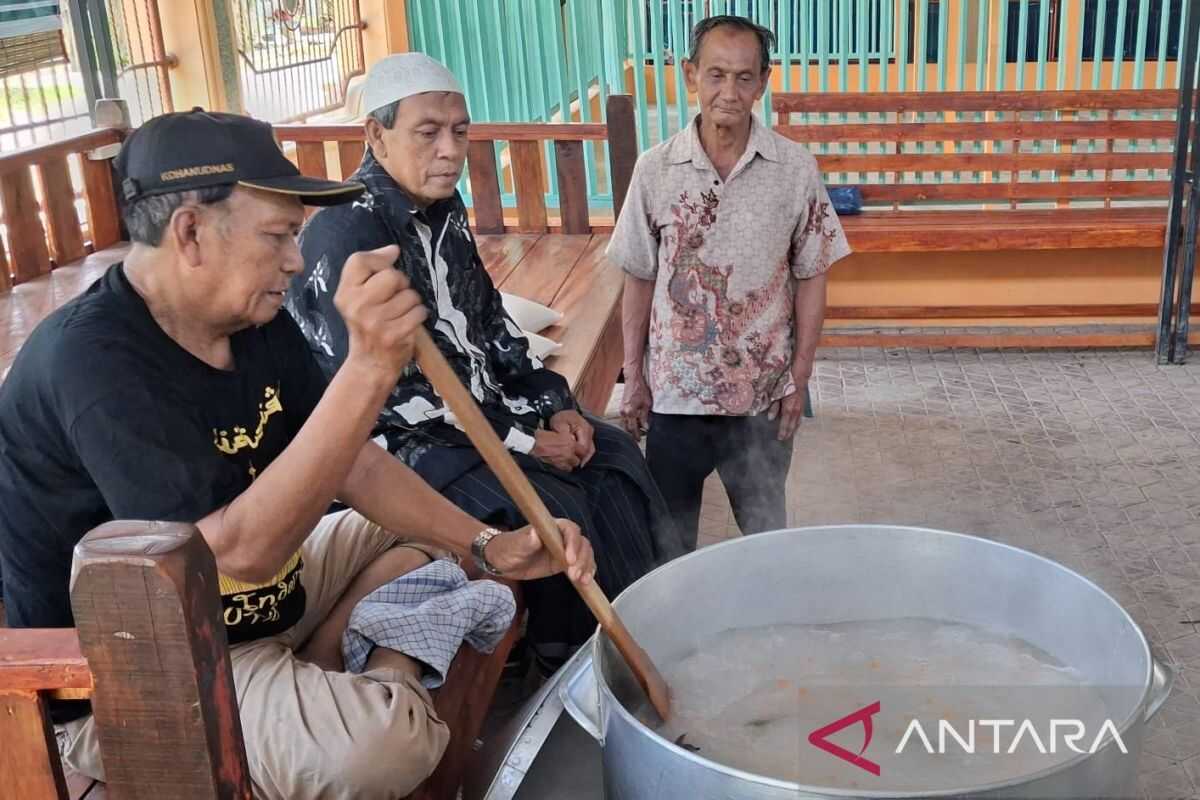
Banda Aceh – The tradition of kanji rumbi continues to be a significant Ramadhan practice at Darussalam Mosque in Gampong Baroh, Langsa Lama District, Langsa City, Aceh, serving as the breaking-fast menu for local residents and travellers.
“This has been a tradition every Ramadhan month for the full 30 days,” said Mansur (72), the veteran kanji rumbi cook at Darussalam Mosque, in Langsa on Saturday.
At the mosque, Mansur was busy stirring giant pots filled with kanji rumbi, an Acehnese delicacy that has become a mandatory breaking-fast menu for local residents. Kitchen work at the mosque begins early in the morning. Rice, the primary ingredient, must be soaked overnight beforehand. To produce one large pot of kanji rumbi, Mansur uses approximately 15 kilogrammes of rice, equivalent to one small sack (goni).
Mansur explained that the main strength of kanji rumbi lies in the complex spice blend known as “peurancah”. This dish uses dozens of types of spices from the Serambi Mekkah region.
“All the spices are ground at home before being brought to the mosque. For one pot, we also use coconut milk from 40 coconuts to make it rich,” he said.
Beyond rice and spices, the porridge is enriched with pieces of carrot, potato, soup leaf, and temurui leaf (salam koja), which provides a distinctive aroma.
Notably, the entire cooking process, which takes hours, is carried out exclusively by male staff, without involving women, in keeping with the mosque’s longstanding tradition.
In a separate statement, mosque administrator Zailani added that the kanji distribution tradition at Darussalam Mosque has been running for more than a decade.
“Distribution of the porridge begins after Asr prayer until just before breaking-fast time. The main targets are mosque congregants and travellers passing through Langsa City. Anyone who comes can take it for free,” said Zailani.
For Acehnese people, kanji rumbi is more than just stomach filler. The warm spice content is believed to have medicinal properties for aiding digestion and boosting stamina after a full day of fasting.
Now, every day at 4.00 p.m. (WIB), dozens of plastic packets containing kanji rumbi are neatly arranged on tables, ready to be taken home by residents or shared at the mosque courtyard during breaking-fast.