
Kalbe Donates 65,000 TB Reagents to Ministry of Health to Accelerate Disease Elimination
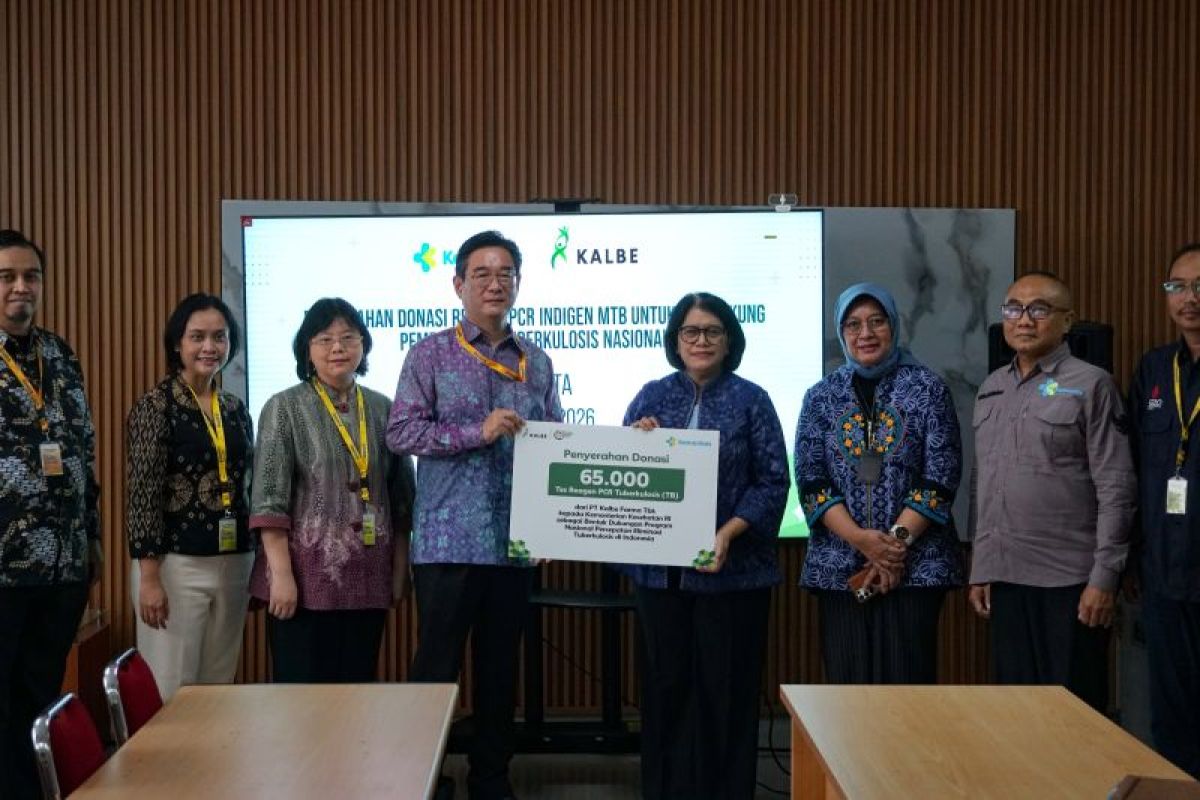
Jakarta - PT Kalbe Farma Tbk (Kalbe) has donated 65,000 TB PCR INDIGEN test reagents to the Ministry of Health as support for Indonesia’s national tuberculosis (TB) acceleration elimination programme.
Kalbe Farma Director Mulialie stated in Jakarta on Thursday that Indonesia ranks as the second-largest TB burden country globally after India. According to the Global TB Report 2024, an estimated 382 TB cases per 100,000 population in Indonesia equates to approximately 1.08 million cases. Annually, the country records 118,000 TB-related deaths, equivalent to 14 deaths every hour.
“The government aims to achieve tuberculosis elimination by 2030 through strengthening early detection and appropriate treatment. Kalbe is committed to contributing towards this target through accurate and rapid diagnostic innovation,” he said.
Early detection is essential to prevent transmission and accelerate treatment outcomes. Elimination efforts require expansion of active screening and increased PCR (Polymerase Chain Reaction)-based testing.
Mulialie also highlighted the product’s domestic content level, recorded above 40 per cent, demonstrating that the product represents domestic innovation and supports national health independence.
The donation of 65,000 TB PCR INDIGEN test reagents reflects Kalbe’s commitment to accelerating tuberculosis elimination in Indonesia. The company believes collaboration between industry and government is crucial to the success of national health programmes.
Through this donation, Kalbe aims to strengthen synergies in improving access to quality diagnostic services. Utilising PCR machines already available in various laboratories will accelerate testing implementation whilst optimising existing national health assets. With collective support, achieving the 2030 tuberculosis elimination target becomes increasingly realistic.