
KAI to construct 5,484 integrated residential units across Jakarta, Surabaya, Bandung and Semarang
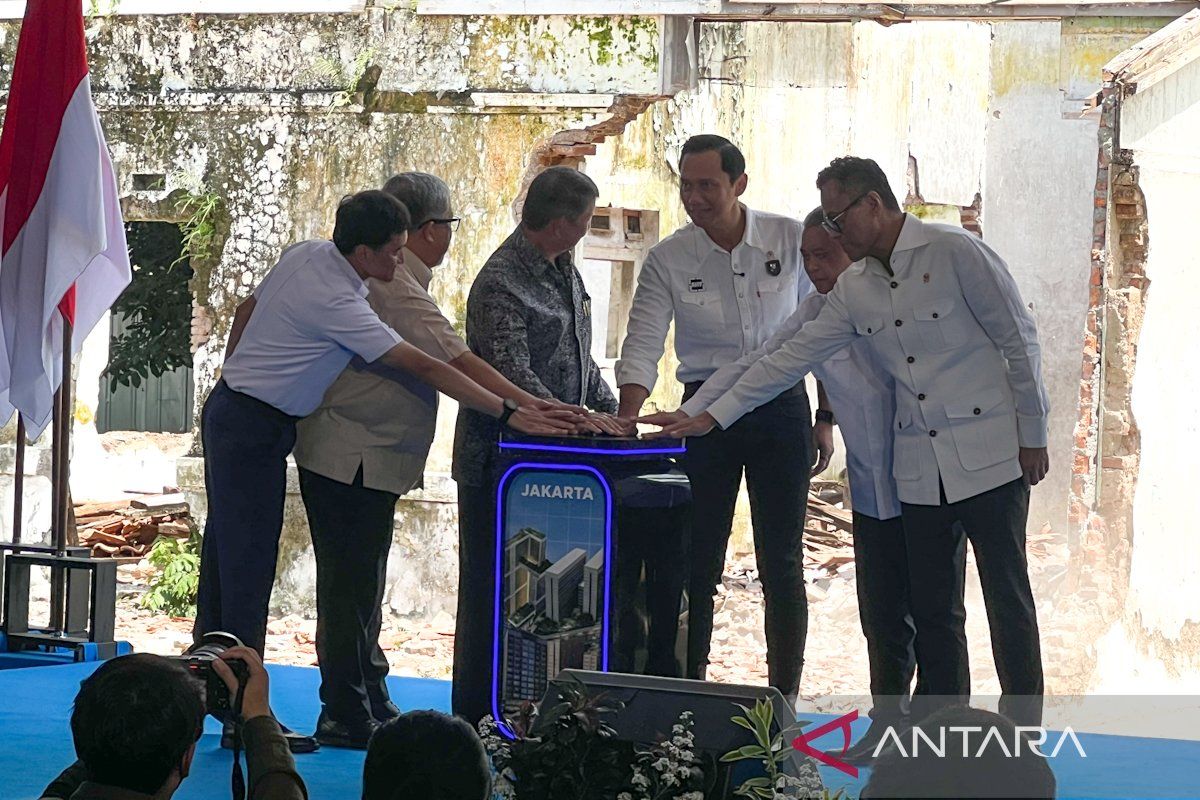
Jakarta — PT Kereta Api Indonesia (Persero) is constructing 5,484 residential units integrated with public transportation across Jakarta, Bandung, Semarang and Surabaya in support of the government’s programme to develop three million homes for urban populations.
“PT Kereta Api Indonesia supports the national development programme through utilisation of railway assets to deliver residential units integrated with public transportation,” said KAI Chief Executive Officer Bobby Rasyidin at the official launch of the housing development programme in support of the Three Million Homes initiative on land owned by PT Kereta Api Indonesia near Manggarai Station, Jakarta, on Monday.
The development encompasses a total of 5,484 residential units spread across four cities — Jakarta, Bandung, Semarang and Surabaya — based on a Transit Oriented Development (TOD) concept, integrating residential areas with public transport infrastructure.
The construction is being undertaken in cooperation with the Ministry of Housing and Spatial Planning (PKP), the Indonesian Investment Management Body (BPI Danantara) and other relevant parties.
In Jakarta, development is taking place in the Manggarai Station area with plans for eight residential towers divided into two blocks, each comprising 12 storeys. These eight towers will provide a total of 2,200 residential units, with unit types of 45 and 52 square metres designed for urban populations.
Construction of the residential area at Manggarai is scheduled to commence shortly, with unit handover to residents targeted for early 2027.
Beyond Jakarta, residential development is also planned at Kiaracondong Station in Bandung, occupying approximately 7,600 square metres of land. This location will feature two residential towers with approximately 753 units designed as an integrated residential area connected to Bandung’s public transportation system.
Residential development is also planned at Semarang Poncol Station near the Dr Kariadi area, occupying approximately 1.2 hectares of land. In Semarang, the project will comprise two residential towers standing 42 storeys tall with approximately 1,042 units integrated with the railway transportation network.
In Surabaya, construction is taking place at Gubeng Station, with two residential towers planned on approximately 1.2 hectares of land. This area will feature approximately 1,489 residential units in buildings reaching 52 storeys, designed as an urban residential area based on public transportation principles.
KAI stated that residential development in railway station areas aims to create a more integrated urban ecosystem through housing proximate to public transportation, efficient land utilisation and enhanced public mobility.
The company also noted it holds approximately 320 million square metres of land throughout Indonesia with potential for development as Transit Oriented Development (TOD) areas to expand access to urban housing.
Regarding financing, “clearly there is a portion from KAI itself, then from Danantara. Then there is also a portion from loans — domestic loans,” said Bobby.
Coordinating Minister for Infrastructure and Regional Development Agus Harimurti Yudhoyono (AHY) stated that the three million homes programme addresses housing shortages whilst promoting economic growth through the provision of adequate housing for low-income populations.
Housing shortage, or backlog, refers to the gap between the number of homes required by the population and the number of homes available.
“President Prabowo is firm in his commitment and has believed from the outset that a healthy family begins with a good home, and an empowered society begins with a prosperous home,” said AHY.
AHY therefore appreciated the initiative and cooperation between the Ministry of Housing and Spatial Planning, the Ministry of Transportation, PT KAI and Danantara, which seeks to develop vertical residential areas.
Meanwhile, Head of the Housing Task Force and Presidential Special Envoy Hashim Djojohadikusumo urged increased development of the vertical residential area at Manggarai Station by increasing the number of building storeys, given land constraints in urban areas requiring more optimal space utilisation.
According to Hashim, increasing storeys to approximately 24 levels has the potential to substantially increase residential capacity, allowing the number of available units to expand whilst broadening public access to adequate housing in urban areas.
“If possible, architects and everyone should be directed to do more. I think from 2,200 units (at Manggarai Station, if increased to) 24 storeys, it could potentially double,” said Hashim.