
KAI Container Transport Grows 14.57% in the First Quarter of 2026, Boosting Rail Mode for National Logistics
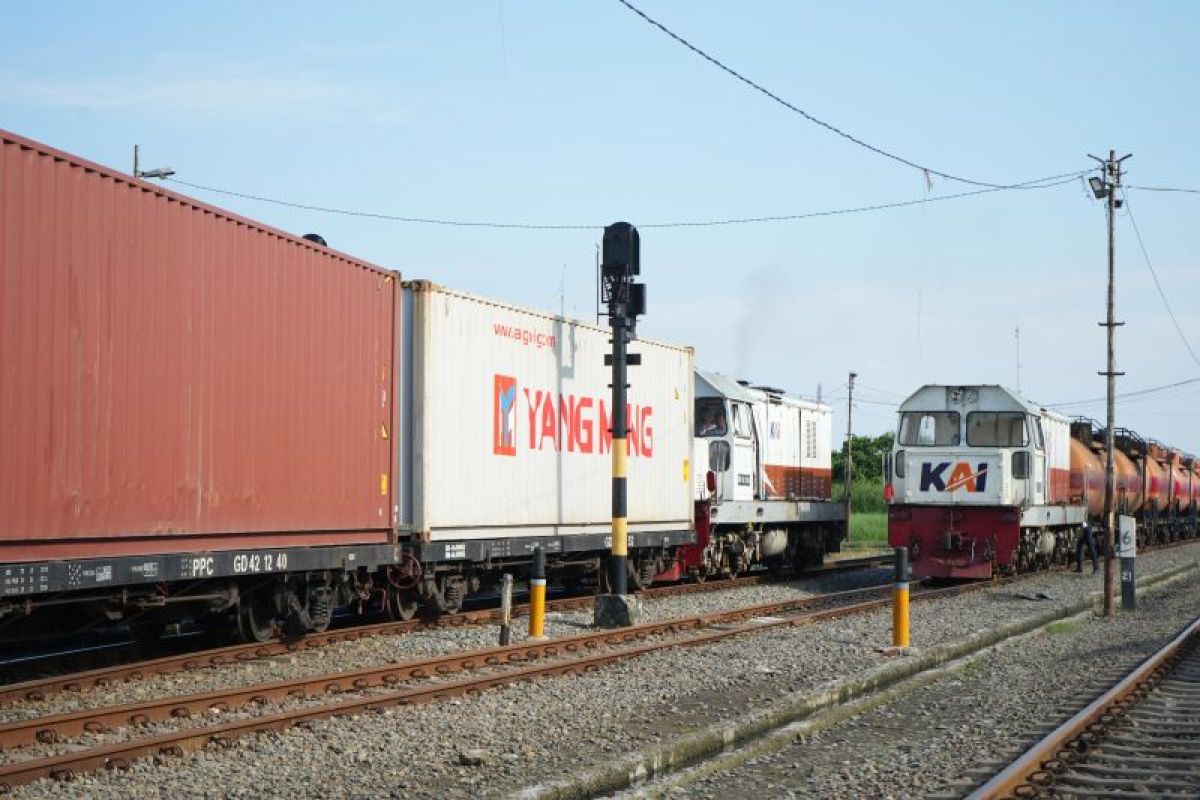
In the first quarter of 2026, PT Kereta Api Indonesia (Persero)’s container transport performance showed an improvement at the start of the year. Throughout Q1 2026, the container transport volume reached 1,371,036 tonnes, a 14.57% increase compared to the same period in 2025, which was 1,196,600 tonnes.
On the other hand, the national goods distribution needs continue to rise in line with population growth. According to data from the Central Statistics Agency, Indonesia’s population is estimated to reach around 281 million people in 2025. With that scale, logistics movement requires a mode of transportation capable of carrying large volumes, on schedule, and efficient in the long term.
KAI Vice President of Corporate Communication, Anne Purba, stated that this situation indicates the need to strengthen the rail-based logistics system as part of the national solution.
“With the continuously increasing logistics volume, a mode of transportation is needed that can carry large-scale loads consistently. Railways become one option that can be optimised to support more efficient and structured national distribution,” said Anne.
From an operational perspective, punctuality performance also improved. In Q1 2026, the on-time departure punctuality for freight transport was recorded at 95.97%, while arrival punctuality reached 91.77%. These figures are better than the same period the previous year, which was 95.89% for departures and 87.04% for arrivals. This consistency is an important factor in maintaining supply chain reliability.
These efforts are reinforced through strategies to increase transport capacity. KAI currently operates wagons with an average capacity of 50 tonnes per wagon, gradually increasing to 70 tonnes. With one trainset of up to 60 wagons, the carrying capacity can reach 4,200 tonnes in one trip. This capacity provides significant efficiency in distributing large quantities of goods at once and demonstrates the potential of railways in reducing dependence on road transport for long-distance distribution.
In a broader context, national logistics distribution is still dominated by road-based transport. Based on the National Logistics Ecosystem (NLE) study by the Coordinating Ministry for Economic Affairs of the Republic of Indonesia (2024), Indonesia’s logistics costs remain around 14.29% of Gross Domestic Product (GDP). This condition indicates the need for diversification of transport modes to improve distribution efficiency.
Additionally, in the National Railway Master Plan (RIPNas) 2030 by the Ministry of Transportation of the Republic of Indonesia, the rail-based freight transport share is targeted to reach 15% by 2030, from the current position below 5%. This target illustrates the need to increase capacity and the role of rail mode in the national logistics system.
Strengthening rail-based transport also contributes to maintaining road infrastructure. Shifting part of goods distribution to railways can reduce the burden of heavy vehicles on highways, thereby helping to extend the service life of roads and suppress infrastructure maintenance costs.
The greatest development potential lies on Java Island as the national economic activity centre. Integration between industrial areas, ports, and rail networks becomes a key factor in driving increased container transport volume.
Anne added that strengthening rail-based logistics transport requires cross-sector collaboration to operate optimally.
“Going forward, rail-based logistics development needs to be supported by network integration, capacity enhancement, and synergy with various parties. With those steps, goods distribution can run more efficiently and be able to meet the continuously growing economic needs,” Anne concluded.
With the trend of transport volume growth and the continuously increasing national logistics needs, strengthening the rail mode becomes an important part in building a more efficient, measurable, and sustainable distribution system.