
Kadin Welcomes Deputy House Speaker's Call to Postpone Indian Pickup Truck Imports
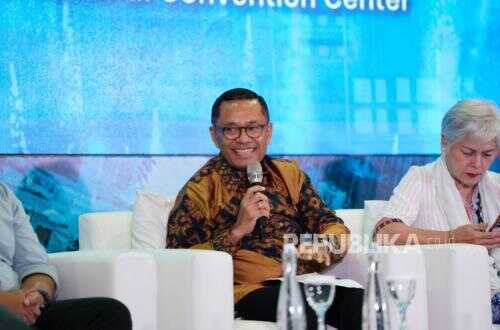
JAKARTA — The Indonesian Chamber of Commerce and Industry (Kadin) has expressed its appreciation for the swift response from Deputy Speaker of the House of Representatives Sufmi Dasco Ahmad, who called on the government to postpone plans to import 105,000 vehicles from India for the Red and White Village/Sub-district Cooperative programme (KDKMP).
Kadin Deputy Chairman for Industry Saleh Husin said Dasco’s response not only aligned with the aspirations of industry players but also served to save the national automotive industry from destruction and prevent losses that would befall the Village Cooperatives.
“We at Kadin extend our highest appreciation to Mas Dasco and salute his swift response. Just imagine if the 105,000 vehicles used by the Red and White Village Cooperatives were imported products — what would happen with after-sales service? Such a policy could turn imported vehicles into scrap after a number of years due to spare parts difficulties,” Saleh said in a written statement in Jakarta on Monday (23/02/2026).
According to Saleh, if Indian manufacturers are serious, they should build factories in Indonesia as Toyota, Suzuki, Honda, Daihatsu, Mitsubishi, Hino, Hyundai, DFSK, BYD, and VinFast have done. The government needs to place all business players on a level playing field.
“We have coordinated with automotive industry players, including component manufacturers. They are appealing to the President to halt the vehicle imports from India that are currently underway,” Saleh said.
Saleh stated that the import of fully built-up (CBU) vehicles by PT Agrinas Pangan Nusantara could kill the domestic automotive industry, fail to stimulate the economy, and contradict the industrialisation programme being promoted by the government. He assessed that the President’s target of eight per cent economic growth could go unmet if national industry does not grow.
Saleh noted that the policies of all parties, particularly state-owned enterprises, must be guided by President Prabowo’s directives. He repeatedly emphasised the importance of downstream processing and industrialisation to increase added value, expand employment, and boost exports.
The automotive industry has significant backward and forward linkages, meaning the sector has very strong economic interconnections, both upstream (material suppliers) and downstream (distribution and services). This makes the automotive industry a significant driver of economic growth due to its extensive dependence on the supply chain and its impact on other sectors.
“We should be supporting the President’s wishes, not killing off existing investments and industries,” Saleh added.