
Kadin Urges President to Cancel Import of 105,000 Vehicles for Village Cooperatives, Warning It Could Kill Automotive Industry
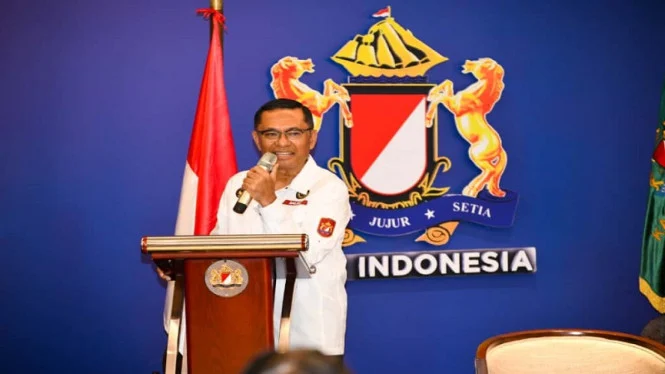
Jakarta, VIVA – The Indonesian Chamber of Commerce and Industry (Kadin) has urged President Prabowo Subianto to cancel plans to import 105,000 commercial vehicles worth Rp 24.66 trillion from India to support the operations of the Merah Putih Village/Sub-district Cooperatives (KDKMP).
The import of fully assembled vehicles (completely built up/CBU) is considered potentially fatal to the domestic automotive industry, unlikely to stimulate the economy, and entirely at odds with the industrialisation programme being promoted by the government. Moreover, the national automotive industry has declared itself capable of supplying the pickup trucks required by the KDKMP.
“After receiving input from automotive industry players and associations, we urge the President to cancel the plan to import 105,000 commercial vehicle units,” said Kadin Deputy Chairman for Industry Saleh Husin in a statement on Sunday, 22 February 2026.
The former Minister of Industry said domestic automotive companies have stated their readiness to fulfil the KDKMP’s requirements. “On one hand, the President has set an economic growth target of 8 per cent, and to achieve that, one key factor is that domestic industry must grow so that we gain added value, create jobs, and generate multiplier effects,” he said.
“We should be supporting the President’s aspirations, not killing off existing investments and industries,” he added.
Saleh said the KDKMP’s need for pickup trucks should be used as an opportunity to advance the national automotive industry. Importing fully assembled vehicles would have far-reaching consequences for the domestic automotive sector that has already been established. He explained that the automotive components industry, which constitutes the backward linkage of the motor vehicle assembly industry, would be severely affected. This situation threatens the sustainability of domestic vehicle production.
He explained that automotive component industries — including engines, bodies, chassis, tyres, batteries, seats, and electronics — are crucial to the strength of the automotive supply chain.
“The stronger local automotive component production is, the higher the local content level, the greater the labour absorption, and the larger the multiplier effect on the economy. Conversely, if the market is dominated by fully assembled imported vehicles, the national components industry will come under pressure and the downstreaming and industrialisation agenda could weaken,” Saleh elaborated.
President Prabowo, through his 17 priority programmes and eight priority agendas, has emphasised the importance of downstreaming and industrialisation in creating jobs and achieving economic justice. The downstreaming and industrialisation programmes are believed capable of increasing added value, expanding employment, and delivering multiplier effects for the economy. Through downstreaming and industrialisation, technology transfer and local human resource development can be achieved.