
Kadin Urges Loading and Unloading Regulation to Support National Investment Climate
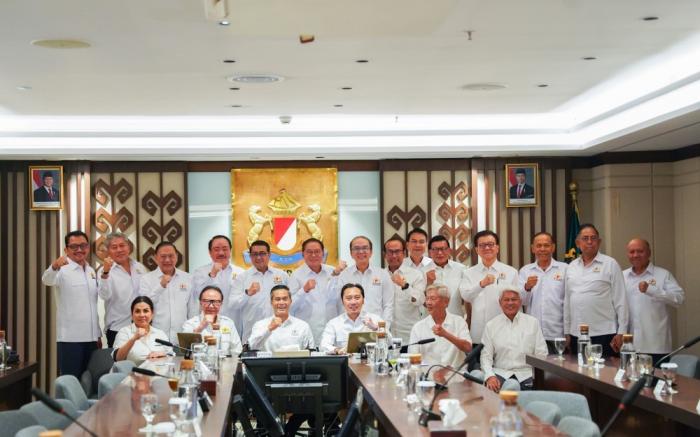
JAKARTA – Certainty in port sector regulation is increasingly vital as Indonesia seeks to maintain its investment competitiveness and national logistics efficiency.
Loading and unloading operations, particularly those involving Ship to Ship (STS) transfers, have become a focal point as they directly impact port operational efficiency, distribution costs, and business operators’ ease of conducting their activities.
Against this backdrop, the business community is hoping for clearer rules to ensure operations proceed in an orderly and competitive manner. The Chamber of Commerce and Industry (Kadin) Indonesia has called for loading and unloading regulations designed to support the investment climate.
For business operators, regulatory certainty serves as a foundation to prevent business disruptions from field-level issues, especially in strategic sectors related to supply chains and commodity distribution. Consequently, Kadin is working to bring together various stakeholders to discuss port loading and unloading issues collaboratively and develop more constructive policy measures.
Kadin Promotes Regulation Providing Certainty for Business
Kadin Indonesia is advancing loading and unloading regulations that support the investment climate for the business community. Andi Yuslim Patawari, Deputy General Chairman for the Kalimantan Region at Kadin Indonesia, stated that Kadin is working to maintain good relations with all parties to create a conducive investment environment.
According to him, regulatory certainty is essential for business operators to conduct their activities with confidence and comfort. In the port sector, clear rules not only facilitate smooth operations but also provide assurance to investors seeking to commit capital to logistics, distribution, and related business activities.
“With clear regulations and rules, we want business operators to feel comfortable conducting their activities,” Andi said in a statement in Jakarta on Friday.
This statement affirms that the business community’s current needs extend beyond market opportunities to include legal certainty and governance. When regulations are clearly structured, business operators can focus more on operational efficiency, business development, and enhanced competitiveness.
In a broader context, loading and unloading rules are an important component of efforts to improve the national investment ecosystem. If port operations proceed more orderly, efficiently, and with fewer obstacles, this will positively affect investor perceptions of Indonesia’s business climate.
Focus Group Discussion on STS Transfers Addresses Port Dynamics
Kadin convened a Focus Group Discussion (FGD) on the implementation of Ship to Ship (STS) transfers at Indonesian port facilities. The FGD was organised in response to emerging complexities in loading and unloading operations, particularly at STS transfer locations in Indonesian ports.
These dynamics are believed to impact port operations, vessel activities, various stakeholders, labour, and business competition aspects.
Through this forum, Kadin Indonesia brought together relevant ministries and agencies along with business operators to discuss various field-level issues. The discussion is expected to provide more comprehensive understanding whilst formulating constructive policy measures.
Andi stated that Kadin brought together various parties involved in ship loading and unloading regulations. Various field problems can be resolved through dialogue and joint discussions among stakeholders.
Kadin’s step in convening the FGD demonstrates that resolving loading and unloading issues cannot be done unilaterally. Many interconnected aspects are involved, ranging from port regulations, vessel operations, labour, to healthy business competition. Therefore, a joint forum is considered an important space to bring together the perspectives of regulators, business operators, and technical field personnel.
Furthermore, Kadin also emphasised the importance of reducing logistics costs to enable Indonesia to compete in supply chain provision, particularly in the energy sector such as coal mining in the Kalimantan region.
This emphasis on logistics costs is particularly relevant because ports represent a key distribution node. If loading and unloading processes become more efficient, logistics costs can be reduced, ultimately strengthening Indonesia’s global market competitiveness.
Government Focuses on Governance and Worker Protection
Meanwhile, Tri Aditya Putra, Deputy Assistant for Organisation and Legal Affairs at Indonesia’s Ministry of Cooperatives, stated that his office continues to push for improved governance of cooperatives managing dock worker activities at ports.
He considered discussions involving various parties to be important so the government receives comprehensive input from all stakeholders.
“In the future, such discussions should also involve all parties, including stakeholders, field implementers, and other related parties, so we can gather comprehensive input and provide the best solutions for everyone,” he said.
This statement confirms that improving the loading and unloading sector involves not only business rules but also institutional governance structures supporting workers. Cooperatives involved in dock worker activities must have sound governance so field operations are more orderly and professional.
From the labour perspective, Yuli Adiratna, Director of Labour Supervision System Development at Indonesia’s Ministry of Manpower, emphasised the importance of ensuring protection for dock workers at ports. According to her, such protection can be realised through improving worker competency, ensuring occupational safety standards, and providing other necessary safeguards for dock workers.