
Kadin Concerns New Import Rules Will Raise Livestock Feed Prices
The Indonesian Chamber of Commerce and Industry (Kadin) has responded to the government’s policy on regulating wheat imports for animal feed through the state-owned enterprise PT Berdikari. This measure is governed by the government via Trade Ministry Regulation No. 11 of 2026.
Trade Ministry Regulation No. 11 of 2026 on the Second Amendment to Trade Ministry Regulation No. 18 of 2025 concerning Policies and Regulations on Imports of Agricultural and Livestock Products. This regulation was promulgated on 24 April 2026.
Subsequently, the regulation takes effect 14 days after promulgation, meaning on 8 May 2026. This regulation forms part of the government’s efforts to strengthen food security while curbing import dependency.
Vice Chairman of the Industry Sector of Kadin Indonesia, Saleh Husin, stated that this policy can indeed be understood as the government’s attempt to strengthen control over the supply and prices of strategic commodities.
This approach enables more coordinated import management, reducing volatility from global supply, and positions the state-owned enterprise as a stabilisation instrument (buffer) within the framework of food security and industrial policy.
Nevertheless, Saleh cautioned that this government step has the potential to squeeze the livestock industry because the offered prices reach 370-375 US dollars per tonne, higher than direct imports by business actors at only 270 US dollars per tonne.
“The difference of around 100 US dollars per tonne, we assess as inefficient and risks triggering an increase in livestock feed prices,” he said in a statement received on Wednesday (6/5/2026).
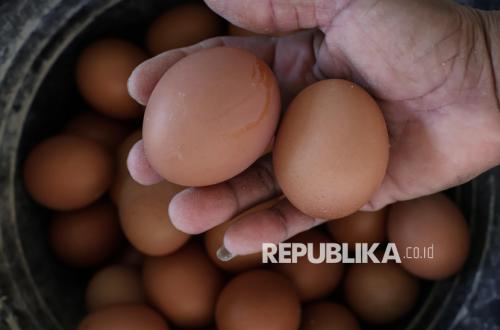
Ultimately, this drives up prices for chicken, beef, eggs, and fish, as well as amplifying pressure on food inflation. Thus, questions arise from industry players regarding the urgency of mandatory imports through the state-owned enterprise if it only adds to cost burdens.
Saleh added that the significant price difference, around 100 US dollars per tonne, also indicates potential inefficiencies. “This scheme risks creating market distortions due to the loss of competitive mechanisms and increasing input costs for the livestock industry,” he emphasised.
The impact not only squeezes business margins but also has the potential to be passed on to consumers in the form of price increases for food products like chicken, eggs, and meat, thereby heightening inflationary pressures.
As such, Saleh explained, although this policy has justification at the macro level, an implementation that is too closed and inefficient can be counterproductive.
A more balanced approach, for example, by opening limited options for direct imports while still maintaining the state-owned enterprise’s role as a stabiliser. “This would be more effective in maintaining a balance between market stability and industrial efficiency.”