
Kadin assesses education services and industry as optimistic in facing pressures
Jakarta (ANTARA) - The Indonesian Chamber of Commerce and Industry (Kadin) assesses that several business sectors, including information and communication, education services, and processing industries, continue to exhibit strong optimism amid escalating global economic pressures at the beginning of 2026.
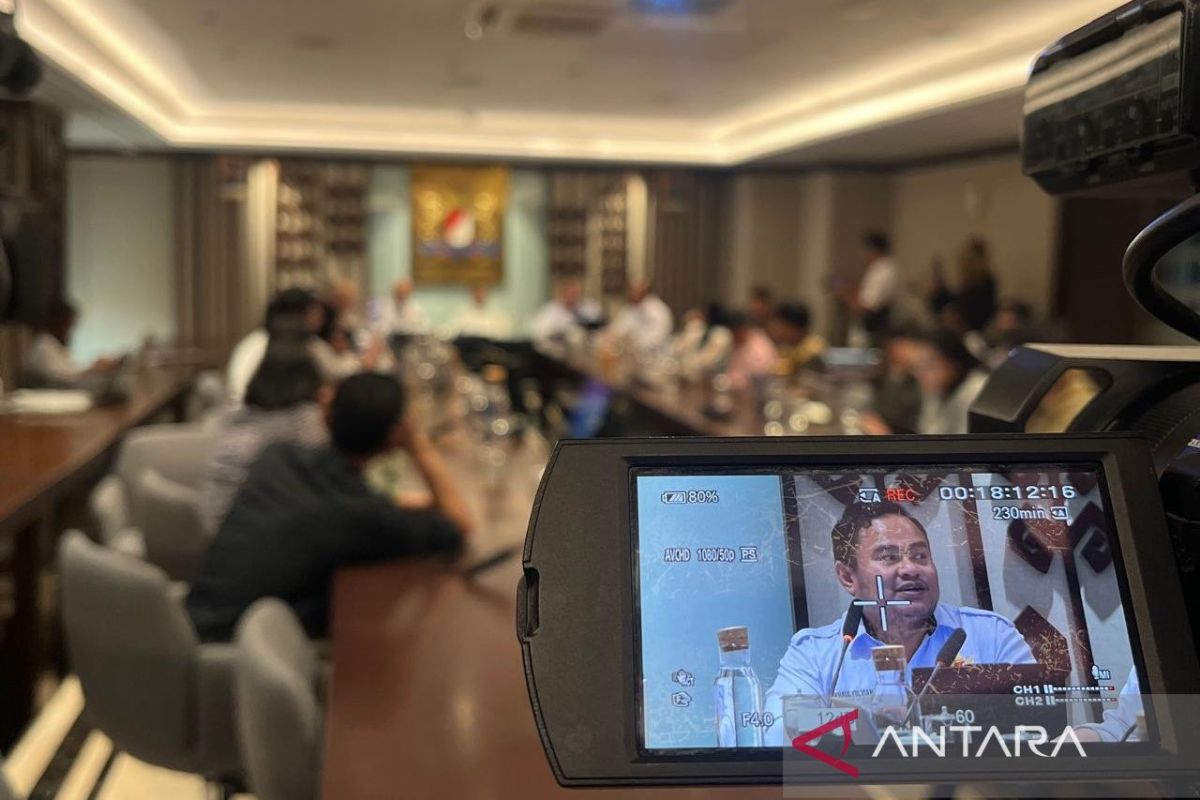
Director of Insights at the Kadin Indonesia Institute, Fakhrul Fulvian, stated in Jakarta on Friday that the Q1 2026 Business Pulse survey captures a downward trend in business sentiment, yet reveals robust confidence in certain sectors.
“The most optimistic sectors are three: information and communication, education services, and processing industries; these are more optimistic than the others,” he said.
He explained that 2026 began with heightened global economic uncertainty, ranging from supply chain disruptions and commodity price fluctuations to exchange rate pressures. These conditions have influenced business perceptions of performance.
The survey, conducted from mid-March to early April 2026 among 210 Kadin members across 27 provinces, indicates a decline in business sentiment compared to the previous quarter.
The proportion of business actors rating business conditions as improving fell from 39.3 percent to 25.2 percent, while those rating conditions as worsening rose to 40.5 percent.
Fakhrul noted that these pressures stem from weakening demand, rising operational costs, and consumer purchasing power that has not fully recovered.
Additionally, he mentioned that education services, accommodation, and processing industries also recorded relatively higher investment plans compared to other sectors. These three sectors are deemed more adaptive and less directly impacted by geopolitical volatility.
In contrast, sectors such as wholesale trade, corporate services, and mining and quarrying exhibit higher levels of pessimism.
This is partly influenced by supply chain pressures and changes in government policies.
Regarding challenges, the survey records a significant increase in perceptions of government policies as a business obstacle, from just 0.3 percent in the previous quarter to 16.7 percent.
Key issues highlighted include changes in environmental policies, energy subsidies, and sectoral regulations.
Amid these pressures, business actors tend to adopt cautious measures, including holding back on expansion and focusing more on maintaining liquidity. This is reflected in the decline in investment plans from 47 percent to 38.9 percent.
However, the level of business readiness to face geopolitical risks is considered quite good. As many as 36 percent of respondents stated they are prepared for global conflicts, while 32 percent rated conditions as average.
The primary needs of the business world currently are government support, particularly in the form of subsidies and fiscal incentives, as well as eased access to financing to maintain business stability.
Kadin views consistent government policy direction and energy price stability as key factors in enhancing business confidence moving forward.
Furthermore, openness in global markets and the utilisation of technologies such as artificial intelligence also represent new sources of optimism.