
K.H. Noer Ali, the Fighting Lion of Karawang-Bekasi
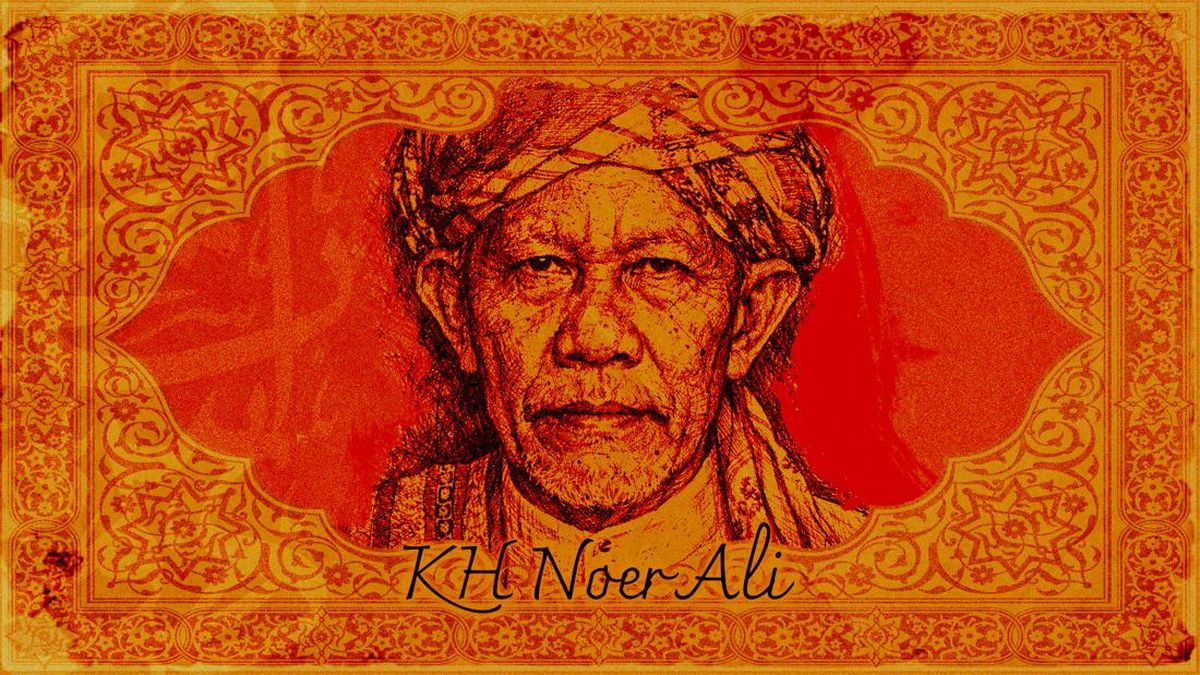
K.H. Noer Alie (1914-1992), the ‘Lion of Karawang-Bekasi’, was designated by the state as a National Hero of Indonesia through Presidential Decree Number 085/TK/2006 on 3 November 2006. He was a cleric who also fought to defend Indonesia’s independence from Dutch colonial rule. Noer Alie was born to a farmer couple, his mother Maimunah binti Tarbin and father Anwar bin Layu. He was the fourth of nine siblings. Unlike other villagers, Noer Alie’s family were a humble family. Unlike communities from other villages where most worked as farm labourers on others’ land, Noer Alie’s family were farmers on their own land, although they owned only a few fields. He began his early education by studying religion with several religious teachers in Bekasi. In 1934, he continued his education by performing the Hajj to the holy land of Mecca for six years. He founded an organisation named Persatuan Pelajar Betawi (Betawi Students Association). While in the holy land, a foreign student sparked Noer Alie’s sense of nationalism: “Why can the Netherlands, a small country, colonise Indonesia? The Netherlands should be able to be expelled easily if there is the will!” After returning to the archipelago, Noer Alie immediately dedicated his knowledge by founding an Islamic boarding school (pesantren) in Ujungmalang, a region in Bekasi Regency. His journey as a Bekasi patriot continued when Indonesia gained independence; he was elected Chairman of the National Indonesian Committee of the Region (KNID) Babelan Branch. The man also nicknamed ‘the White Eel’ participated in defending independence by becoming Chairman of the Bekasi People’s Militia and commander of Battalion III Hasbullah Bekasi. During the First Dutch Military Aggression (Aggression I), Noer Alie conducted guerrilla warfare in West Java. During this time, he founded and commanded the Central Headquarters of Hisbullah-Sabilillah (MPHS) in Greater Jakarta. Rawa Gede. During the massacre at Rawa Gede, Noer Alie became the spark that inspired people to join MPHS. About 600 fighters joined and attacked Dutch posts by guerrilla warfare. His struggle continued after the Renville Agreement when he fought the Dutch in North Banten until the Roem–Royen (Roem Royen) Agreement was established. In the Round Table Conference, Noer Alie helped Mohammad Natsir in the Indonesian delegation. Only when the Netherlands signed the recognition of Indonesia’s sovereignty did MPHS’s struggles end. After fighting on the battlefield, Noer Alie began another struggle in the fields of education and politics. In education, he established the Islamic Education Institution in Jakarta, the Madrasah Diniyah in Ujungmalang, and the Indonesian People’s School in various areas in Bekasi. In politics, he became chairman of the People’s Freedom Party (Partai Amanat Rakyat) Bekasi branch, chairman of Masyumi branch Jatinegara, a member of the Constitutional Assembly, and a member of the Daily Leadership/Consultative Council of Masyumi Central. Next he became Chairman of the Drafting Team for the Conference of Ulama-Umaro throughout West Java, which became the forerunner of the West Java Regional Ule Council (Majelis Ulama Indonesia, MUI). Noer Alie died at the age of 78. He was officially commemorated as a national hero in 2006, about 14 years after his death.