
Juwono Sudarsono, Minister to Three Presidents Who Has Now Passed Away
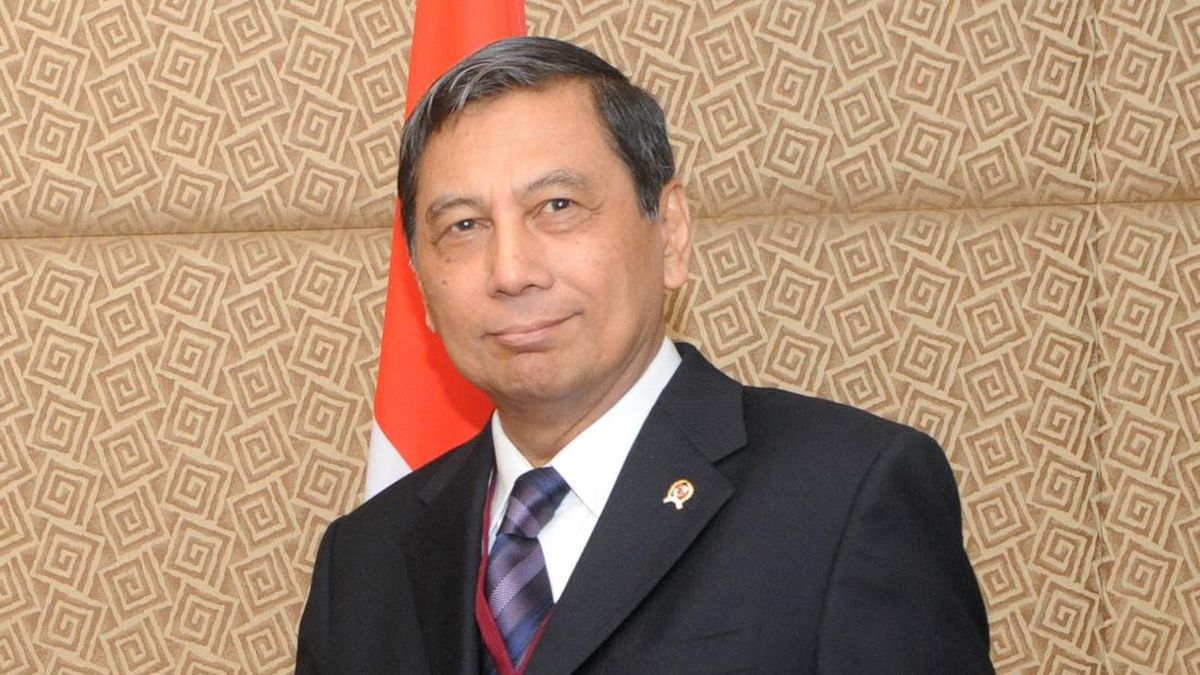
Defence Minister during the presidencies of Abdurrahman Wahid (Gus Dur) and Susilo Bambang Yudhoyono (SBY), Juwono Sudarsono passed away on Saturday (28/3). The news of his death was confirmed by Brigadier General Rico Ricardo Sirait, Head of Information for the Secretary General of the Ministry of Defence. “It is true (that he has passed away),” he told CNNIndonesia.com. In a written statement received by CNNIndonesia.com, Juwono is said to have breathed his last at Pondok Indah Hospital in South Jakarta. Juwono, who has been a Professor of International Relations at Universitas Indonesia (UI) since 1998, was the only figure trusted by four Presidents of the Republic of Indonesia to serve as a minister. He repeatedly served as a minister throughout the nation’s history, including as Defence Minister from October 1999 to August 2000 and from 21 October 2004 to 20 October 2009. Juwono was the first person from a civilian background to hold the position of Defence Minister. Previously, for about 40 years from 1959 to 1999, the Defence Minister was always from the military. This man, born in Ciamis, West Java, on 5 March 1942, was a politician and the youngest son of the late Dr Sudarsono—a diplomat who once served as Minister of Social Affairs, Minister of Home Affairs, and Ambassador of the Republic of Indonesia to Yugoslavia. During his lifetime, having moved to several countries, Juwono, who once admitted to struggling with the Indonesian language, earned a doctorate in International Relations from the London School of Economics in London, England. He also successfully obtained a PhD from the London School of Economics and Political Science in England with a dissertation titled “Indonesian Foreign Policy 1965-1975: A Case Study of Indonesia-United States Relations” in 1978, as well as a PhD from Georgetown University in England in 1985. During the Soeharto administration, Juwono was appointed as Deputy Governor of the National Resilience Institute (Lemhanas). This position marked the beginning of Juwono’s political career, leading him to eventually be appointed as a minister in various cabinets. In the Seventh Development Cabinet, formed during the administration of President Soeharto and Vice President Baharuddin Jusuf Habibie, Juwono was appointed as Indonesia’s third Minister of Environment. The 1998 riots, marked by the end of Suharto’s presidency, shortened the cabinet’s term, which was supposed to end in 2003. Subsequently, in the Reform Development Cabinet during the administration of the third President B.J. Habibie, Juwono was appointed as Minister of National Education. This cabinet lasted no more than two years, from 23 May 1998 to 20 October 1999. The Reform Development Cabinet ended and was replaced by the National Unity Cabinet under the leadership of President Abdurrahman Wahid (Gus Dur) and Vice President Megawati Sukarnoputri. This cabinet was inaugurated on 29 October 1999 and its term ended on 23 July 2001. During this period, Juwono was trusted by Gus Dur to become the first Defence Minister from a civilian background. However, on 23 August 2000, Juwono was replaced by Mahfud MD due to health reasons. Meanwhile, during the era of President Megawati Sukarnoputri and Vice President Hamzah Haz, with her Mutual Cooperation Cabinet (10 August 2001-20 October 2004), Juwono was appointed as Ambassador of the Republic of Indonesia to the United Kingdom (12 June 2003-October 2004). As time progressed, on 21 October 2004, the sixth President of the Republic of Indonesia, Susilo Bambang Yudhoyono (SBY), inaugurated Juwono as Defence Minister in the United Indonesia Cabinet. Juwono was regarded as a civilian figure who deeply understood military issues as well as the global political map. In his meeting with SBY at Puri Cikeas Indah in Bogor on Monday, 18 October 2004, Juwono discussed Indonesia’s defence and security, both domestic and international, as well as its prospects. This included plans for the formation of the “ASEAN Security Community” and “ASEAN Economic Community,” which were outcomes of the 2003 ASEAN Summit.