
Junta Military Leader Becomes President: What is Myanmar's Future?
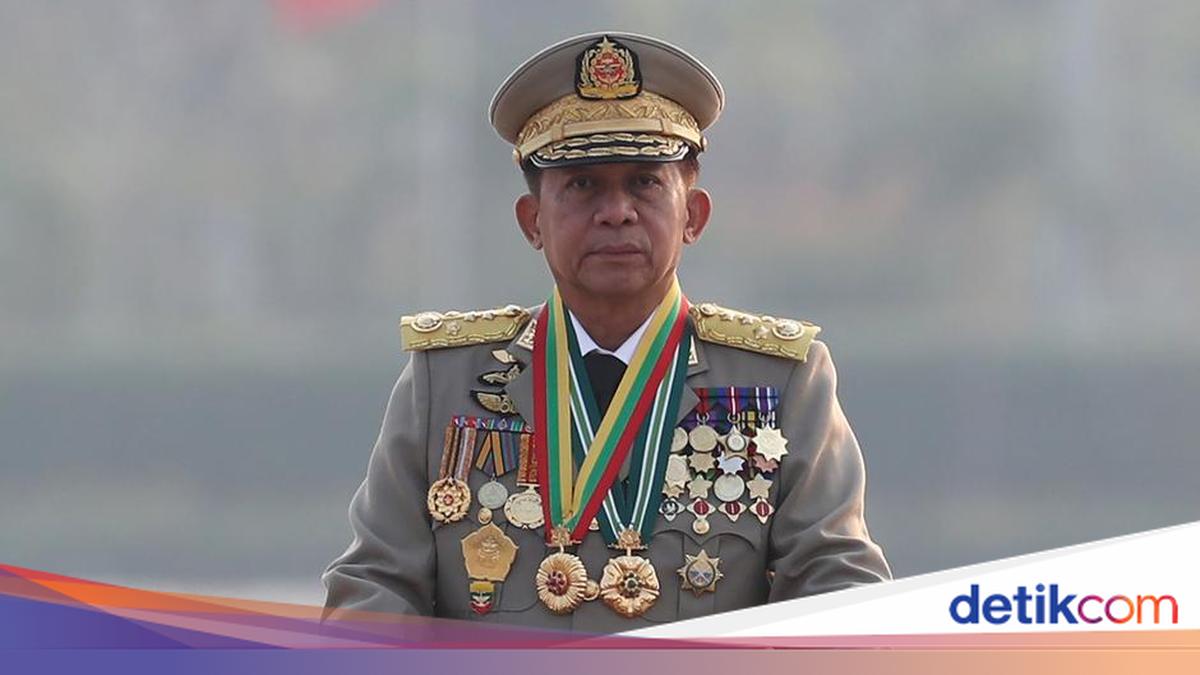
Min Aung Hlaing was elected as Myanmar’s president on 3 April 2026. The election of the former junta commander also signals that military power in Myanmar will continue. The 69-year-old general secured 429 out of 584 votes in a parliament dominated by the pro-military Union Solidarity and Development Party, as well as other parliamentarians appointed by the junta. The parliamentary vote marks the culmination of a controlled transition designed to ensure the military remains at the centre of power. Min Aung Hlaing led the military coup in February 2021. At that time, he ousted Aung San Suu Kyi, Myanmar’s leader from the National League for Democracy (NLD). Aung San Suu Kyi and her party were democratically elected. The NLD won Myanmar’s elections twice, in 2015 and 2020. However, the military generals claimed there was fraud behind the NLD’s victory. In the end, the military carried out the coup, which resulted in a civil war in Myanmar. Unending civil war Five years after the military coup, Myanmar is still embroiled in civil war. The military still controls the major cities and key state institutions. Nevertheless, the military actually controls less than half of Myanmar’s territory. Most border areas and rural regions are contested or controlled by opposition groups. In February 2026, the United Nations reported around 6,800 civilian deaths and 3.6 million displacements due to the conflict since 2021. Some estimates suggest the death toll is much higher. Min Aung Hlaing’s victory is seen as not resolving the conflict in Myanmar. Even the election could not be held across all regions due to ongoing fighting. The election only took place in 265 out of 330 administrative townships in Myanmar. The United Nations, Western governments, and human rights groups have stated that the election was not free and fair. Parties that do not support the junta were sidelined, while criticism of the election was criminalised. Meanwhile, Aung San Suu Kyi, now 80 years old, is serving a 27-year prison sentence on various charges, including corruption. The Union Solidarity and Development Party won 81% of the seats in the election. Under the current constitution, parliament also allocates a quarter of seats to the military. Min Aung Hlaing’s efforts to consolidate power since 2021 Min Aung Hlaing has also established various new mechanisms to ensure the military’s authority remains significant. The most prominent is the formation of the Union Consultative Council. Analysts describe the five-member council as a “super institution” above the executive, legislative, and judicial branches. In practice, the military commander is not truly relinquishing power but distributing it to various institutions dominated by himself and his allies. The transition to “civilian government” is not democratic, Yoshihiro Nakanishi, a professor at Kyoto University’s Centre for Southeast Asian Studies, told DW. “On the contrary, this is an attempt to formalise the military regime and treat the 2021 military coup as an unchangeable reality,” Yoshihiro added. Myanmar’s economy, battered and facing a fuel crisis The economy of Myanmar has been torn apart by war, sanctions, and an electricity crisis in the country. Now, Myanmar must also face the impact of the war in Iran and disruptions to shipping routes through the Strait of Hormuz. Myanmar is heavily dependent on imports of refined fuel from Singapore and Malaysia, so rising oil prices are inevitable. In addition, the US-Israel war with Iran is expected to increase transportation costs, inflation, and make daily life more difficult in Myanmar. The Myanmar junta has even imposed fuel restrictions on private vehicles. “The energy crisis is a serious additional challenge for any government seeking to revive a battered economy amid ongoing struggles for control in various parts of the country,” said Moe Thuzar, senior fellow and coordinator of the Myanmar Studies Programme at ISEAS–Yusof Ishak Institute, to DW. “The civil war situation in Myanmar over the past five years has not subsided; nor has the military’s determination to ‘conduct effective combat operations against terrorists,’ as they call the resistance groups.” The junta expands use of drones in military operations The ongoing fighting indicates no breakthrough for peace in Myanmar. The junta is expanding conscription, increasing the use of drones, and relying more on air power. In December 2025, the military recorded several advances in some areas, though it does not dominate the entire country. Airstrikes are becoming more intensive and causing large numbers of civilian casualties, especially in Sagaing, Rakhine, and other conflict areas. Civil war potentially heating up Before taking office as president, Min Aung Hlaing resigned from his 15-year position as military commander. He was replaced by his close ally, Ye Win Oo. He is a former intelligence chief who led troops in the arrest of Aung San Suu Kyi during the 2021 coup. Analysts say Ye Win Oo’s promotion is solely due to his loyalty to Min Aung Hlaing. On the other side, opposition groups remain resilient and announced the formation of a new body ahead of the presidential vote for Min Aung Hlaing. “The Spring Revolution and civil war in this country are likely to continue and even intensify,” said Sabe Soe, director of the NGO Burma Center Prague, to DW. “Even the military continues to launch airstrikes on civilians. The humanitarian situation and level of repression are expected to worsen in the coming months,” Sabe added. He also emphasised the importance