
Junaedi and His Tempe Business That Won Him a House with Help from BRI
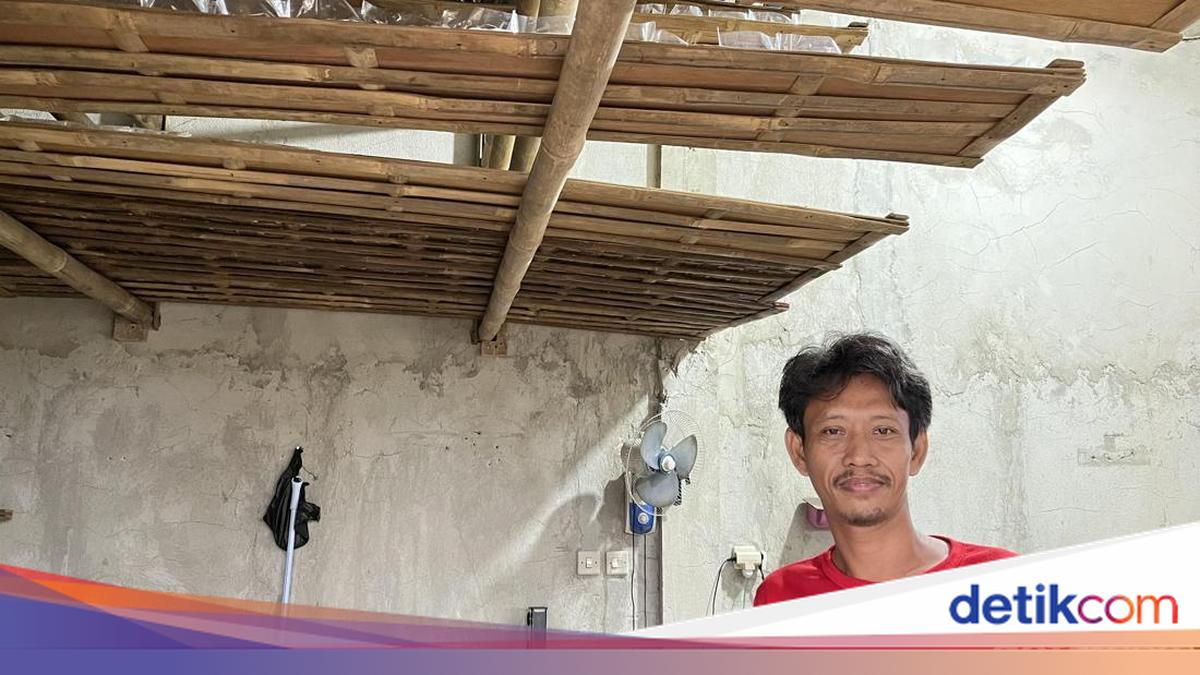
Every day, Junaedi leaves for Pasar Cikema in Cibinong, Bogor Regency, around 00:00 Western Indonesia Time to peddle his own tempe. He returns home around 09:00 WIB to rest, then resumes tempe production in the afternoon.
That busy routine was evident when detikcom visited his home and tempe production site in Citeureup, Bogor Regency. Junaedi was seen packing the fermented soybeans into plastic bags, while a worker was tidying the tempe that had gone through fermentation.
“If I don’t get help, the workers might suffer,” said Junaedi when met at his home in Citeureup.
He has followed this routine since moving to Bogor about 19 years ago. He chose tempe making as his business because he had previously worked with his uncle who was also a tempe seller in his hometown.
In the early days, he could produce only about 10-15 kilograms of tempe per day. But gradually the business grew. Now he is able to produce one quintal per day, roughly 3 tonnes per month.
The process he undertakes with diligence. He strives to retain customers while also seeking strategic stalls to keep his goods selling well.
“So, in selling, you need to choose where to sell to attract customers and keep them happy. You want to ensure customer satisfaction, not disappoint them,” said the 46-year-old.
Impact of BRI’s KUR
In his business journey, Junaedi realised that to increase revenue, he also needed to add capital for production. He thus utilised a loan from the Kredit Usaha Rakyat (KUR) programme of BRI.
Junaedi says he has borrowed from BRI three times. The previous two loans have been paid off, each worth Rp80 million and Rp150 million. The latest loan through BRI’s KUR has only been in operation for a few months, valued at Rp100 million with a three-year tenor.
The impact of the loan has been substantial for the business and his family’s life. The loan capital from BRI has allowed his tempe business to grow rapidly.
The first loan of Rp80 million was used to boost working capital. Some of the funds were used to buy land in Citeureup measuring 150 square metres.
He realised that while he was renting elsewhere, production could not run at full capacity. Therefore, he began considering moving to a more suitable location.
“That is, when I was renting, I had to spend around Rp1 million each month. Now that BRI has lent me money, I own a place of my own, the business is growing, and there is capital, which is nice,” said Junaedi.
Thereafter, Junaedi applied for another loan of Rp150 million. This money was used for building a house and expanding tempe production.
Since then, Junaedi’s tempe business has grown rapidly. In fact, tempe production even reached two quintals per day.
“Praise be to God, all from BRI. The land purchase was all financed by BRI,” said Junaedi.
Today, Junaedi’s tempe business gross revenue can reach around Rp15 million per month. The earnings are used for family needs and recycled back into the business as working capital.
Additionally, profits are used to pay employees. He currently employs one worker who is related to him.
When detikcom visited his home, two labourers were seen repairing the front of Junaedi’s house. The renovations were to make the production site more suitable after a visit from the Nutrition Fulfillment Service Unit (SPPG) for a planned collaboration under the MBG programme.
Junaedi is grateful that the KUR BRI loan has helped develop his business to the point where he can own a house and his own tempe production site. He hopes the business will continue to grow in the future.
“Yes, hopefully the KUR assistance will continue; as business people you sometimes need capital, and I am truly grateful,” said Junaedi.
BRI Appreciates Tempe Micro-, Small and Medium Enterprises (MSMEs)
The story regarding the impact of BRI’s KUR programme on residents’ economic improvement was also confirmed by the BRI Unit Citeureup Officer, Yoserio Saragih. Yose said he had directly observed the programme’s benefits for Junaedi’s tempe business in the Tempe Block, his assigned area.
“So, I personally see that it is very beneficial because they manage it not for odd things, no. They focus on their businesses or assets,” Yose told detikcom.
In addition, according to Yose, repayments by business people in the area have been relatively smooth. In fact, the head office of BRI even provided rewards for residents in the Tempe Block.
“The reward comes in the form of funds from the head office. We also award prizes, such as additional gifts, things like panjat pinang, and so on,” Yose said.
Yose explained that disbursement of KUR BRI loans is relatively rapid while still following proper procedures. Moreover, according to Yose, Junaedi and other traders in the Tempe Block have used the loan funds productively.
“In general, the residents there are not into weird things, no one uses illegal lending and so on. So the residents are all merchants, decent people, and that makes our processes fast,” he said.