
Judge Questions Nadiem: Agrees to Chromebook Procurement but Disagrees with Being the Decision-Maker?
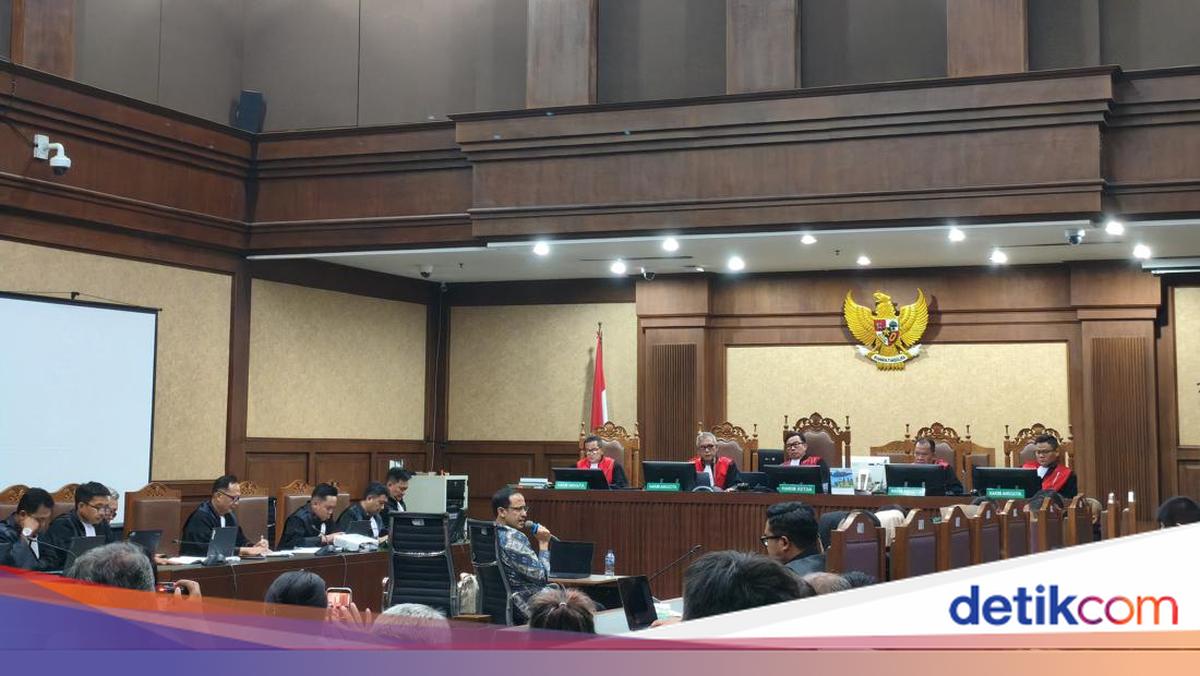
The judge questioned the defendant, former Minister of Education, Culture, Research, and Technology Nadiem Anwar Makarim, regarding his stance on agreeing to the Chromebook procurement. The judge highlighted that Nadiem agreed with the procurement but did not agree to being identified as the party deciding on the procurement.
This was raised by the judge during the defendant’s examination hearing at the Jakarta Corruption Court on Monday (11/5/2026). The judge asked Nadiem who decided on the procurement during his tenure as minister.
“Earlier I heard your statement that you strongly agree with this Chromebook procurement and the use of Chromebooks, but you do not agree with the statement that you decided it?” asked the judge.
“That’s correct, Your Honour,” replied Nadiem.
“If this Chromebook procurement was very beneficial at the time, why, in this incident, does it seem like everyone is avoiding responsibility, stating that it wasn’t them who decided? If not you, then who decided on this major activity?” asked the prosecutor.
In response to the prosecutor’s question, Nadiem stated that the decision at that time was taken by the director-general. He mentioned that the director-general issued the decree (SK).
“The director-general issued the SK, the director issued the guidelines and technical instructions. Those are already documents,” explained Nadiem.
“Okay,” responded the judge.
“Whoever in the ministry issues the document is the one who decides. So, if there’s a document that I sign, then I am the one who decides. If the director-general signs it, then the director-general decides; if the director, then the director decides,” stated Nadiem.
“It’s the same with procurement, Your Honour. In procurement, only the PPK signs the results of the procurement, meaning the decision-maker is the PPK, like that, Your Honour,” he continued.
The judge then inquired about the ministerial regulation (permen) regarding special allocation funds (DAK). The judge asked whether there was any connection between that permen and the Chromebook procurement. However, Nadiem answered that there was no connection.
“The one shown earlier is the permen, right? What number was it? The one signed by the defendant,” asked the judge.
“Permendikbud No. 5 of 2021,” answered Nadiem.
“Without that permen, could this activity proceed?” asked the judge.
“Clearly, Your Honour,” replied Nadiem.
“The reason?” asked the judge.
“I’m glad Your Honour asked that question. Whether that permen is signed or not, the indictment concerns the Chromebook procurement within the Ministry of Education, Culture, Research, and Technology. The DAK permen has absolutely no influence on the ministry’s procurement with the ministry’s budget,” explained Nadiem.
“So, whether you sign the DAK permen or not, whether it is issued or not, it’s not an issue? The project still proceeds?” asked the judge.
“For the Chromebook procurement in the ministry and the use of the budget, it has absolutely no connection. Whether I sign it or not, the Chromebook procurement in the Ministry of Education will proceed or not, it’s the same; it’s an internal Ministry of Education matter,” answered Nadiem.
In this case, Nadiem is charged with corruption related to the Chromebook laptop procurement during his tenure as Minister of Education, Culture, Research, and Technology. The project is said to have caused a state loss of Rp 2.1 trillion.
Besides Nadiem, there are three other defendants in this case. They are Sri Wahyuningsih, former Director of Primary Schools in the Directorate-General of Early Childhood Education, Basic Education, and Secondary Education from 2020-2021; Mulyatsyah, former Director of Junior High Schools in the Ministry of Education, Culture, Research, and Technology in 2020; and Ibrahim Arief (Ibam), a consultant for the Ministry of Education, Culture, Research, and Technology during Nadiem’s era.
Sri and Mulyatsyah have been found guilty. Sri was sentenced to 4 years in prison, and Mulyatsyah to 4.5 years in prison.