
JSX Plummets 2% Amid Iran Crisis, These 10 Stocks Hit Hardest
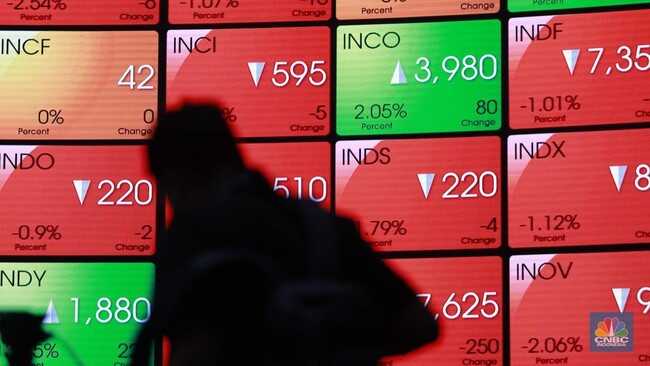
Jakarta — Geopolitical escalation in the Middle East involving Iran, the United States, and Israel appears to have affected the psychology of investors in the domestic capital market. This is evident from the decline in the Jakarta Stock Exchange (JSX) Index following market opening to -2.26% at the level of 8,045.79.
Rising global uncertainty risks prompted market participants to rebalance their portfolios, triggering sell-offs across the vast majority of shares on the Indonesia Stock Exchange (IDX).
This risk-aversion dynamic is reflected in the list of shares with the deepest declines (top losers) accompanied by significant outflow transaction volumes in today’s trading, based on data from Monday 2 March 2026 at 09:15 Western Indonesia Time.
Based on available market data, numerous shares experienced sharp corrections approaching or touching the daily Automatic Rejection Boundary (ARB). The following details the 10 top-losing stocks with the largest transaction values:
PT Bakrie & Brothers Tbk (BNBR) led the decline with exceptionally massive transaction values reaching Rp111.60 billion. The 9.81% decrease with such transaction volume indicates strong distribution activity. Amid global market panic, major investors frequently secure liquidity from shares with volatile movements.
Aside from BNBR, a notable trend emerged in media and entertainment sector stocks. Emitters such as PT MNC Digital Entertainment Tbk (MSIN), PT MD Entertainment Tbk (FILM), PT Intermedia Capital Tbk (MDIA), and PT MNC Sky Vision Tbk (MSKY) dominated the weakness list with corrections ranging between 9% and nearly 12%.
Selling pressure on this sector represents a logical response amid current unstable macroeconomic conditions. Investors tend to dispose of high-beta or secondary shares first to relocate funds to cash instruments or more defensive assets such as gold stocks or oil shares.
Other shares including TRUE, YELO, BELL, KOTA, and IBOS were not spared from selling pressure. This phenomenon underscores the high sensitivity of the domestic market to external sentiment resulting from tensions in Iran.
As long as Middle Eastern tensions show no signs of abating, volatility in the domestic exchange is expected to remain elevated. Market participants currently prioritise capital preservation over taking additional risks amid uncertainty over foreign capital flows.
Although historical data from June 2025 showed declines would last only 2 to 3 days, current escalation is deemed significantly higher and could trigger additional sell-offs given the substantial probability that geopolitical tensions will continue to intensify.