
JPMorgan Boss Sounds Alarm, World in 2026 Deemed Full of Risks
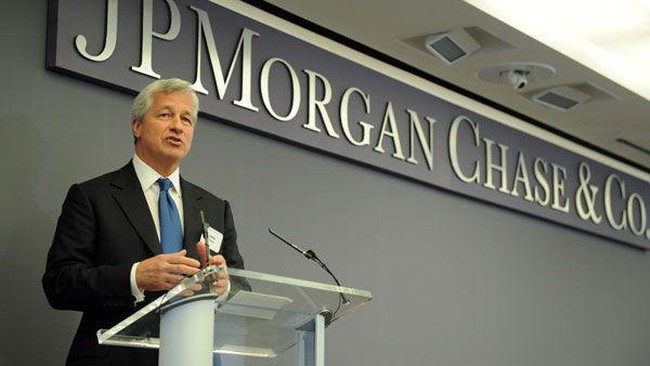
Chief Executive Officer of JPMorgan Chase, Jamie Dimon, is urging various parties to reaffirm their commitment to the “idealism of the United States (US)” amid his company’s efforts to navigate geopolitical uncertainties, economic slowdowns, and major disruptions from artificial intelligence (AI) developments.
According to CNBC International, in his annual letter to shareholders, Dimon views the 250th anniversary of the US as an important moment to strengthen the fundamental principles that shaped the nation, namely freedom, independence, and opportunity.
“The challenges we all face are very significant,” he warns, quoted on Saturday (11/4/2026).
“The list is long, but the main ones are the ongoing terrible war and violence in Ukraine, the current war in Iran and broader hostilities in the Middle East, terrorist activities, and rising geopolitical tensions, especially with China,” Dimon states.
“Even in tough times, we are confident that America will do what it has always done—look back to the values that have defined our unique nation and maintain our leadership in the free world.”
It should be noted that Dimon, the long-time leader of the world’s largest bank by market capitalisation, is one of the most vocal US corporate leaders. His annual letter not only offers notes on his company’s performance but also a broad perspective on the global situation.
In the letter dated Monday, he notes obstacles including global conflicts, persistent inflation, private market turmoil, and what he calls poor banking regulation.
Dimon says that while regulations implemented after the 2008 financial crisis have achieved some good things, those rules have also created a fragmented and slow-moving system. Moreover, the rules and regulations are expensive, overlapping, and excessive—some of which make the financial system weaker and reduce productive lending.
In the same letter, he specifically cites the negative consequences of current capital and liquidity requirements, the construction of the Federal Reserve’s (The Fed) central bank stress tests, and the processes at the Federal Deposit Insurance Corp—an independent US government agency established to maintain stability and public confidence in the banking system—which he deems poorly handled.
Dimon also mentions that JPMorgan’s reaction to the revision of the Basel III Endgame proposal—the final rules in America that complete the implementation of global regulatory standards designed to make banks stronger in facing crises—and the additional costs for global systemically important banks (GSIB) issued by US regulators last month is mixed.
“Although pleased to see the latest proposals for Basel III Endgame and GSIB aiming to reduce the required capital increase from the 2023 proposal, there are still some aspects that are frankly unreasonable,” Dimon states.
The CEO explains that with a total proposed additional cost of around 5%, the bank would need to hold up to 50% more capital on most loans to US consumers and businesses compared to large non-GSIB banks for the same set of loans.
“Honestly, that’s not right, and it’s un-American,” he emphasises.
Trade and Geopolitics
Regarding trade and geopolitics, Dimon identifies geopolitical tensions as the main risk facing his bank. This particularly includes the wars in Ukraine and Iran and their impact on commodities and global markets, describing war as a realm of uncertainty.
“The outcome of these current geopolitical events may well determine how the future global economic order unfolds. But then again, it may not,” Dimon explains.
He also cites a reconfiguration of global economic relations triggered by US trade policies. US President Donald Trump has made tariffs a hallmark policy in his second term by introducing higher import duties on dozens of trading partners and import categories.
“The trade war is clearly not over, and it is estimated that many countries are analysing how and with whom they should make trade agreements,” he adds.
“While some of this is necessary for national security and resilience, which are very important, it is difficult to predict what the long-term effects will be.”
Private Markets and AI
In the annual letter, Dimon also highlights recent turmoil where concerns around loans to software companies triggered massive withdrawal demands from private credit funds.
“Overall, private credit tends to lack significant transparency or strict ‘mark-to-market’ valuations of their loans—this increases the likelihood that people will sell if they think the environment will worsen—even if actual realised losses barely change,” Dimon says.
The executive adds that actual losses are already higher than they should be relative to the current environment.
“Whatever happens, it is expected that at some point insurance regulators will push for tighter ratings or writedowns, which will likely lead to greater capital demands,” Dimon reveals.
Regarding AI, Dimon reaffirms that the speed of AI adoption is unlike any technology before it. He says that although its implementation will be transformational, it remains to be seen how this AI revolution will play out.
“Overall, investment in AI is not a speculative bubble; on the contrary, it will provide significant benefits. However, at present, we cannot predict