
Jombor Terminal and Levia's Journey Home
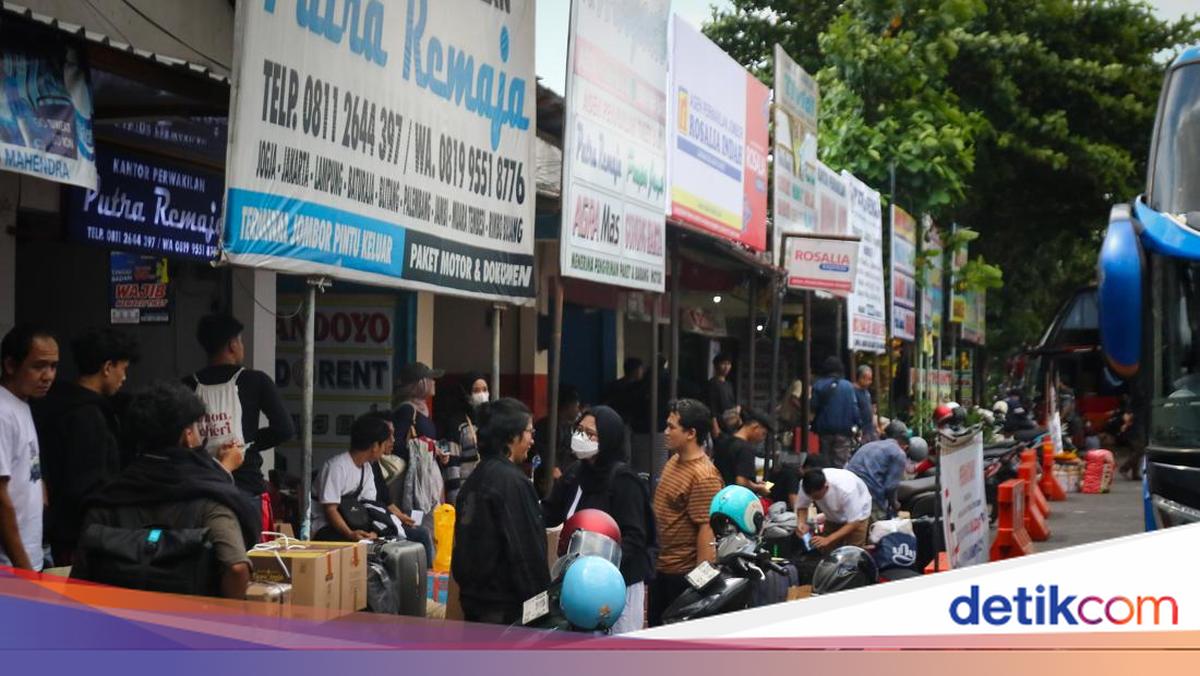
Rows of chairs in front of the night bus agency at Jombor Terminal, Sleman Regency, began filling with prospective homebound travellers in the final week of Ramadan in 2026. In one corner, Levia (20) appeared anxious, waiting for her bus to arrive.
She held tightly to a ticket she had obtained well before Ramadan began. Several times, she checked the watch circling her right wrist.
Levia had come to the terminal accompanied by one of her siblings. However, her journey home to Palembang would be made alone.
Occasionally, she glanced at each bus entering the terminal. However, the buses that arrived were not the one taking her back to her hometown in Palembang, South Sumatra.
“I work here in Jogja. This is actually the first time I’m going home, after just a year of working away,” Levia said when speaking to detikJogja on Monday (16 March 2026).
Levia was only able to travel home today after her employer granted her holiday leave. Over the next two weeks, she would spend time in her birthplace.
“My company gave me leave starting today. It turns out I got two weeks off,” she said.
For Levia, the bus represents an affordable mode of transport. Additionally, the bus stop was not too far from her home.
“Because it’s more comfortable by bus. If I fly, the airport is quite far from home,” she said.
So she sought a ticket well before Ramadan. Besides avoiding queues, it also ensured she did not miss out on tickets.
“I happened to book far in advance, preparing to go home so I could get a seat,” she said.
Whilst Levia had to undertake the long journey to Palembang alone, it was different for Hasuri. The man from Serang was returning home with three friends.
Hasuri said he had been working away in Jogja for just two months. The construction of the Jogja-Solo Tollway project brought him to the City of Students.
“Four of us are going home together; we all work on the tollway. I’ve only been away for two months in Jogja,” said Hasuri.
At least, during this Eid moment, he could satisfy his longing for family in Banten for longer before returning to Jogja. As the tollway project would continue after the holiday ended.
“The break might last until next month. God willing, I’ll come back here,” he said.
For some people, Eid is a time to gather with family. But not for Rasimin (56).
For years, the Banyumas resident has spent Eid on the road. It is understandable—his profession as an intercity and inter-provincial bus driver (AKAP) requires him to keep driving. The need to keep the family’s income flowing is his main reason.
“I’ve been with Sinar Jaya for over 10 years. Well, God willing, I’ll be driving non-stop this Eid. It’s a necessity,” said Rasimin.
For Rasimin, the road has become a close companion. The longing for family at home he has gradually grown accustomed to, as long as their needs remain met.
“Well, I’m already used to life on the road, so I enjoy it. What matters is that there’s enough at home to cover their needs,” he said.
At least, to ease his longing, he makes time to call his family at home. Only after Eid will he have time to gather with his family. After all, his wife and children have never complained.
“They’re used to it. My wife is used to it, my children are used to it. I just call when I can, maintain family bonds over the phone,” he said.
The surge in prospective homebound travellers was also felt by bus ticket agents at Jombor Terminal. Although not as busy as two years before.
“Yes, it was busier two years ago. Last year’s Eid wasn’t particularly busy either,” said Ambar Yanti, one of the bus agents and Chair of the Jombor Terminal Night Bus Agents and Representatives Association (Papbima).
She said the passenger surge began to be felt from 13 March onwards. Meanwhile, the peak of the exodus was estimated to occur on 18 March.
“It started getting busier from the 13th. I think the peak will be around the 18th,” said Yanti.
On average, 30 prospective passengers depart from Jombor Terminal per day. Their destinations are mostly to Sumatra. This figure is still better than on ordinary days.
“For this Eid, Sumatra-bound is my area, with around 30 people, yes per day. I’m just averaging it out,” she said.
Regarding ticket prices, Ambar noted that increases had occurred, determined by each bus company. Agents simply follow the policies set by the companies.
She gave an example of ticket prices to Sumatra, which previously cost around 490,000 rupiah but could now reach 640,000 rupiah as Eid approached.
“The increases are gradual. It started at around 490,000 rupiah, then rose to 550,000 rupiah, and is now around 640,000 rupiah,” she said.
Currently, most departure tickets through the period approaching Eid had already been sold. Passengers wanting to travel could usually only hope for ticket cancellations.
“By the 20th, most are usually full. Usually, if someone wants to travel, they just wait for cancellations,” she concluded.