
Joint Reflection for Improving Daycare Service Governance
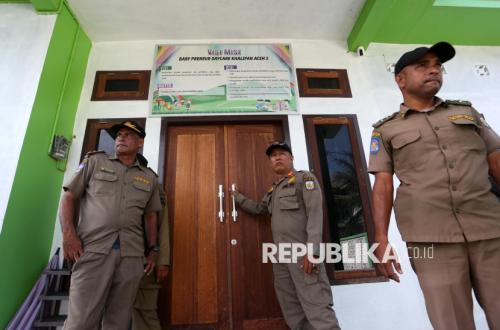
The case of child abuse at Little Aresha in Yogyakarta has left deep scars. A service that should provide a safe space for children has instead become a site of violence.
This incident has elicited diverse responses representing various perspectives. Some question parental decisions, others highlight negligence in selecting services, and some point to providers seen as non-compliant or overly business-oriented.
All these responses stem from the same assumption: that parts of the system that should function properly are not operating as intended.
In cases of daycare abuse, data from various media publications suggest that attention is primarily focused on licensing. When the abuse case at Wensen School in Depok was revealed in 2024, circulating data indicated that out of 110 registered daycares, only 12 had official permits, meaning approximately 89 per cent operated without permission. In response to the Little Aresha case in Yogyakarta, the Ministry of Women’s Empowerment and Child Protection again cited licensing data: around 44 per cent of daycares lack operational permits.
However, more fundamental questions must be asked: if all daycares were licensed, would that mean children are safe? And has the state truly built a daycare governance system that works as an interconnected whole, rather than merely a collection of standalone regulations? So far, various findings indicate that what we have resembles a collection of policy instruments rather than a connected system.
What exactly is meant by daycare services?
In practical understanding, daycare services are often seen as places to “drop off” children while parents work. Viewed through the lens of policy frameworks, these services align more closely with the definition of caregiving in Minister of Social Affairs Regulation No. 1 of 2020, which is an effort to meet needs for affection, attachment, safety, and sustained well-being for the child’s best interests. In this context, daycare services can be understood as a form of caregiving provided by parties other than the family and non-residential, where some daily child caregiving functions are carried out by non-family caregivers (carers) for a certain period.
Of course, caregiving here cannot be narrowly interpreted as merely ensuring diaper changes or supervision. In early childhood, especially up to age eight, children are in a phase of irreplaceable opportunities. During this period, brain architecture develops rapidly and depends on the intensity and quality of interactions with adults.
Through these interactions, the foundations of cognitive, social, emotional, and physical development are built, which will later determine their potential in adult life. Therefore, international consensus positions caregiving and education not as a dichotomy, but as an unbroken continuum within the framework of early childhood education and care (ECEC).
Awareness of this integration is reflected in the inclusion of Child Daycare Centres as a type of early childhood education unit in Law No. 20 of 2003 on the National Education System. However, this integration does not mean blurring the differences in service provision needs between the two. Each has its role in supporting early childhood development.
In this regard, daycare services, or let’s interpret them as temporary caregiving, still have specific needs, namely care in terms of health and nutrition, protection, and supporting infrastructure, which differ from the minimum criteria for educational service provision.
Policy Expansion Without Adequate Governance?
In recent years, the state has actively promoted the expansion of daycare services. Law No. 4 of 2024 establishes access to child daycare as a right, while the 2025-2045 Care Economy Roadmap emphasises its link to women’s workforce participation. These policies position daycare as a right for working women.
This push is reinforced by the Joint Circular of 6 Ministers No. 2 of 2025 on the Establishment and Operation of Child Daycare Centres in the Environment of Ministries/Institutions, Local Governments, SOEs/Regional SOEs, Private Sector, and Communities, which encourages cross-sector expansion of child daycare services.
The policy signals are clear: First, daycare services are a right for working families; second, the state has prepared safe governance for families to utilise these services; and third, it invites community participation to become providers. However, amid this expansion push, what is actually meant by daycare services themselves, and has that clarity been present in a system that properly guides all involved parties?
Returning to the initial question: does licensing guarantee decent daycare services?
In practice, the recommendation to check the Business Identification Number (NIB) as part of verifying daycare services can be a relevant step. Possession of an NIB indicates that an activity has been administratively registered and has a legal basis to operate.
Permits, standards, and supervision are indeed interconnected, but each has distinct functions. Permits provide legality, meaning the service is allowed to operate. Standards present minimum criteria for what is considered safe and decent. Supervision ensures that these are actually implemented in the field. In ke